 Bug FAQ
Large Hover Fly
Melangyna novaezelandiae · Order: Diptera · Family: Syrphidae

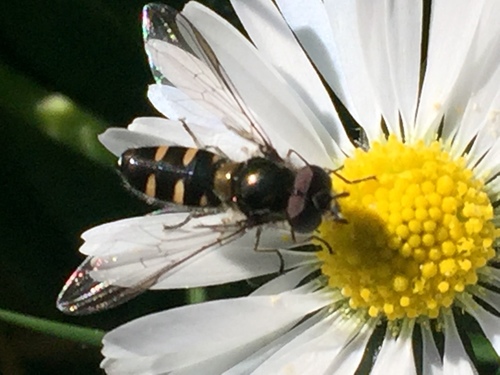
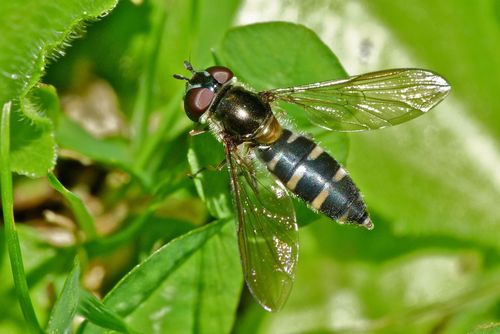
The large hoverfly is 9 to 12 mm long and has a black body with yellow bands on the abdomen (male three pairs, female four pairs) and a reddish-brown underside. It lives throughout New Zealand, including sub-alpine, agricultural areas and offshore islands, and adults feed on flower nectar and pollen while the larvae hunt aphids and other small insects. Adults are most common from September to May but can be seen year-round; they live 19 to 45 days and go through three larval stages before pupating for 8 to 15 days.
Source: Wikipedia
How to recognize it
Males have three creamy yellow bands on a black abdomen; females have four, the last reduced, and the underside is reddish brown.
Source: Wikipedia
Size
Adults measure between 9 and 12 mm in length.
Source: Wikipedia
Where it lives
They occur in many habitats, from sub-alpine zones to farms and gardens.
Source: Wikipedia
What it eats
Adults sip nectar and collect pollen from many flower species. Larvae are predators that eat aphids and also feed on caterpillars such as Pieris rapae.
Source: Wikipedia
Life cycle
Adults live 19 to 45 days; larvae pass through three instars lasting 3 to 20 days total before pupating for 8 to 15 days.
Source: Wikipedia
When you see it
Adults are abundant from September to May but may be present all year.
Source: Wikipedia
Where it comes from
The species is native to New Zealand and is found across the main islands and the Chatham Islands.
Source: Wikipedia
Lookalikes
In agricultural fields, this hoverfly and Melanostoma fasciatum together caused about a third of Pieris rapae caterpillar deaths.
Source: Wikipedia
More photos
Questions people ask
What do the yellow bands on the abdomen look like?
Males have three creamy yellow bands on a black abdomen, while females have four, with the last band reduced.
Source: Wikipedia
Where can I find large hoverflies?
They are found throughout New Zealand in habitats ranging from sub-alpine areas to farms and gardens, even on offshore islands.
Source: Wikipedia
Do they help control garden pests?
Yes, the larvae prey on aphids and also eat caterpillars such as Pieris rapae, which can damage crops.
Source: Wikipedia
Are they important for pollination?
Adults visit many flowers for nectar and pollen and are the second most common flower visitors in crops, indicating they aid pollination.
Source: Wikipedia
Same family (Syrphidae)






Sources
- Wikipedia: https://en.wikipedia.org/wiki/Melangyna_novaezelandiae
Look it up elsewhere: GBIF · iNaturalist · BugGuide · Wikipedia
Text written 2026-10-23 from the sources above and checked sentence by sentence against them. Data fetched 2026-10-22.