 Bug FAQ
Large Gray Dagger
Acronicta insita · Order: Lepidoptera · Family: Noctuidae
Source: Wikipedia
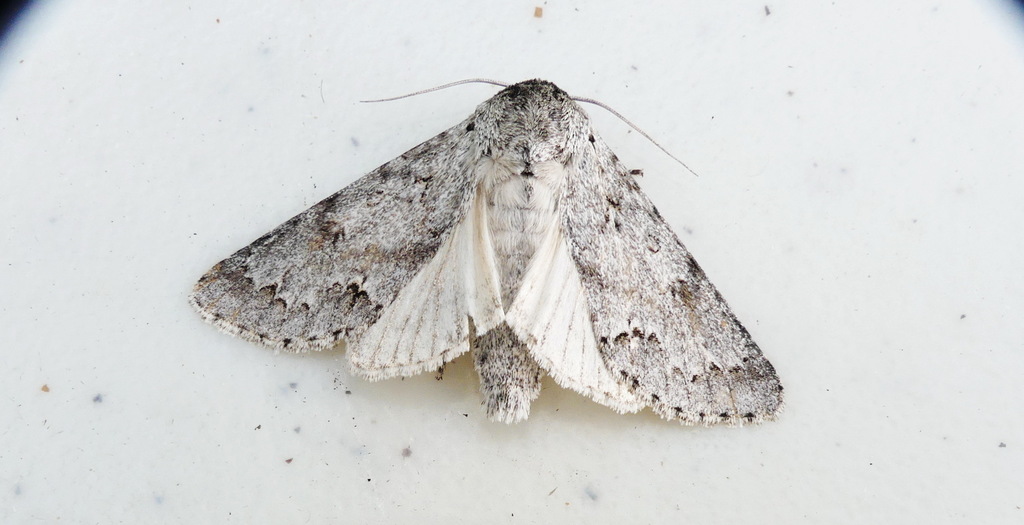
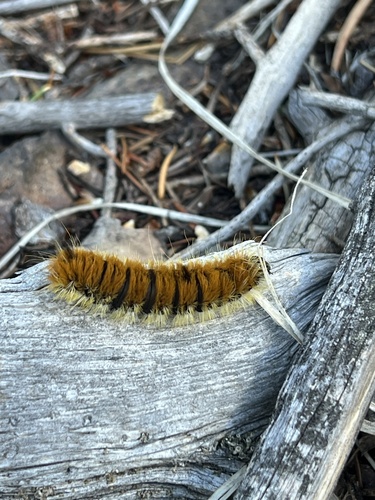
The large gray dagger moth has a wingspan of about 45 to 55 mm and belongs to the Noctuidae family. Its fine, hollow hairs contain a toxin that can cause rashes if the moth is handled or brushed against clothing.
Source: Wikipedia
Size
The wingspan ranges from 45 to 55 mm.
Source: Wikipedia
Does it bite or sting?
The moth’s hollow hairs contain a toxin; contact can produce rashes that may spread if clothing rubs the area.
Source: Wikipedia
How to get rid of it
Avoid handling the moth and wash any clothing that touched it to prevent rash spread.
Source: Wikipedia
Where it lives
It occurs from Newfoundland westward to the Pacific coast, including Vancouver Island and Haida Gwaii, and south to North Carolina and Colorado.
Source: Wikipedia
What it eats
Caterpillars eat the leaves of alder, birch, poplar, hawthorn and willow.
Source: Wikipedia
Life cycle
There is one generation per year, with adults on the wing between May and July.
Source: Wikipedia
When you see it
Adults are active from May through July, depending on location.
Source: Wikipedia
Where it comes from
It is native to much of Canada and the United States, from the Atlantic to the Pacific and down to the mid-Atlantic states.
Source: Wikipedia
Lookalikes
Acronicta hesperida and Acronicta dactylina are now considered the same species as A. insita.
Source: Wikipedia
Where it is found in the US
Recorded in 30 of 51 states and DC. Most records: Washington, Oregon, Michigan, Vermont, Montana, California, Maine, Minnesota.
Darker = more records. Counts are museum and citizen-science records, not population size.
Source: GBIF
Status: native in North America; native in United States; native in Canada. Source: iNaturalist
Months it is reported in the US
Source: GBIF
More photos
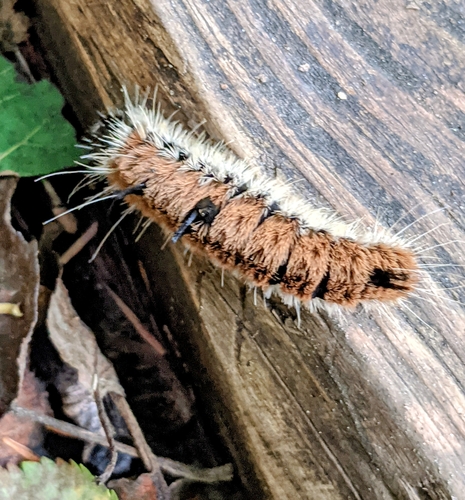
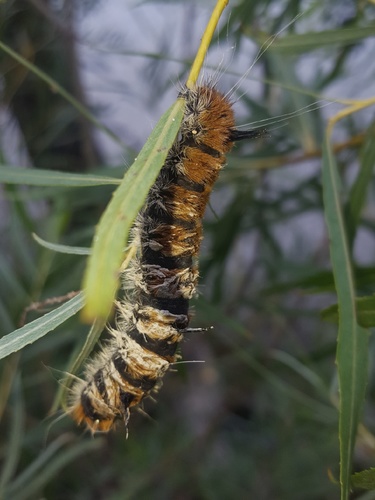
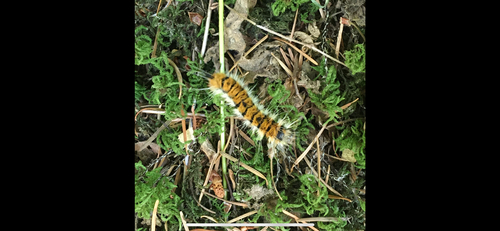
Questions people ask
What should I do if I get a rash from this moth?
Wash the affected skin and any clothing that touched the moth; the rash may last up to a week and can spread if the area is scratched or rubbed.
Source: Wikipedia
When can I expect to see adult large gray dagger moths?
Adults are typically seen flying from May to July, depending on where you live.
Source: Wikipedia
What plants do the caterpillars feed on?
The larvae eat leaves of alder, birch, poplar, hawthorn and willow.
Source: Wikipedia
Same family (Noctuidae)
 Ipsilon Dart MothAgrotis ipsilonDamages trees, gardens or crops
 Fall Armyworm MothSpodoptera frugiperdaDamages trees, gardens or crops
 Army Cutworm MothEuxoa auxiliarisDamages trees, gardens or crops
 Large Yellow UnderwingNoctua pronubaDamages trees, gardens or crops
 Silver ΥAutographa gamma
 American DaggerAcronicta americanaCan irritate skin
Sources
- Wikipedia: https://en.wikipedia.org/wiki/Acronicta_insita
Look it up elsewhere: GBIF · iNaturalist · BugGuide · ITIS · Wikipedia
Text written 2026-10-23 from the sources above and checked sentence by sentence against them. Data fetched 2026-10-23.