 Bug FAQ
Larch Pug
Eupithecia lariciata · Order: Lepidoptera · Family: Geometridae
Also called: Larch Pug Moth, fir needle inchworm
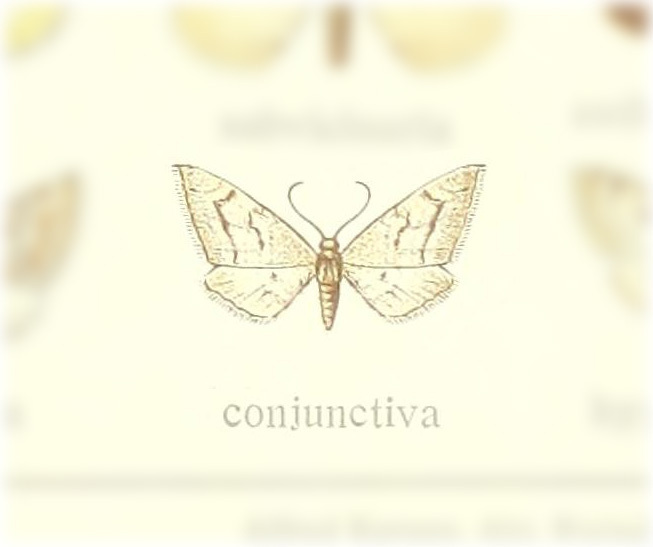
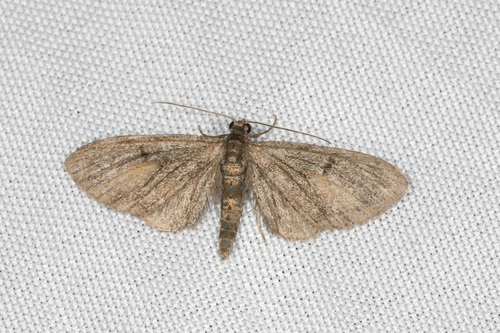
The larch pug moth has a wingspan of about 19 to 22 mm and forewings 10 to 12 mm long. It lives across Europe, Siberia, the Far East, Korea, Japan and much of North America from Yukon to Arizona. Caterpillars feed on larch and the adults fly in a single generation from May to June, often attracted to light.
Source: Wikipedia
How to recognize it
The forewings are whitish-grey with dark crosslines and a sharply angled median line.
Source: Wikipedia
Size
Wingspan ranges from 19 to 22 mm. Forewing length is 10 to 12 mm.
Source: Wikipedia
What it eats
Caterpillars feed on larch trees.
Source: Wikipedia
Life cycle
Adults are on the wing in one generation from May to June. They are attracted to light sources.
Source: Wikipedia
When you see it
Moths fly during May and June.
Source: Wikipedia
Where it comes from
In North America it occurs from Yukon and Newfoundland down to New York and Arizona.
Source: Wikipedia
Lookalikes
It resembles Eupithecia castigata but has longer forewings, a whiter ground colour, more angled dark crosslines, and paler hind-wing margins. It also looks similar to Eupithecia virgaureata and Eupithecia subfuscata.
Source: Wikipedia
Where it is found in the US
Recorded in 15 of 51 states and DC. Most records: Vermont, New York, New Mexico, Maryland, Massachusetts, Washington, Wyoming, North Carolina.
Darker = more records. Counts are museum and citizen-science records, not population size.
Source: GBIF
Months it is reported in the US
Source: GBIF
More photos
Questions people ask
When are the adult moths active?
Adults fly in a single generation from May to June.
Source: Wikipedia
How can I tell this moth apart from similar species?
It has longer forewings, a whiter colour, more sharply angled dark crosslines, and paler hind-wing margins compared with Eupithecia castigata, and it also resembles Eupithecia virgaureata and Eupithecia subfuscata.
Source: Wikipedia
Same family (Geometridae)




Sources
- Wikipedia: https://en.wikipedia.org/wiki/Larch_pug
Look it up elsewhere: GBIF · iNaturalist · BugGuide · ITIS · Wikipedia
Text written 2026-10-29 from the sources above and checked sentence by sentence against them. Data fetched 2026-10-29.