 Bug FAQ
Kudzu Bug
Megacopta cribraria · Order: Hemiptera · Family: Plataspidae
Also called: Bean Plataspid Bug, Globular Stink Bug, Lablab Bug
Source: Wikipedia
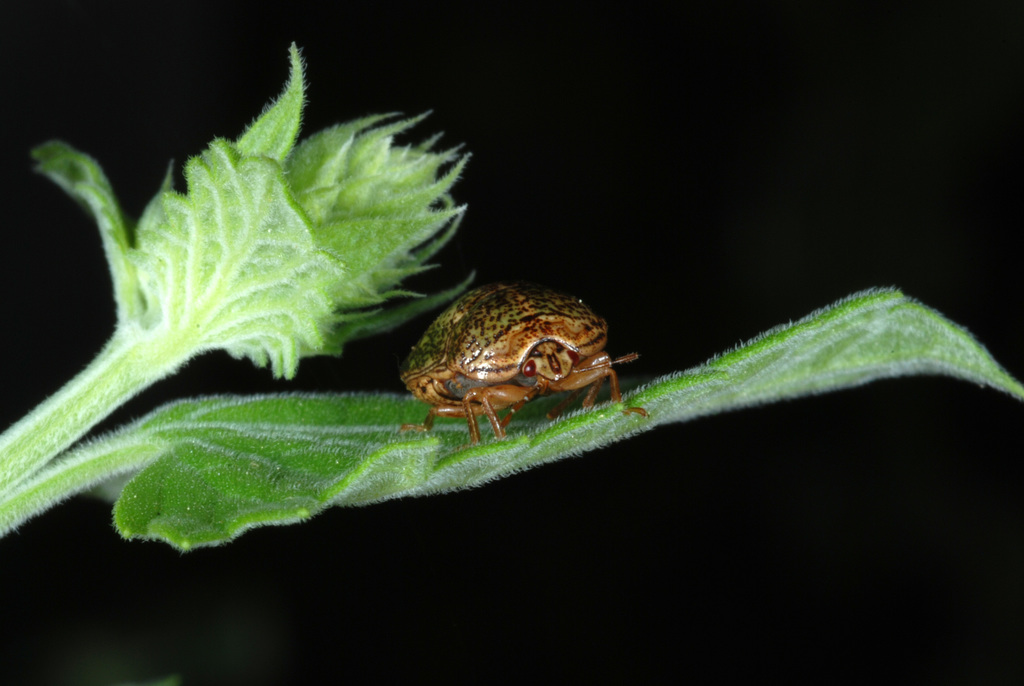
Kudzu bugs often enter homes in large numbers, especially in autumn, attracted to white surfaces like walls and vehicles. They feed on soybean stems, reducing crop yields, but can also suppress invasive kudzu plants. When crushed they release a foul smell and a yellow liquid that can stain surfaces and cause a burning, irritating sensation on skin.
Source: Wikipedia
How to recognize it
The bug is harmless to houseplants and people but frequently comes inside houses. It is drawn to white surfaces because its simple eyes detect high reflectance.
Source: Wikipedia
Is it a pest in the house?
They are a major nuisance for residents and can stain cloth, wood, and other surfaces with a yellow liquid when crushed.
Source: Wikipedia
Does it bite or sting?
The liquid released can cause a burning sensation, sometimes a red welt, and may irritate skin.
Source: Wikipedia
How to get rid of it
Researchers in the southeastern US are studying alternative control methods. Because the bug depends on a specific symbiont, providing a defective version of that bacterium could be an effective control strategy.
Source: Wikipedia
Where it lives
Kudzu bugs gather in huge numbers inside houses or other structures, seeking shelter in autumn.
Source: Wikipedia
What it eats
Adults suck sap from soybean stems, lowering crop yields. When they infest kudzu, they noticeably reduce the growth of that invasive plant.
Source: Wikipedia
Life cycle
Females lay particles containing a symbiotic bacterium that nymphs eat after hatching. Nymphs without the symbiont grow slower, stay smaller, and die more often.
Source: Wikipedia
When you see it
They seek shelter in houses during autumn. If disturbed they emit an unpleasant odor.
Source: Wikipedia
Where it comes from
They are native to India and China.
Source: Wikipedia
Lookalikes
Megacopta punctatissima, once considered a separate species in Japan, is now treated as the same species.
Source: Wikipedia
Where it is found in the US
Recorded in 21 of 51 states and DC. Most records: North Carolina, Georgia, Alabama, South Carolina, Tennessee, Virginia, District of Columbia, Mississippi.
Darker = more records. Counts are museum and citizen-science records, not population size.
Source: GBIF
Status: introduced in United States. Source: iNaturalist
Months it is reported in the US
Source: GBIF
More photos


Questions people ask
Do kudzu bugs bite or sting people?
They do not bite, but crushing them can release a liquid that burns and irritates the skin.
Source: Wikipedia
Why are kudzu bugs in my house?
They are attracted to white walls and other bright surfaces and seek shelter inside homes, especially in autumn.
Source: Wikipedia
Are kudzu bugs harmful to my garden?
They feed on soybean plants, reducing yields, but can also help control the invasive kudzu vine.
Source: Wikipedia
How can I get rid of kudzu bugs?
Scientists are exploring methods that target their essential bacterial symbiont, but practical home solutions are still under study.
Source: Wikipedia
Same family (Plataspidae)
Sources
- Wikipedia: https://en.wikipedia.org/wiki/Megacopta_cribraria
Look it up elsewhere: GBIF · iNaturalist · BugGuide · Wikipedia
Text written 2026-10-22 from the sources above and checked sentence by sentence against them. Data fetched 2026-10-22.