 Bug FAQ
Knot Grass Moth
Acronicta rumicis · Order: Lepidoptera · Family: Noctuidae
Also called: Knot Grass, Knot Grass [moth]
Source: Wikipedia
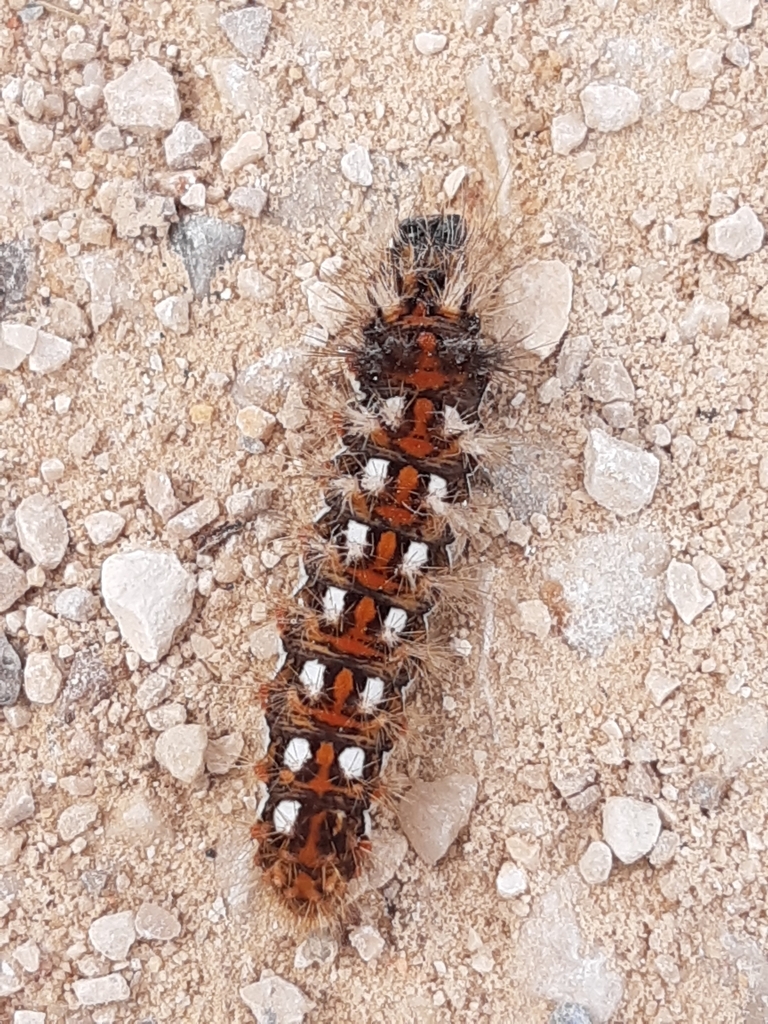
The knot grass moth has a wingspan of about 34 to 44 mm and distinctive wing markings. It lives in open, non-humid places such as meadows, garden edges and hedgerows across the Palearctic. Two generations fly each year, in late spring and again in late summer, with larvae feeding on maize, strawberries and other herbaceous plants.
Source: Wikipedia
How to recognize it
Forewings show a mix of dark and light grey blotches, and a white spot midway down the trailing edge that other Acronicta moths lack. Hindwings are dark brown.
Source: Wikipedia
Size
Wingspan ranges from 34 to 44 mm.
Source: Wikipedia
Life cycle
Larvae feed from summer into winter, then pupate in cocoons.
Source: Wikipedia
When you see it
Two broods: adults fly in May-June and again in August-September.
Source: Wikipedia
Where it comes from
Distributed throughout the Palearctic region.
Source: Wikipedia
More photos


Questions people ask
What plants do they damage?
They can damage strawberries and other herbaceous crops such as maize.
Source: Wikipedia
When are they active?
Adults are active in late spring (May-June) and again in late summer (August-September).
Source: Wikipedia
Same family (Noctuidae)
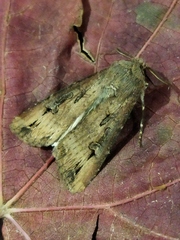 Ipsilon Dart MothAgrotis ipsilonDamages trees, gardens or crops
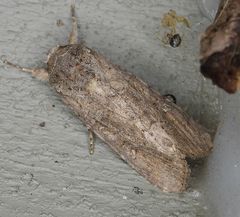 Fall Armyworm MothSpodoptera frugiperdaDamages trees, gardens or crops
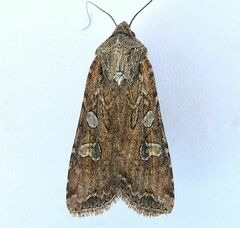 Army Cutworm MothEuxoa auxiliarisDamages trees, gardens or crops
 Large Yellow UnderwingNoctua pronubaDamages trees, gardens or crops
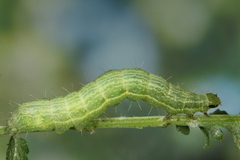 Silver ΥAutographa gamma
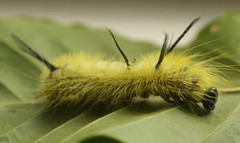 American DaggerAcronicta americanaCan irritate skin
Sources
- Wikipedia: https://en.wikipedia.org/wiki/Acronicta_rumicis
Look it up elsewhere: GBIF · iNaturalist · BugGuide · ITIS · Wikipedia
Text written 2026-10-22 from the sources above and checked sentence by sentence against them. Data fetched 2026-10-22.