 Bug FAQ
Kawakawa looper
Cleora scriptaria · Order: Lepidoptera · Family: Geometridae
Also called: Kawakawa looper moth, Kawakawa moth
Source: Wikipedia
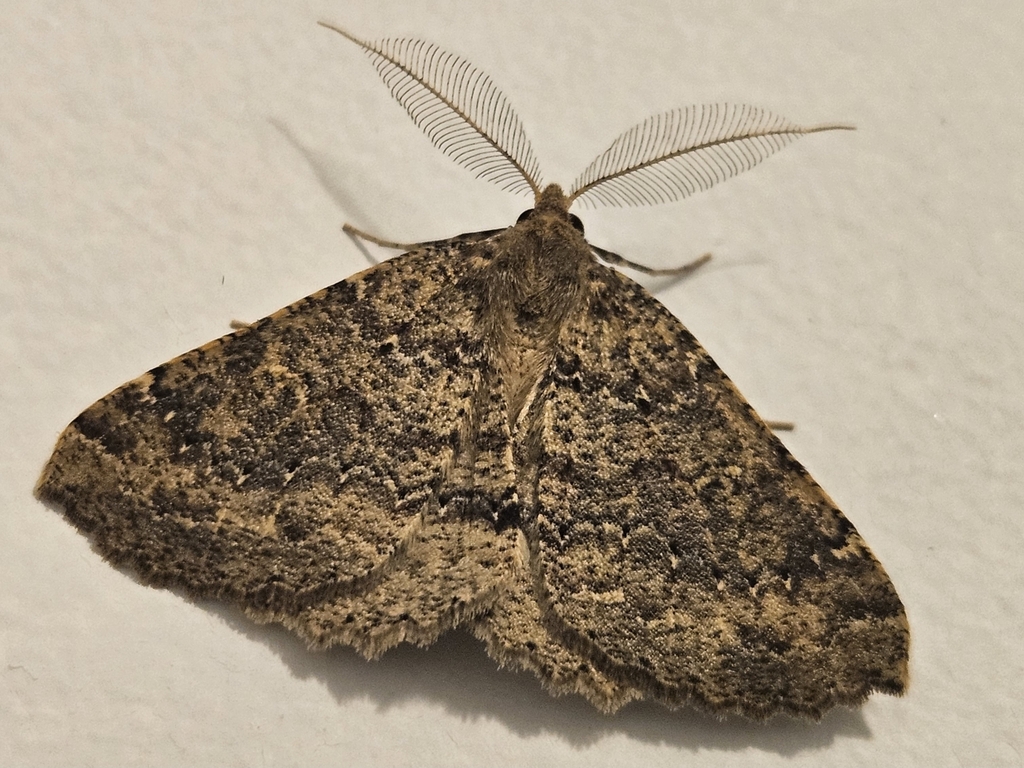
Adults are 10 to 15 mm long with a wingspan of 30 to 55 mm and have mottled yellow-brown forewings marked with distinctive spots. They live near kawakawa and hide on leaf litter or tree trunks where their pattern provides camouflage. The species is native to New Zealand.
Source: Wikipedia
How to recognize it
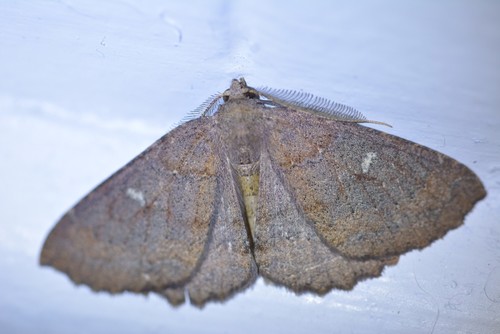
Both sexes show unique spots in the middle of the wings that range from black to white or cream. The most common colouration is yellow-brown mottled forewings.
Source: Wikipedia
Size
Adult bodies measure 10 to 15 mm in length and their wingspan ranges from 30 to 55 mm.
Source: Wikipedia
Where it lives
They are usually found on or near kawakawa and other host plants.
Source: Wikipedia
What it eats
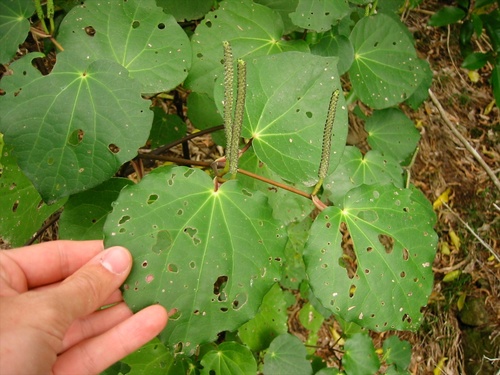
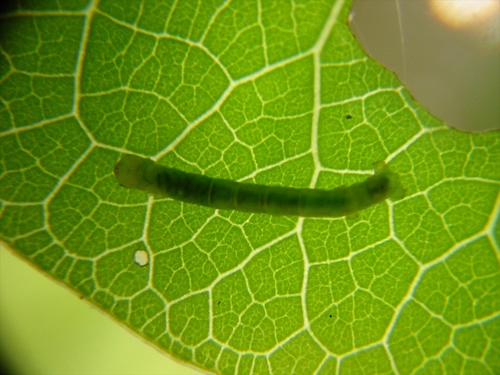
Caterpillars eat kawakawa leaves at night, leaving characteristic holes. Larger caterpillars also notch the leaf edges.
Source: Wikipedia
Life cycle
Females lay eggs on the leaves or stems of kawakawa. When fully grown, caterpillars drop to the ground and hide in leaf litter.
Source: Wikipedia
Where it comes from
Cleora scriptaria is endemic to New Zealand.
Source: Wikipedia
More photos

Questions people ask
What do Kawakawa looper caterpillars eat?
They feed on the leaves of the kawakawa plant, making holes and edge notches.
Source: Wikipedia
Where are Kawakawa loopers found?
They are found near kawakawa and other host plants, often hiding in leaf litter or on tree trunks.
Source: Wikipedia
How big are adult Kawakawa loopers?
Adults are 10 to 15 mm long with a wingspan of 30 to 55 mm.
Source: Wikipedia
Same family (Geometridae)
 Willow BeautyPeribatodes rhomboidaria
 Pale BeautyCampaea perlataDamages trees, gardens or crops
 Large Lace-border MothScopula limboundataDamages trees, gardens or crops
 Riband WaveIdaea aversata
 Yellow Shell MothCamptogramma bilineata
 Large Maple Spanworm MothProchoerodes lineolaDamages trees, gardens or crops
Sources
- Wikipedia: https://en.wikipedia.org/wiki/Cleora_scriptaria
Look it up elsewhere: GBIF · iNaturalist · BugGuide · Wikipedia
Text written 2026-10-23 from the sources above and checked sentence by sentence against them. Data fetched 2026-10-22.