 Bug FAQ
Jumping Jack Ant
Myrmecia nigrocincta · Order: Hymenoptera · Family: Formicidae
Also called: Jack Jumper Ant, Jumper Ant
Source: Wikipedia
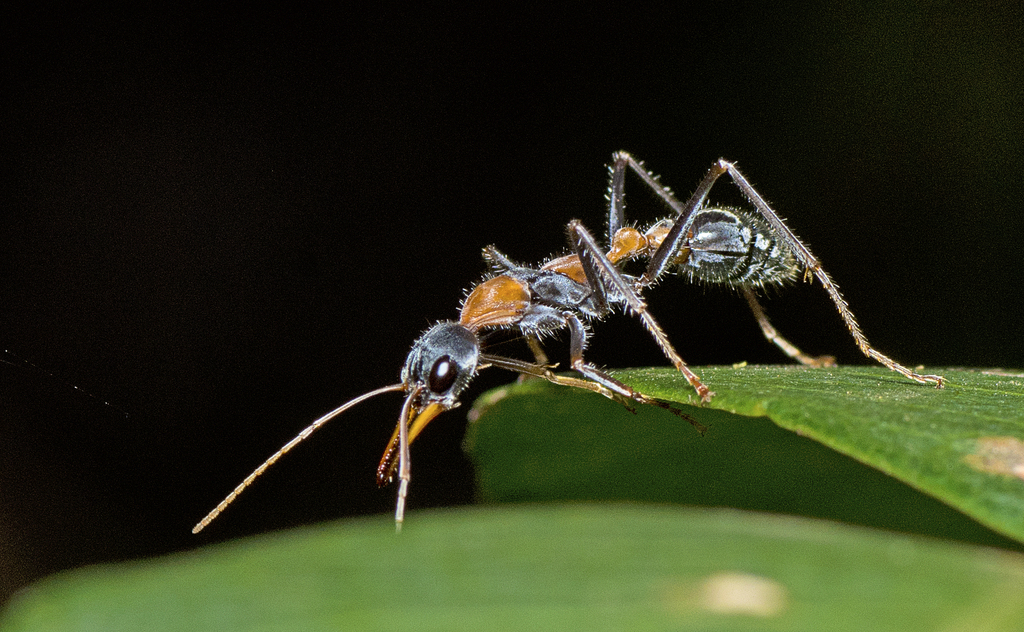
Workers are 13 to 15 mm long, males 16 to 17 mm, and queens 17 to 19 mm. They prey on butterfly larvae, even carrying them while jumping.
Source: Wikipedia
How to recognize it
A bi-coloured thorax and post-petiole that are yellowish-red and black set them apart from other Myrmecia ants.
Source: Wikipedia
Size
Workers measure 13 to 15 mm, males 16 to 17 mm, and queens 17 to 19 mm in length.
Source: Wikipedia
Does it bite or sting?
Their sting is highly venomous and causes intense burning pain.
Source: Wikipedia
Where it lives
They are also found at elevations from 80 m up to 1 220 m in various habitats.
Source: Wikipedia
What it eats
They have been observed hunting and carrying the larvae of imperial hairstreak butterflies.
Source: Wikipedia
Life cycle
Workers can reproduce because they carry the gamergates gene, even without a queen. A worker ant can live for more than one year.
Source: Wikipedia
When you see it
They are active during the day and do not hibernate.
Source: Wikipedia
Where it comes from
Colonies are abundant in eastern Australia, especially on coastal plains with suitable dry forest.
Source: Wikipedia
Lookalikes
The bi-coloured thorax and post-petiole (yellowish-red and black) help distinguish them from other Myrmecia species.
Source: Wikipedia
More photos
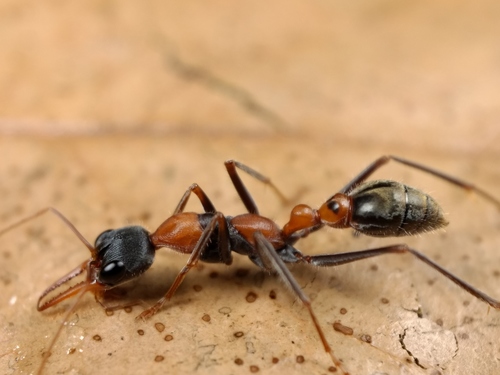
Questions people ask
Do they sting people?
Yes, their sting is highly venomous and produces intense burning pain.
Source: Wikipedia
How big are they?
Workers are 13 to 15 mm long, males 16 to 17 mm, and queens 17 to 19 mm.
Source: Wikipedia
Same family (Formicidae)
 Eastern Black Carpenter AntCamponotus pennsylvanicusCan damage your home
 Red Imported Fire AntSolenopsis invictaCan sting
 American Winter AntPrenolepis imparis
 Argentine AntLinepithema humileNuisance, not dangerous
 Immigrant Pavement AntTetramorium immigransCan sting
 Odorous House AntTapinoma sessileCan damage your home
Sources
- Wikipedia: https://en.wikipedia.org/wiki/Myrmecia_nigrocincta
Look it up elsewhere: GBIF · iNaturalist · BugGuide · ITIS · Wikipedia
Text written 2026-10-23 from the sources above and checked sentence by sentence against them. Data fetched 2026-10-22.