 Bug FAQ
Jet Ant
Lasius fuliginosus · Order: Hymenoptera · Family: Formicidae
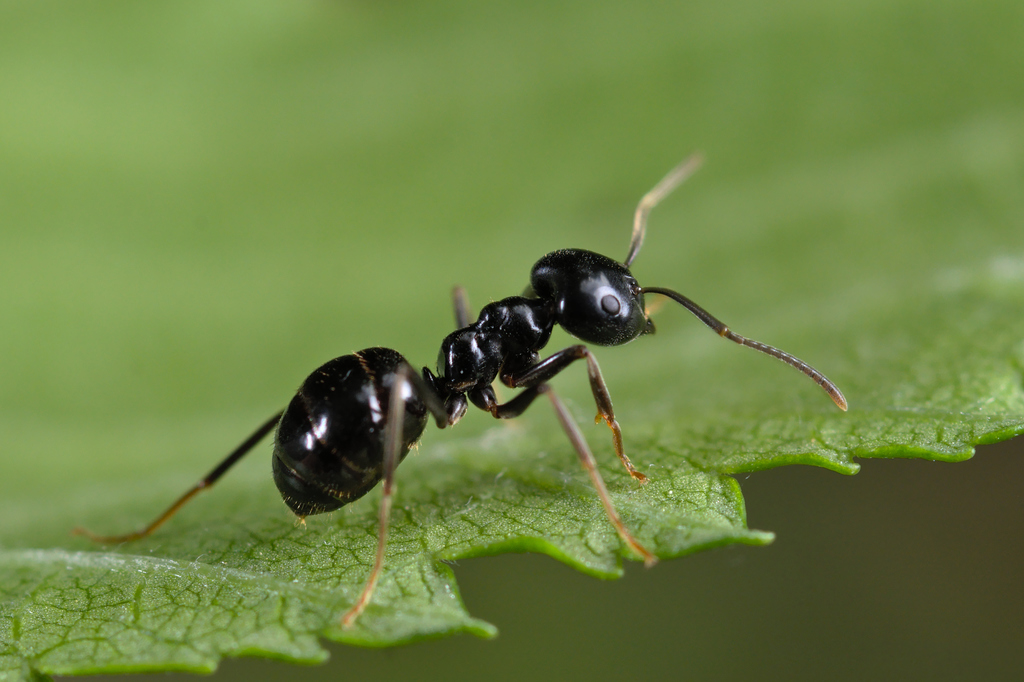
Jet Ant workers are black, shiny, with a large head and brown-yellow legs; queens are slightly larger. They build cardboard-like nests in hollow trees and tend aphids for honeydew, also cultivating fungi with wood, honeydew and nectar. New queens start colonies by parasitising nests of the yellow ant Lasius umbratus, and their workers later take over the nest.
Source: Wikipedia
How to recognize it
Workers are black and shiny with a relatively large, broadly heart-shaped head that has a distinct notch at the back and rounded occipital lobes. Their legs are brownish-yellow.
Source: Wikipedia
Size
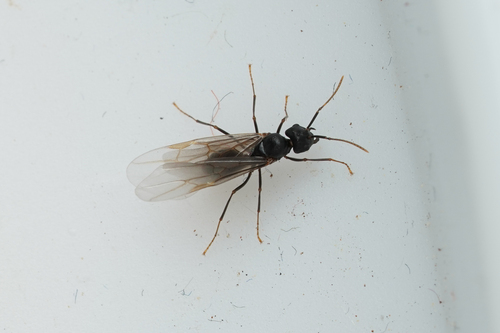
Workers measure about 4 to 6 mm long; queens are 6 to 6.5 mm, and males are 4.5 to 5 mm.
Source: Wikipedia
Where it lives
They construct nests that look like cardboard inside old hollow trees, using chewed wood mixed with saliva. The colony cultivates fungi, feeding it shredded wood, honeydew from aphids, and nectar; the fungi help strengthen the nest.
Source: Wikipedia
What it eats
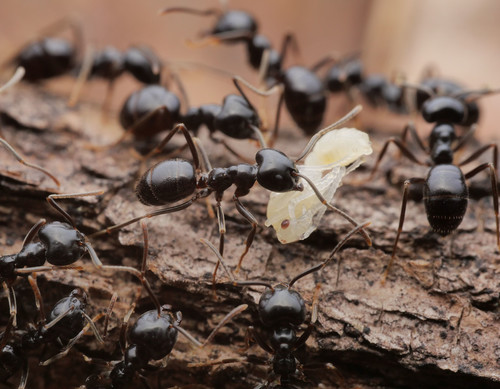
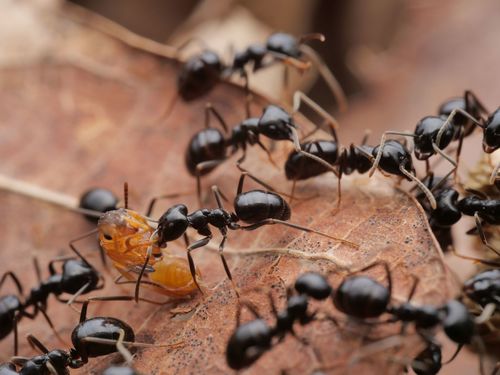
They tend aphids for honeydew and often travel long distances along scent trails to reach food sources such as trees. They also collect nectar and provide it, along with shredded wood and honeydew, to their cultivated fungi.
Source: Wikipedia
Life cycle
A newly mated queen cannot start a nest alone; she invades a nest of the yellow ant Lasius umbratus and establishes a colony by social parasitism. Her worker offspring gradually replace the original host workers and take over the nest.
Source: Wikipedia
Lookalikes
They are often found together with the nitidulid beetle Amphotis marginata, known as the “highwayman” of ant communities.
Source: Wikipedia
More photos
Questions people ask
Do they damage houses or wooden structures?
They build nests in hollow trees, not in homes, and no information indicates they damage buildings.
Source: Wikipedia
Are they a problem for gardens or trees?
They live in tree hollows and tend aphids, but the sources do not say they harm trees or garden plants.
Source: Wikipedia
Same family (Formicidae)
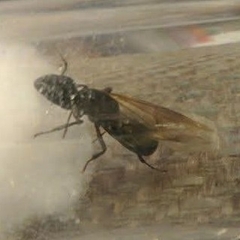 Eastern Black Carpenter AntCamponotus pennsylvanicusCan damage your home
 Red Imported Fire AntSolenopsis invictaCan sting
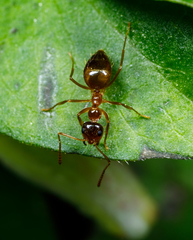 American Winter AntPrenolepis imparis
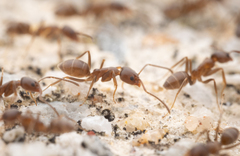 Argentine AntLinepithema humileNuisance, not dangerous
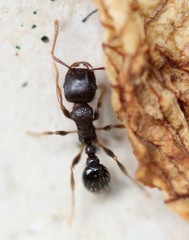 Immigrant Pavement AntTetramorium immigransCan sting
 Odorous House AntTapinoma sessileCan damage your home
Sources
- Wikipedia: https://en.wikipedia.org/wiki/Lasius_fuliginosus
Look it up elsewhere: GBIF · iNaturalist · BugGuide · ITIS · Wikipedia
Text written 2026-10-22 from the sources above and checked sentence by sentence against them. Data fetched 2026-10-22.