 Bug FAQ
Japanese Wood Ant
Formica japonica · Order: Hymenoptera · Family: Formicidae
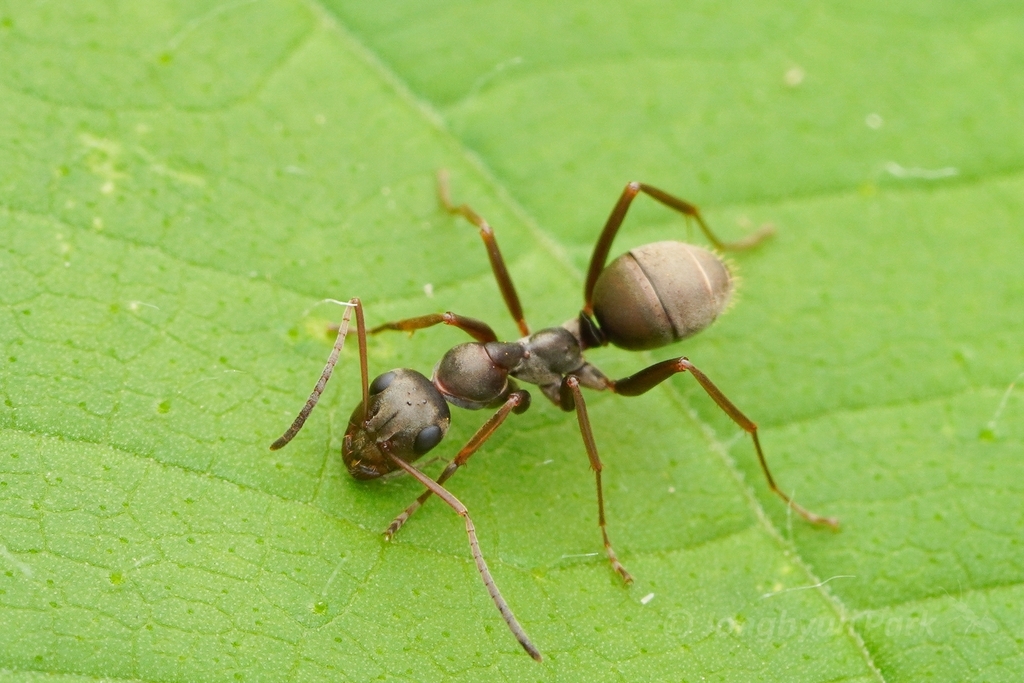
Formica japonica is an ant species that lives in soil nests and can have many workers. Colonies are usually polygynous, and queens typically mate with a single male. New queens and males are produced in early summer, are cared for by workers, and later take nuptial flights.
Source: Wikipedia
How to recognize it
Formica japonica belongs to the genus Formica.
Source: Wikipedia
Does it bite or sting?
There is a risk of being bitten or injured by these ants despite some butterflies mimicking their scent.
Source: Wikipedia
Where it lives
Colonies nest in soil and may contain hundreds to thousands of workers. Both monogynous and polygynous colonies occur, with polygyny being more common.
Source: Wikipedia
Life cycle
In early summer the colony produces new queens and males, which are fed and groomed by workers until they mature. Mature queens and males leave the nest in nuptial flights to find mates.
Source: Wikipedia
When you see it
New reproductive ants are produced in early summer. During summer, the brain chemicals of cared-for queens naturally increase with age.
Source: Wikipedia
Where it comes from
It is common in Japan and also found in Russia, Mongolia, China, Taiwan, and Korea.
Source: Wikipedia
Lookalikes
Four possible sibling species may exist, each with distinct hydrocarbon scents across Japan.
Source: Wikipedia
More photos


Questions people ask
When are new queens produced?
New queens are produced in early summer and are cared for by workers until they are ready to fly.
Source: Wikipedia
Where are Japanese wood ants found?
They are common in Japan and also occur in Russia, Mongolia, China, Taiwan, and Korea.
Source: Wikipedia
Do colonies have one queen or many?
Both occur, but colonies with multiple queens are more common.
Source: Wikipedia
Same family (Formicidae)
 Eastern Black Carpenter AntCamponotus pennsylvanicusCan damage your home
 Red Imported Fire AntSolenopsis invictaCan sting
 American Winter AntPrenolepis imparis
 Argentine AntLinepithema humileNuisance, not dangerous
 Immigrant Pavement AntTetramorium immigransCan sting
 Odorous House AntTapinoma sessileCan damage your home
Sources
- Wikipedia: https://en.wikipedia.org/wiki/Formica_japonica
Look it up elsewhere: GBIF · iNaturalist · BugGuide · ITIS · Wikipedia
Text written 2026-10-23 from the sources above and checked sentence by sentence against them. Data fetched 2026-10-22.