 Bug FAQ
Japanese Carpenter Ant
Camponotus japonicus · Order: Hymenoptera · Family: Formicidae
Source: Wikipedia
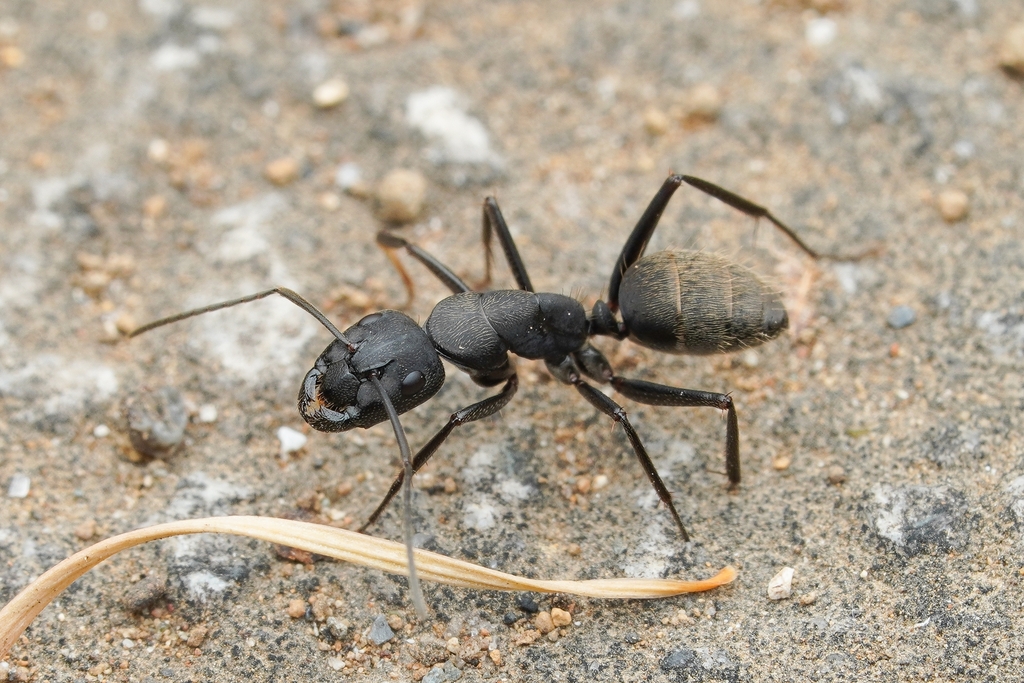
The Japanese carpenter ant is a large black ant, with queens showing tiny brown hairs on the thorax and abdomen. Workers range from 6 to 15 mm, while queens can reach about 17 mm. It lives across eastern Asia and can become a household pest when it invades homes or protects aphids.
Source: Wikipedia
How to recognize it
Queens are black with microscopic brown hairs on the thorax and abdomen.
Source: Wikipedia
Size
Queens grow to about 17 mm long. Workers are divided into three size groups ranging from 6 to 15 mm.
Source: Wikipedia
Is it a pest in the house?
It may be a nuisance inside homes.
Source: Wikipedia
Where it comes from
It is native to eastern Asia. It was first recorded in India’s Arunachal Pradesh at 1700 m elevation.
Source: Wikipedia
Lookalikes
It serves as a host for the parasite Polyrhachis lamellidens. It also hosts the parasite Niphanda fusca.
Source: Wikipedia
More photos

Questions people ask
What does the Japanese carpenter ant look like?
It is a large black ant; queens have tiny brown hairs on their thorax and abdomen, and workers range from 6 to 15 mm in length.
Source: Wikipedia
Why might I see these ants inside my house?
They can become a pest when they enter homes or protect aphids, making them a household nuisance.
Source: Wikipedia
Same family (Formicidae)
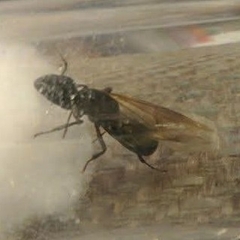 Eastern Black Carpenter AntCamponotus pennsylvanicusCan damage your home
 Red Imported Fire AntSolenopsis invictaCan sting
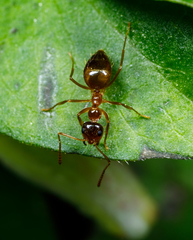 American Winter AntPrenolepis imparis
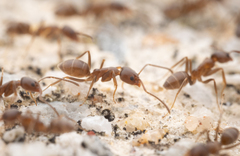 Argentine AntLinepithema humileNuisance, not dangerous
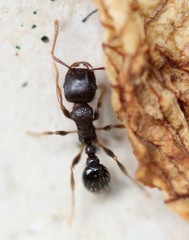 Immigrant Pavement AntTetramorium immigransCan sting
 Odorous House AntTapinoma sessileCan damage your home
Sources
- Wikipedia: https://en.wikipedia.org/wiki/Camponotus_japonicus
Look it up elsewhere: GBIF · iNaturalist · BugGuide · ITIS · Wikipedia
Text written 2026-10-23 from the sources above and checked sentence by sentence against them. Data fetched 2026-10-22.