 Bug FAQ
Jack Jumper Ant
Myrmecia pilosula · Order: Hymenoptera · Family: Formicidae
Also called: Black Jumper Ant, Jack Jumper
Source: Wikipedia
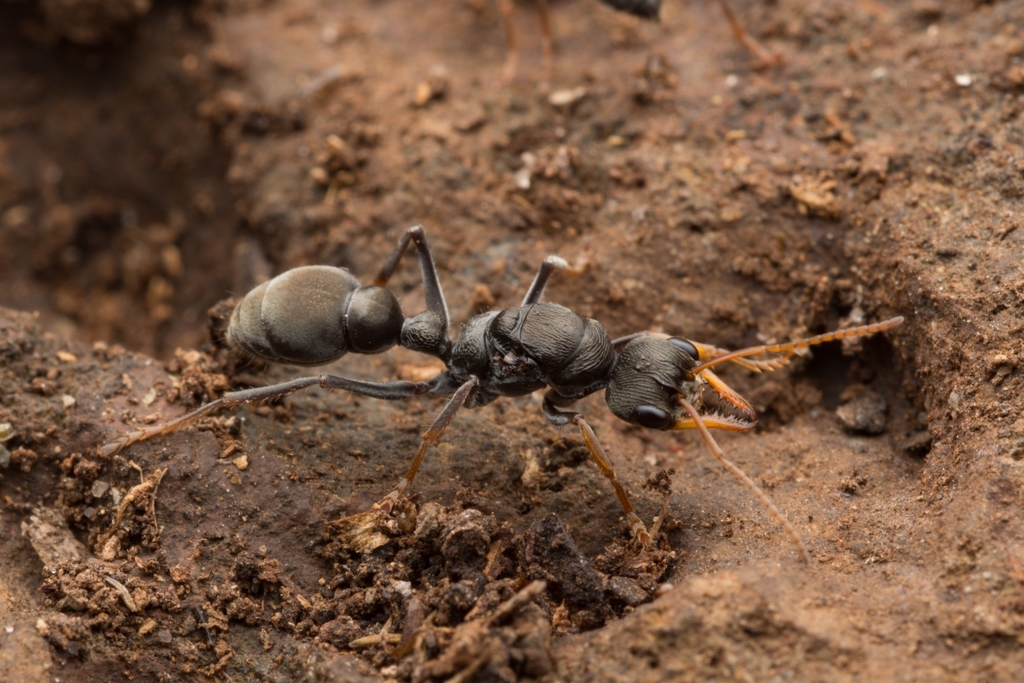
Jack jumper ants are medium-sized Myrmecia ants, with workers 12 to 14 mm long and queens up to 16 mm. They live in open bushland, woodlands and dry forests of Tasmania and southeastern Australia and hunt small insects using vision. Their barbless sting usually causes only a mild local reaction, but the venom is highly immunogenic and responsible for most ant-allergy cases in Australia.
Source: Wikipedia
How to recognize it
They can be black or blackish-red with yellow or orange legs, antennae, tibiae, tarsi and mandibles.
Source: Wikipedia
Size
Workers measure 12 to 14 mm, males 11 to 12 mm, and queens 14 to 16 mm in length.
Source: Wikipedia
Is it a pest in the house?
Control measures such as bendiocarb, chlorpyrifos, diazinon, permethrin or Solfac sprays can reduce their numbers near homes.
Source: Wikipedia
Does it bite or sting?
Their sting usually causes a mild local reaction, but the venom is highly immunogenic and accounts for most ant-allergy cases in Australia.
Source: Wikipedia
How to get rid of it
Effective chemicals include bendiocarb, chlorpyrifos, diazinon and permethrin; spraying Solfac into nests works when nests are close to human activity.
Source: Wikipedia
Where it lives
They are day-active and nest in open bushland, woodlands and dry open forests on gravelly or sandy soils, mainly in rural areas.
Source: Wikipedia
What it eats
They prey on small insects, killing them with a barbless stinger that injects venom, and they locate prey by sight.
Source: Wikipedia
Life cycle
Workers live over a year and can reproduce with drones even without a queen.
Source: Wikipedia
When you see it
They are primarily active during daylight hours.
Source: Wikipedia
Where it comes from
The species is native to Australia, especially Tasmania and the southeast mainland.
Source: Wikipedia
Questions people ask
How big are jack jumper ants?
Workers are 12 to 14 mm long, males 11 to 12 mm, and queens 14 to 16 mm.
Source: Wikipedia
Where do jack jumper ants live?
They nest in open bushland, woodlands and dry forests on gravelly or sandy soils, mainly in rural areas of Tasmania and southeastern Australia.
Source: Wikipedia
Are jack jumper ant stings dangerous?
The sting usually causes only a mild local reaction, but the venom can trigger severe allergic responses in people.
Source: Wikipedia
How can I control jack jumper ants around my home?
Insecticides such as bendiocarb, chlorpyrifos, diazinon, permethrin or Solfac sprays applied to nests are effective.
Source: Wikipedia
Same family (Formicidae)
 Eastern Black Carpenter AntCamponotus pennsylvanicusCan damage your home
 Red Imported Fire AntSolenopsis invictaCan sting
 American Winter AntPrenolepis imparis
 Argentine AntLinepithema humileNuisance, not dangerous
 Immigrant Pavement AntTetramorium immigransCan sting
 Odorous House AntTapinoma sessileCan damage your home
Sources
- Wikipedia: https://en.wikipedia.org/wiki/Jack_jumper_ant
Look it up elsewhere: GBIF · iNaturalist · BugGuide · ITIS · Wikipedia
Text written 2026-10-23 from the sources above and checked sentence by sentence against them. Data fetched 2026-10-22.