 Bug FAQ
Ichneutica scutata
Ichneutica scutata · Order: Lepidoptera · Family: Noctuidae
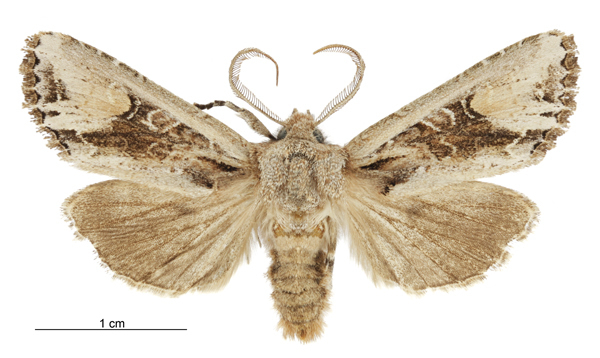
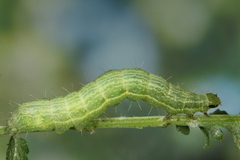
Ichneutica scutata is a moth endemic to New Zealand. Adults have a wingspan of about 30 to 39 mm for males and 34 to 36.5 mm for females and fly from late March to July. The larvae feed on herbaceous plants such as Plantago, Convolvulus, Plagianthus divaricatus, Bromus willdenowii and Poa annua.
Source: Wikipedia
How to recognize it
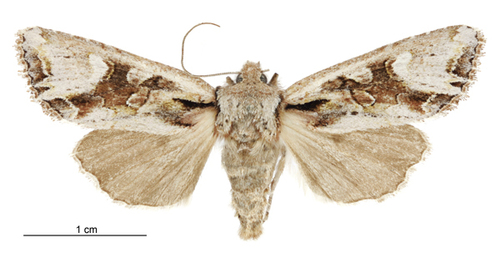
The forewings are pale ochreous with a reddish-brown streak, and have distinct orbicular, claviform and reniform spots outlined in dark reddish-fuscous. It looks similar to I. insignis and I. skelloni but is much paler and its forewing streak is reddish-brown rather than black.
Source: Wikipedia
Size
Male wingspan ranges from 30 to 39 mm; females are slightly larger, 34 to 36.5 mm.
Source: Wikipedia
Life cycle
Females lay eggs in a large, tightly packed cluster. Pupation occurs in the soil near the host plants.
Source: Wikipedia
Where it comes from
The species is endemic to New Zealand.
Source: Wikipedia
More photos
Questions people ask
What plants do the larvae eat?
The caterpillars feed on herbaceous plants such as Plantago, Convolvulus, Plagianthus divaricatus, Bromus willdenowii and Poa annua.
Source: Wikipedia
How can I tell it apart from similar moths?
It is much paler than I. insignis and I. skelloni, and its forewing streak is reddish-brown instead of black.
Source: Wikipedia
Same family (Noctuidae)
 Ipsilon Dart MothAgrotis ipsilonDamages trees, gardens or crops
 Fall Armyworm MothSpodoptera frugiperdaDamages trees, gardens or crops
 Army Cutworm MothEuxoa auxiliarisDamages trees, gardens or crops
 Large Yellow UnderwingNoctua pronubaDamages trees, gardens or crops
 Silver ΥAutographa gamma
 American DaggerAcronicta americanaCan irritate skin
Sources
- Wikipedia: https://en.wikipedia.org/wiki/Ichneutica_scutata
Look it up elsewhere: GBIF · iNaturalist · BugGuide · Wikipedia
Text written 2026-10-23 from the sources above and checked sentence by sentence against them. Data fetched 2026-10-23.