 Bug FAQ
Ichneutica omoplaca
Ichneutica omoplaca · Order: Lepidoptera · Family: Noctuidae
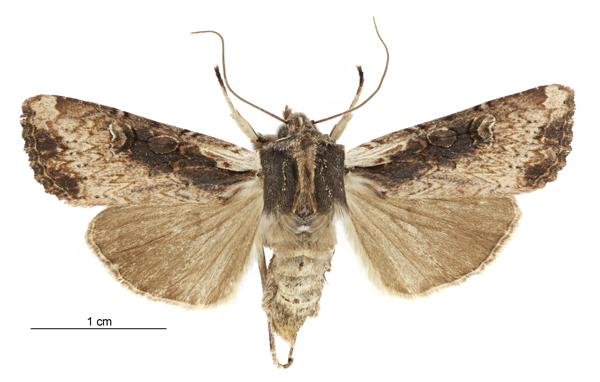
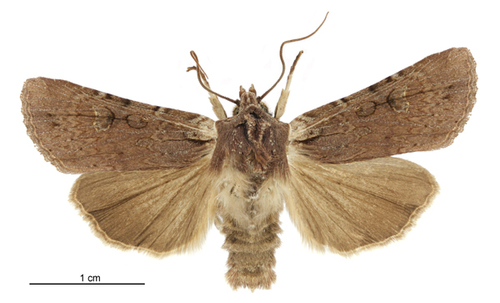
Adult Ichneutica omoplaca moths have a wingspan of about 31 to 41 mm for males and 33 to 43 mm for females, and they show a pale ochreous-white band between the basal streak and the costa that stands out against a darker forewing colour. Adults fly from October through March and are found in beech-forest clearings and tussock grasslands.
Source: Wikipedia
How to recognize it
The key field mark is a pale ochreous-to-white area between the basal streak and the costa that contrasts with the darker ground colour of the forewing.
Source: Wikipedia
Size
Males have a wingspan of 31 to 41 mm, while females range from 33 to 43 mm.
Source: Wikipedia
What it eats
Larvae have been recorded feeding on Poa cita, Dactylis glomerata and have been reared on Plantago lanceolata.
Source: Wikipedia
Life cycle
The larva is not described, but pupae have been found in soil under weeds in a pine plantation.
Source: Wikipedia
Where it comes from
The species is endemic to New Zealand.
Source: Wikipedia
Lookalikes
When the colour contrast is low, it can be confused with I. lindsayorum. I. lindsayorum usually has a much lighter thorax and a broader forewing with a more arched costa.
Source: Wikipedia
More photos
Questions people ask
How can I identify Ichneutica omoplaca?
Look for a pale ochreous-white band between the basal streak and the costa on a darker forewing, and note the wingspan of about 31 to 41 mm in males or 33 to 43 mm in females.
Source: Wikipedia
What habitats do they live in?
They are found in beech forest clearings and tussock grasslands.
Source: Wikipedia
Where is Ichneutica omoplaca found?
It is endemic to New Zealand, ranging from the Bay of Plenty to Southland and also occurring on the Auckland Islands.
Source: Wikipedia
Same family (Noctuidae)
 Ipsilon Dart MothAgrotis ipsilonDamages trees, gardens or crops
 Fall Armyworm MothSpodoptera frugiperdaDamages trees, gardens or crops
 Army Cutworm MothEuxoa auxiliarisDamages trees, gardens or crops
 Large Yellow UnderwingNoctua pronubaDamages trees, gardens or crops
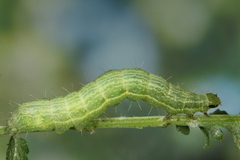 Silver ΥAutographa gamma
 American DaggerAcronicta americanaCan irritate skin
Sources
- Wikipedia: https://en.wikipedia.org/wiki/Ichneutica_omoplaca
Look it up elsewhere: GBIF · iNaturalist · BugGuide · Wikipedia
Text written 2026-10-23 from the sources above and checked sentence by sentence against them. Data fetched 2026-10-23.