 Bug FAQ
Ichneutica lignana
Ichneutica lignana · Order: Lepidoptera · Family: Noctuidae
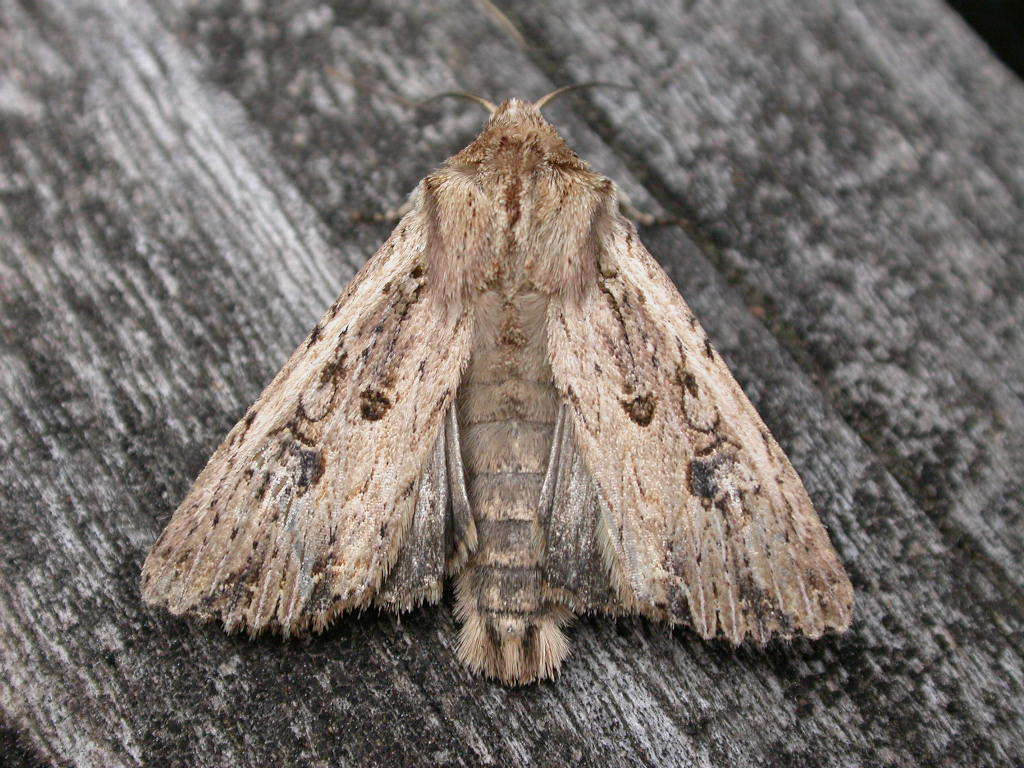
Adult males have a wingspan of 32 to 40 mm and females 33 to 39 mm. It lives in many New Zealand habitats from sea level up to over 1300 m, including coasts, tussock grasslands, shrublands and native forest.
Source: Wikipedia
How to recognize it
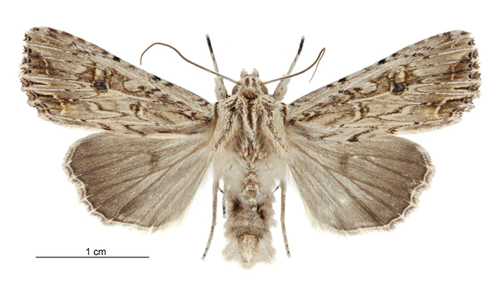
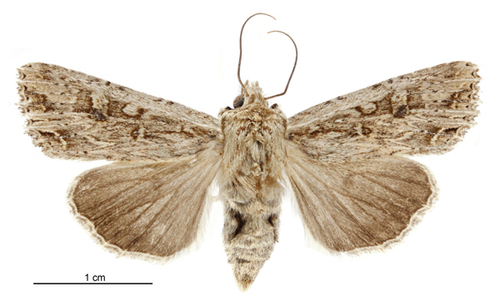
The moth shows dark markings on its abdomen and forewings. A distinctive claviform mark on the forewing separates it from similar species.
Source: Wikipedia
Size
Males have a wingspan between 32 and 40 mm; females between 33 and 39 mm.
Source: Wikipedia
What it eats
Larvae feed on native grasses such as Poa anceps, Poa cita and Festuca novae-zelandiae.
Source: Wikipedia
Life cycle
A larva collected in December on Poa anceps was reared to adulthood, emerging as a moth in March.
Source: Wikipedia
When you see it
Adults fly year-round in northern New Zealand, but only from October to April in the south.
Source: Wikipedia
Where it comes from
It is endemic to New Zealand. It is found on the Three Kings Islands and the North, South and Stewart Islands.
Source: Wikipedia
More photos
Questions people ask
What grasses do the larvae eat?
The larvae feed on native grasses like Poa anceps, Poa cita and Festuca novae-zelandiae.
Source: Wikipedia
When are the adults active?
In northern New Zealand they are on the wing all year, while in the south they appear from October to April.
Source: Wikipedia
How can I tell this moth apart from similar species?
Look for the distinctive claviform mark on the forewing, which the look-alike species lack.
Source: Wikipedia
Same family (Noctuidae)
 Ipsilon Dart MothAgrotis ipsilonDamages trees, gardens or crops
 Fall Armyworm MothSpodoptera frugiperdaDamages trees, gardens or crops
 Army Cutworm MothEuxoa auxiliarisDamages trees, gardens or crops
 Large Yellow UnderwingNoctua pronubaDamages trees, gardens or crops
 Silver ΥAutographa gamma
 American DaggerAcronicta americanaCan irritate skin
Sources
- Wikipedia: https://en.wikipedia.org/wiki/Ichneutica_lignana
Look it up elsewhere: GBIF · iNaturalist · BugGuide · Wikipedia
Text written 2026-10-23 from the sources above and checked sentence by sentence against them. Data fetched 2026-10-23.