 Bug FAQ
Ichneutica averilla
Ichneutica averilla · Order: Lepidoptera · Family: Noctuidae
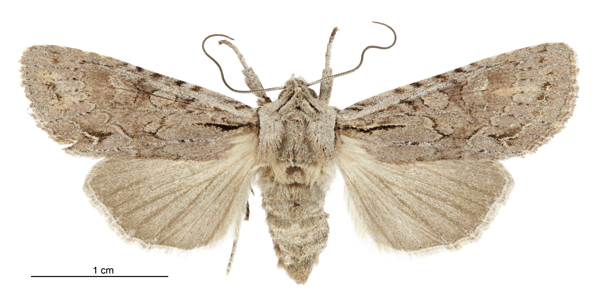
Ichneutica averilla is a medium-sized moth with males spanning 33 to 41 mm and females 36 to 41 mm across the wings. Adults fly from November through March and the larvae have been found feeding on Plantago species. The species is endemic to New Zealand and lives mainly in mountainous areas, though it can also occur at sea level in the southern South Island.
Source: Wikipedia
How to recognize it
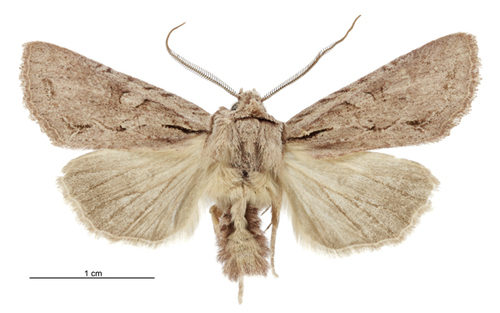
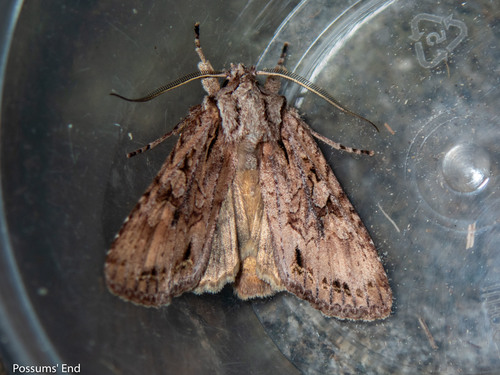
The forewings are pink-brown with a grey tint, a dark longitudinal streak from the wing base, and a distinctive V-shaped dark mark near the rear corner.
Source: Wikipedia
Size
It is a medium-sized moth; males have a wingspan of 33 to 41 mm and females 36 to 41 mm.
Source: Wikipedia
Where it lives
It prefers mountainous terrain but can be found down to sea level in places like the Catlins of the southern South Island.
Source: Wikipedia
What it eats
Larvae have been recorded feeding on plants of the genus Plantago and are thought to use a variety of herbaceous hosts.
Source: Wikipedia
Life cycle
After hatching, the larvae consume their egg shell.
Source: Wikipedia
When you see it
Adult moths are on the wing from November to March.
Source: Wikipedia
Where it comes from
Ichneutica averilla is endemic to New Zealand.
Source: Wikipedia
Lookalikes
It can be mistaken for I. mutans, but differs by having a uniform red-ochre forewing colour and lacking a clear antemedian line.
Source: Wikipedia
More photos
Questions people ask
When are adult Ichneutica averilla moths active?
Adults fly from November through March.
Source: Wikipedia
What do the larvae of Ichneutica averilla eat?
They have been found feeding on Plantago species and probably use other herbaceous plants as well.
Source: Wikipedia
Where does Ichneutica averilla live?
The moth is endemic to New Zealand, mainly in mountainous regions but also at sea level in the southern South Island.
Source: Wikipedia
How can I tell Ichneutica averilla apart from similar species?
It has a uniform red-ochre forewing colour and lacks a distinct antemedian line, unlike the similar I. mutans.
Source: Wikipedia
Same family (Noctuidae)
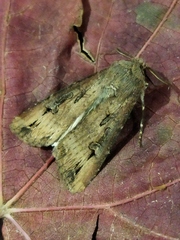 Ipsilon Dart MothAgrotis ipsilonDamages trees, gardens or crops
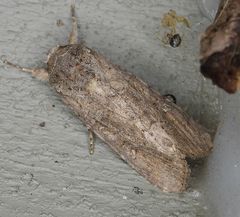 Fall Armyworm MothSpodoptera frugiperdaDamages trees, gardens or crops
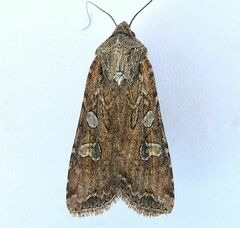 Army Cutworm MothEuxoa auxiliarisDamages trees, gardens or crops
 Large Yellow UnderwingNoctua pronubaDamages trees, gardens or crops
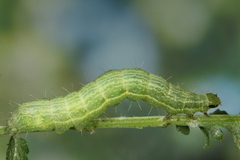 Silver ΥAutographa gamma
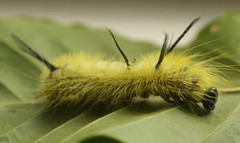 American DaggerAcronicta americanaCan irritate skin
Sources
- Wikipedia: https://en.wikipedia.org/wiki/Ichneutica_averilla
Look it up elsewhere: GBIF · iNaturalist · BugGuide · Wikipedia
Text written 2026-10-23 from the sources above and checked sentence by sentence against them. Data fetched 2026-10-23.