 Bug FAQ
Ichneutica atristriga
Ichneutica atristriga · Order: Lepidoptera · Family: Noctuidae
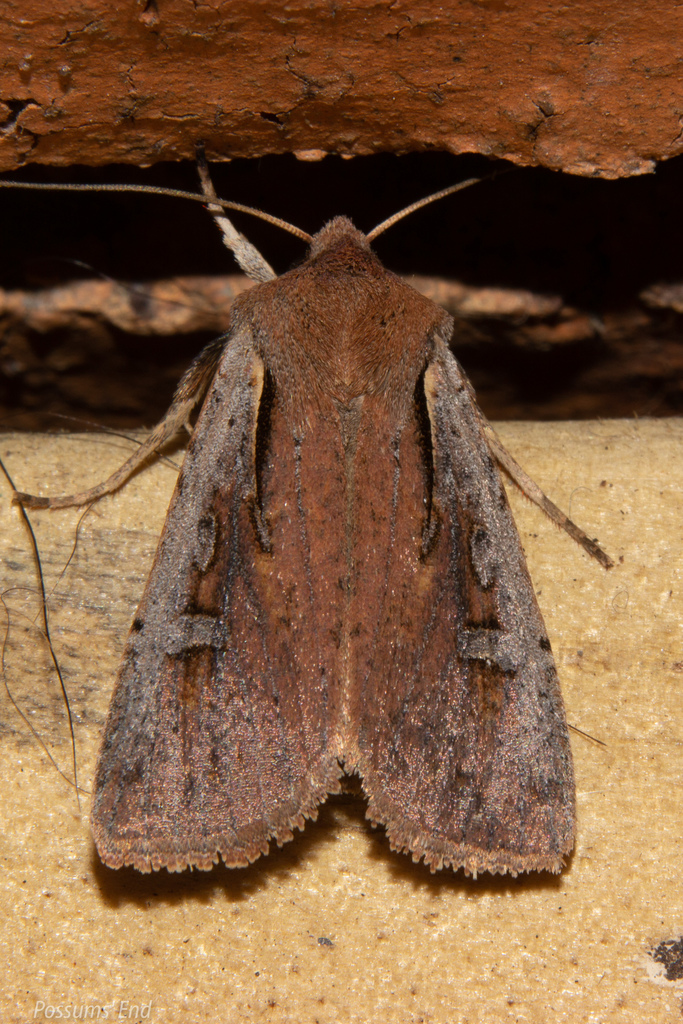
Ichneutica atristriga is a moth native to all main islands of New Zealand. Adults have a wingspan of about 35 to 42 mm and fly from November through May.
Source: Wikipedia
How to recognize it
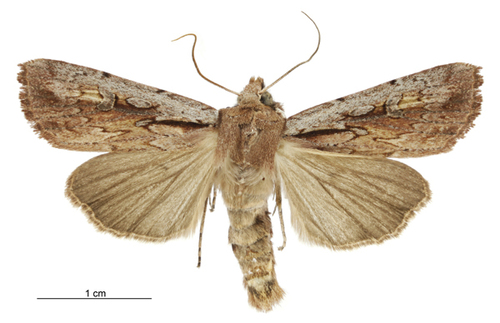
Males are ferruginous-red with forewings showing a hoary costal stripe and faint ferruginous borders on the orbicular and reniform marks. Hindwings are aeneous with a paler fringe edged in whitish.
Source: Wikipedia
Size
Male wingspan ranges 35 to 42 mm; female 35 to 41 mm.
Source: Wikipedia
Where it lives
It is endemic to New Zealand and occurs throughout the North, South and Stewart Islands.
Source: Wikipedia
What it eats
They have also been reared on Bromus and Festuca species.
Source: Wikipedia
Life cycle
Detailed life-history information is lacking.
Source: Wikipedia
Where it comes from
The species is found only in New Zealand, on all three main islands.
Source: Wikipedia
Lookalikes
It may be confused with the smaller I. propria, but I. atristriga lacks the dark discal streak and has a pinkish tinge on the thorax and forewings.
Source: Wikipedia
More photos

Same family (Noctuidae)
 Ipsilon Dart MothAgrotis ipsilonDamages trees, gardens or crops
 Fall Armyworm MothSpodoptera frugiperdaDamages trees, gardens or crops
 Army Cutworm MothEuxoa auxiliarisDamages trees, gardens or crops
 Large Yellow UnderwingNoctua pronubaDamages trees, gardens or crops
 Silver ΥAutographa gamma
 American DaggerAcronicta americanaCan irritate skin
Sources
- Wikipedia: https://en.wikipedia.org/wiki/Ichneutica_atristriga
Look it up elsewhere: GBIF · iNaturalist · BugGuide · Wikipedia
Text written 2026-10-23 from the sources above and checked sentence by sentence against them. Data fetched 2026-10-22.