 Bug FAQ
Hydriomena speciosata
Hydriomena speciosata · Order: Lepidoptera · Family: Geometridae
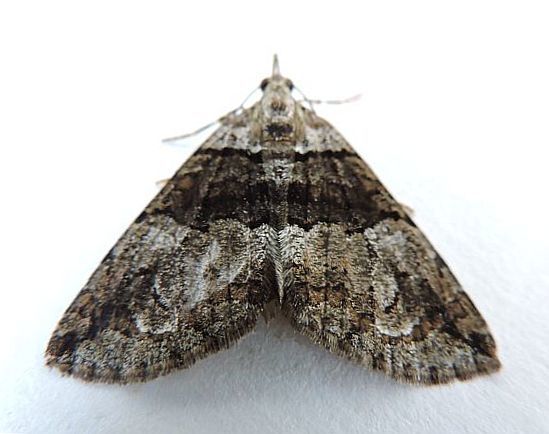
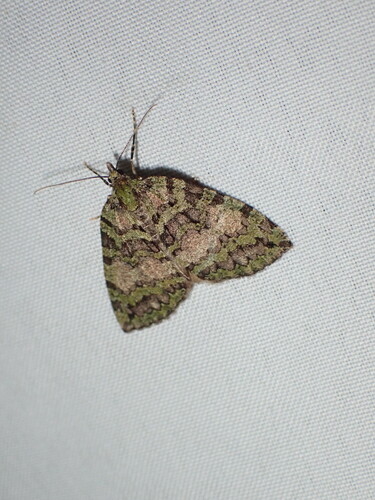
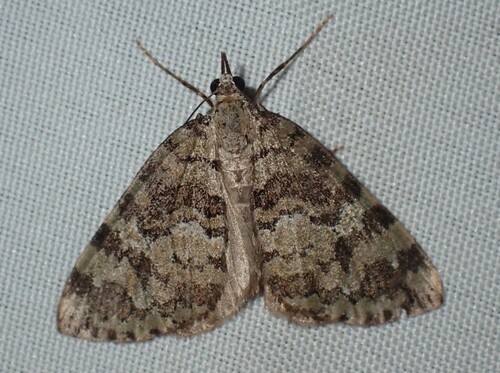
Hydriomena speciosata is a moth with a wingspan of about 36 mm and forewings marked by alternating green and black bands. It lives in wet conifer forests along the Pacific coast from British Columbia to California, where its larvae eat the foliage of many pine family trees. Adults fly in midsummer, and the caterpillars grow to about 20 mm before pupating in May or June.
Source: Wikipedia
How to recognize it
The forewings show alternating bands of green and black.
Source: Wikipedia
Size
The wingspan is roughly 36 mm.
Source: Wikipedia
Where it lives
It inhabits wet conifer forests.
Source: Wikipedia
What it eats
Larvae feed on the foliage of various Pinaceae species, including fir, spruce, pine, Douglas-fir, and hemlock.
Source: Wikipedia
Life cycle
Mature larvae reach about 20 mm in length and pupate in May or June.
Source: Wikipedia
When you see it
Adults are on the wing in midsummer.
Source: Wikipedia
Where it is found in the US
Recorded in 8 of 51 states and DC. Most records: Washington, Oregon, California, Wyoming, Alaska, Colorado, Arizona, Utah.
Darker = more records. Counts are museum and citizen-science records, not population size.
Source: GBIF
Months it is reported in the US
Source: GBIF
More photos
Questions people ask
What do the caterpillars eat?
The caterpillars feed on the leaves of fir, spruce, pine, Douglas-fir, and hemlock trees.
Source: Wikipedia
Same family (Geometridae)




Sources
- Wikipedia: https://en.wikipedia.org/wiki/Hydriomena_speciosata
Look it up elsewhere: GBIF · iNaturalist · BugGuide · ITIS · Wikipedia
Text written 2026-10-26 from the sources above and checked sentence by sentence against them. Data fetched 2026-10-26.