 Bug FAQ
Hydei Fruit Fly
Drosophila hydei · Order: Diptera · Family: Drosophilidae
Also called: Pomace fly
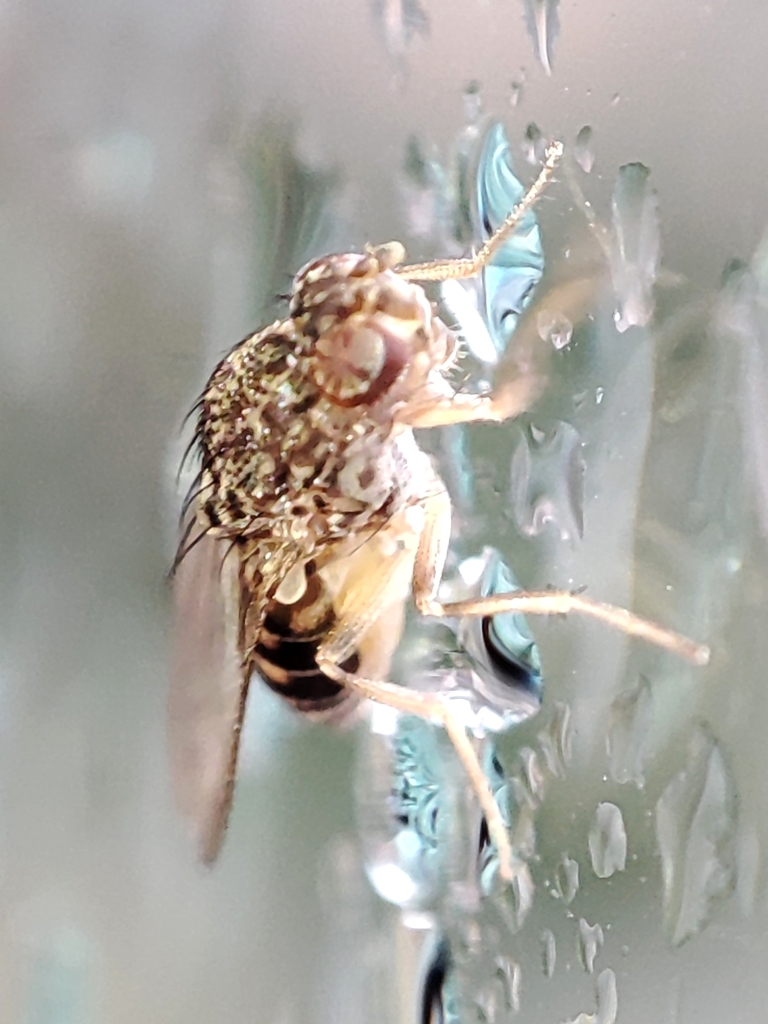
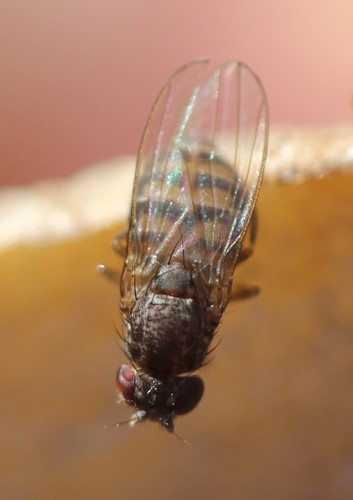
Hydei fruit flies are larger than most fruit flies and have a distinctive variegated thorax pattern. Males produce sperm up to about 23 mm long, roughly ten times their body length. They are found worldwide on compost piles and are commonly used as feeder flies in the pet trade.
Source: Wikipedia
How to recognize it
They can be recognized by a large body and a variegated pigment pattern on the thorax.
Source: Wikipedia
Size
They are larger than many other fruit flies. Males produce sperm up to about 23 mm long, roughly ten times their body length.
Source: Wikipedia
Where it lives
They are commonly found on compost piles worldwide.
Source: Wikipedia
What it eats
They are frequently used as feeder flies in the pet trade.
Source: Wikipedia
Life cycle
Their life cycle is very similar to that of Drosophila melanogaster, despite diverging about 50 million years ago.
Source: Wikipedia
Where it comes from
They occur worldwide on compost piles.
Source: Wikipedia
Lookalikes
They are often mistaken for Drosophila melanogaster because of their close similarity.
Source: Wikipedia
Where it is found in the US
Recorded in 25 of 51 states and DC. Most records: Washington, California, Michigan, North Carolina, Florida, Kentucky, Massachusetts, Maryland.
Darker = more records. Counts are museum and citizen-science records, not population size.
Source: GBIF
Status: native in North America; native in Canada. Source: iNaturalist
Months it is reported in the US
Source: GBIF
More photos
Questions people ask
How can I tell Drosophila hydei apart from other fruit flies?
Look for a larger size and a variegated pigment pattern on the thorax; these traits distinguish D. hydei from similar species.
Source: Wikipedia
Same family (Drosophilidae)


Sources
- Wikipedia: https://en.wikipedia.org/wiki/Drosophila_hydei
Look it up elsewhere: GBIF · iNaturalist · BugGuide · ITIS · Wikipedia
Text written 2026-10-27 from the sources above and checked sentence by sentence against them. Data fetched 2026-10-27.