 Bug FAQ
Hook-barred Spearhorn
Chrysotoxum festivum · Order: Diptera · Family: Syrphidae
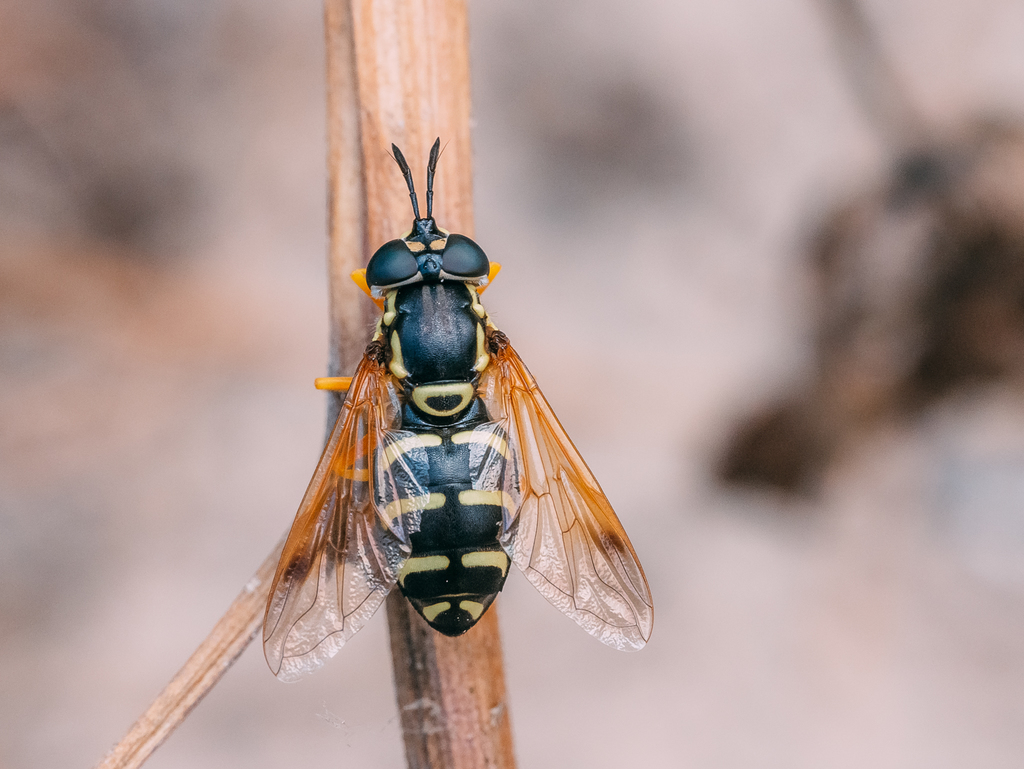
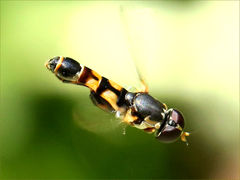
The Hook-barred Spearhorn is a hoverfly with a wing length of about 8 to 12 mm and a small square dark spot on each wing. It has two grey longitudinal stripes on the thorax, a yellow spot on the katepisternum, and the last antennal segment is shorter than the first two combined. It lives in clearings of deciduous woodlands, scrub-woodland edges and grassy areas with scrub, and flies from May through September, peaking in June and August.
Source: Wikipedia
How to recognize it
The wings show a small square dark spot. The thorax bears two grey longitudinal stripes. The katepisternum usually has a yellow spot. The final antennal segment is shorter than the combined length of the first two antennomeres.
Source: Wikipedia
Size
Wing length ranges from 8.25 mm to 12 mm.
Source: Wikipedia
Where it lives
Found in clearings of deciduous woodland and open scrub-woodland areas. Also occurs in grassland with scrub.
Source: Wikipedia
When you see it
Adults fly from May to September, with activity peaks in June and August.
Source: Wikipedia
Where it comes from
Its range extends across the Palaearctic from Fennoscandia south to Iberia and the Mediterranean. It is present from Ireland east through Europe into Greece, Turkey, European Russia and across Siberia to the Pacific coast.
Source: Wikipedia
More photos


Questions people ask
When can I see Hook-barred Spearhorns?
They are on the wing from May through September, most common in June and August.
Source: Wikipedia
What habitats do they prefer?
They favor clearings in deciduous woodlands, scrub-woodland edges, and grassy areas with scrub.
Source: Wikipedia
How can I recognise them?
Look for a small square dark spot on each wing, two grey stripes on the thorax, a yellow spot on the katepisternum, and a short final antennal segment.
Source: Wikipedia
Same family (Syrphidae)


Sources
- Wikipedia: https://en.wikipedia.org/wiki/Chrysotoxum_festivum
Look it up elsewhere: GBIF · iNaturalist · BugGuide · Wikipedia
Text written 2026-10-23 from the sources above and checked sentence by sentence against them. Data fetched 2026-10-22.