 Bug FAQ
Hollow-spotted Plagodis Moth
Plagodis alcoolaria · Order: Lepidoptera · Family: Geometridae
Also called: Hollow-spotted Plagodis

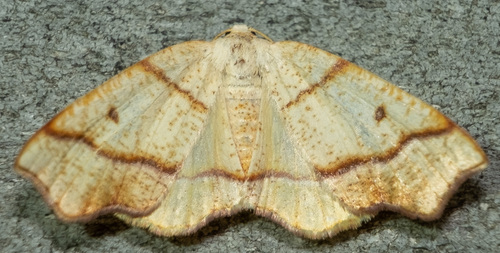
The Hollow-spotted Plagodis moth has a wingspan of about 26 to 35 mm and yellow-white wings with orange-brown shading and lines that range from orange to dark brown or black. It is found across eastern and central North America, from Nova Scotia down to Georgia and west to Manitoba, South Dakota, Missouri and Mississippi. Its larvae feed on deciduous trees such as birch, basswood, beech, maple and oak.
Source: Wikipedia
How to recognize it
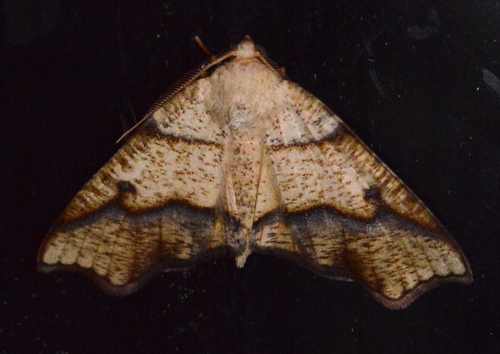
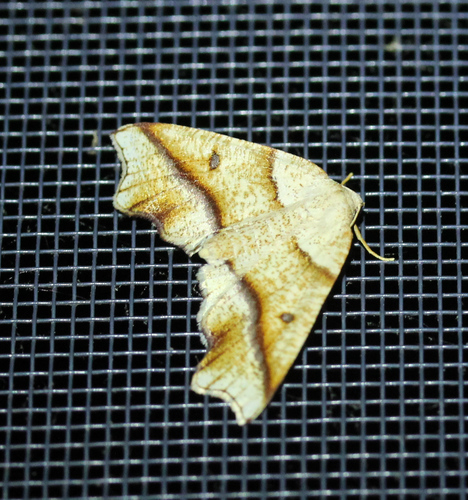
The moth’s wing edge curves outward and meets the leading edge nearer the tip than other Plagodis species, and it has a large discal spot. The wings are yellowish-white with orange-brown shading and lines that vary from orange to dark brown or black.
Source: Wikipedia
Size
Adults have a wingspan ranging from 26 to 35 mm.
Source: Wikipedia
Where it lives
Records extend from Nova Scotia to Georgia, and west to Manitoba, South Dakota, Missouri and Mississippi.
Source: Wikipedia
What it eats
They show a preference for birch (Betula) species.
Source: Wikipedia
Life cycle
Adults are active from late March through September.
Source: Wikipedia
When you see it
The flight period spans the end of March to September.
Source: Wikipedia
Where it comes from
The species is native to eastern and central North America.
Source: Wikipedia
Lookalikes
The outward-curving perimeter line that meets the costa nearer the apex helps distinguish it from other Plagodis moths.
Source: Wikipedia
Where it is found in the US
Recorded in 35 of 51 states and DC. Most records: Connecticut, Massachusetts, Maryland, Michigan, North Carolina, Ohio, Virginia, Pennsylvania.
Darker = more records. Counts are museum and citizen-science records, not population size.
Source: GBIF
Status: native in North America; native in Canada. Source: iNaturalist
Months it is reported in the US
Source: GBIF
More photos
Questions people ask
What trees do the caterpillars eat?
They feed on birch, basswood, beech, maple and oak leaves.
Source: Wikipedia
When can I see adult moths?
Adults are on the wing from the end of March through September.
Source: Wikipedia
Where are they found in North America?
They occur from Nova Scotia to Georgia and west to Manitoba, South Dakota, Missouri and Mississippi.
Source: Wikipedia
Same family (Geometridae)
 Willow BeautyPeribatodes rhomboidaria
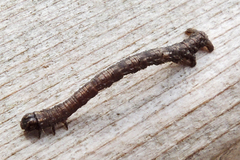 Pale BeautyCampaea perlataDamages trees, gardens or crops
 Large Lace-border MothScopula limboundataDamages trees, gardens or crops
 Riband WaveIdaea aversata
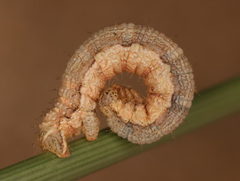 Yellow Shell MothCamptogramma bilineata
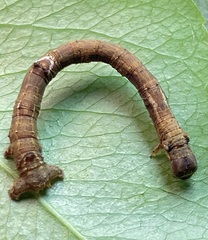 Large Maple Spanworm MothProchoerodes lineolaDamages trees, gardens or crops
Sources
- Wikipedia: https://en.wikipedia.org/wiki/Plagodis_alcoolaria
Look it up elsewhere: GBIF · iNaturalist · BugGuide · ITIS · Wikipedia
Text written 2026-10-23 from the sources above and checked sentence by sentence against them. Data fetched 2026-10-23.