 Bug FAQ
Hibiscus Harlequin Bug
Tectocoris diophthalmus · Order: Hemiptera · Family: Scutelleridae
Also called: Cotton Harlequin Bug
Source: Wikipedia

The hibiscus harlequin bug is a brightly coloured, shield-shaped true bug about 2 cm long. It lives in eastern Australia, New Guinea and many Pacific islands, in gardens, farms and even urban areas. Females lay egg clusters on hibiscus stems and guard them until they hatch.
Source: Wikipedia
How to recognize it
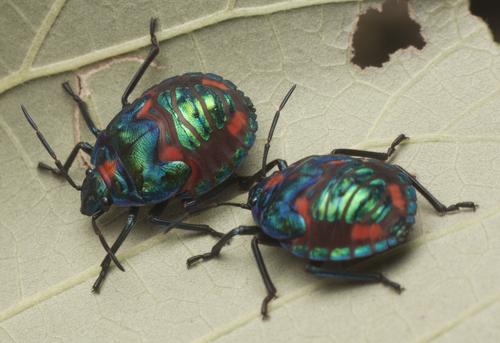
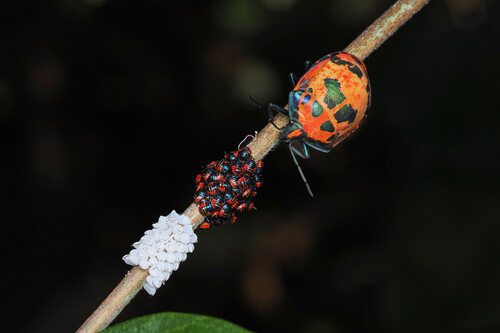
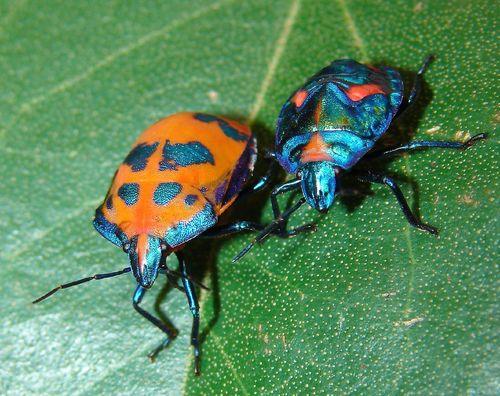
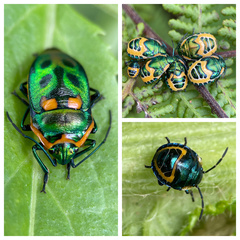
Adult females are mostly orange; males show blue-red or orange patterns; nymphs are metallic green-purple. Colour variation is extreme and may help reduce bird predation, especially for young bugs.
Source: Wikipedia
Size
Adults grow to about 20 mm and have a convex, rounded shield shape with a metallic sheen.
Source: Wikipedia
What it eats
They feed on many Malvaceae species and cultivated cotton, piercing young shoots and sucking the sap.
Source: Wikipedia
Life cycle
Females lay clusters of eggs around hibiscus stems and guard them until the nymphs hatch.
Source: Wikipedia
Where it comes from
Their native range includes eastern Australia, New Guinea and many Pacific islands.
Source: Wikipedia
Lookalikes
Because of its colour variability, the species has been described under at least 16 different names since 1781.
Source: Wikipedia
More photos

Questions people ask
Is this bug a problem for my garden?
Yes, it can damage hibiscus and other Malvaceae plants, as well as cotton, by sucking sap from young shoots.
Source: Wikipedia
How can I identify a harlequin bug?
Look for a 20 mm shield-shaped bug with bright orange females, blue-red or orange males, and metallic green-purple nymphs.
Source: Wikipedia
Same family (Scutelleridae)



Sources
- Wikipedia: https://en.wikipedia.org/wiki/Tectocoris
Look it up elsewhere: GBIF · iNaturalist · BugGuide · Wikipedia
Text written 2026-10-22 from the sources above and checked sentence by sentence against them. Data fetched 2026-10-22.