 Bug FAQ
Herpetogramma sphingealis
Herpetogramma sphingealis · Order: Lepidoptera · Family: Crambidae
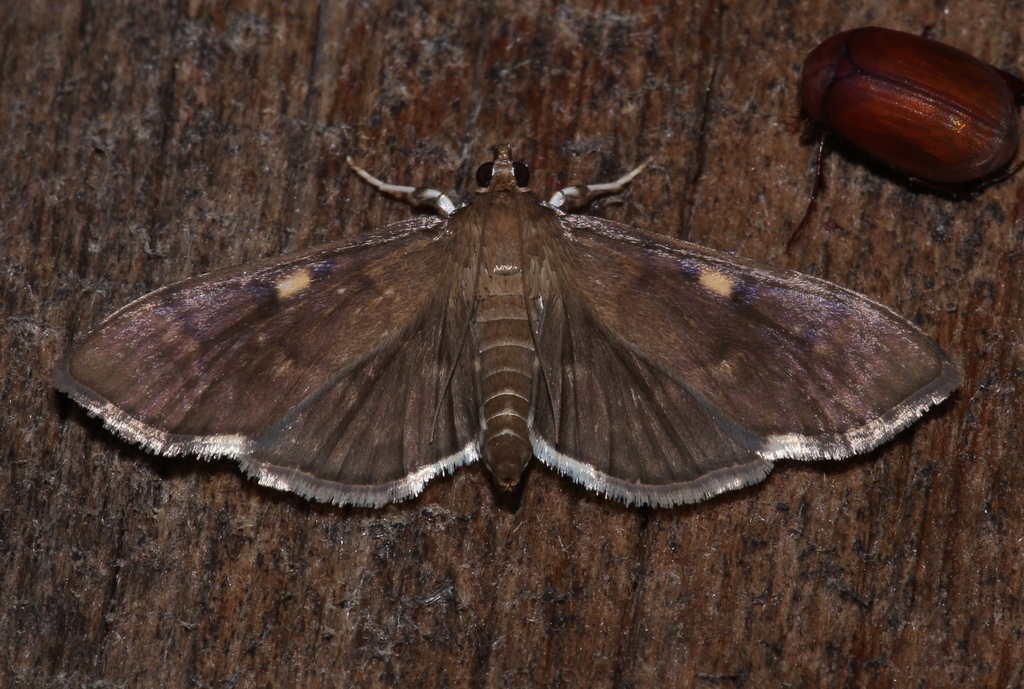
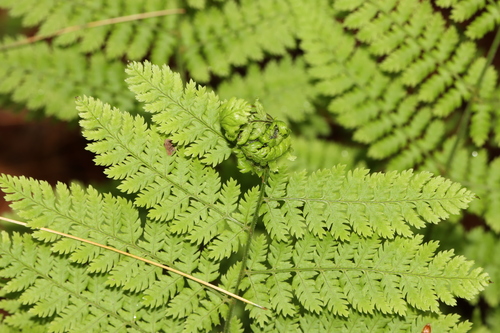
Herpetogramma sphingealis is a small moth with males having a wingspan of about 34 to 37 mm and females 31 to 34 mm. It lives in dark, dry forests of the eastern United States and southern Quebec, especially in rocky maple-oak groves where Christmas ferns grow. The caterpillars feed mainly on Christmas ferns (Polystichum acrostichoides) and sometimes on other wood ferns.
Source: Wikipedia
How to recognize it
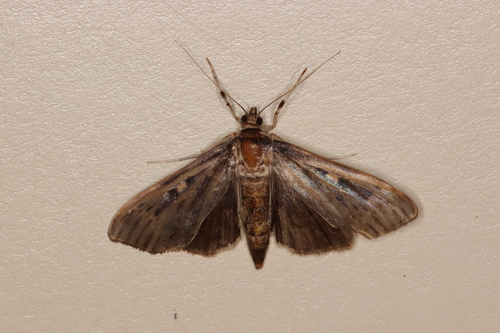
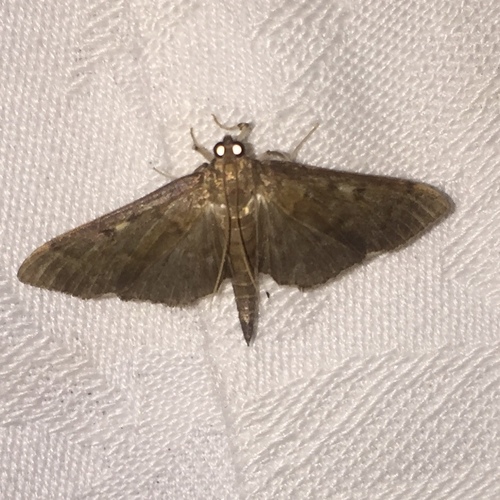
The underside of the head, thorax, abdomen and legs is pure white, making it easy to see when it flies toward a light trap. Males are almost uniformly dark brown with a dark spot on the hind-wing, while females have slightly squarer wings and are less uniformly colored.
Source: Wikipedia
Size
Male wingspan ranges from 34 to 37 mm, and female wingspan from 31 to 34 mm.
Source: Wikipedia
Where it lives
It prefers the darkest parts of rich, dry forests with maples and oaks, especially on rocky, hilly sites where Christmas ferns are common. Its dark brown coloration provides camouflage in these shadowy forest environments.
Source: Wikipedia
What it eats
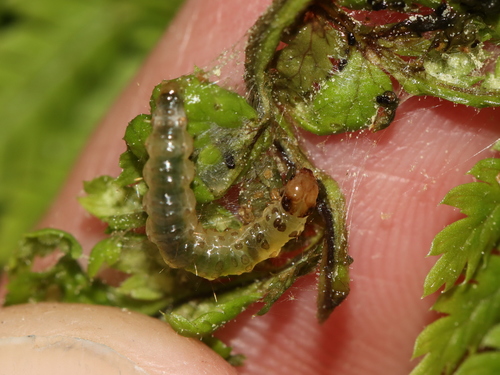
Caterpillars mainly eat the fronds of Christmas ferns (Polystichum acrostichoides) and occasionally feed on wood ferns.
Source: Wikipedia
Life cycle
Herpetogramma sphingealis was formally described as a new species in 2011.
Source: Wikipedia
When you see it
Adults are attracted to light traps and are often among the first moths to appear at the start of night.
Source: Wikipedia
Where it comes from
The species is found from southern Quebec down through the eastern United States to Georgia and Louisiana, extending west to Arkansas.
Source: Wikipedia
Where it is found in the US
Recorded in 26 of 51 states and DC. Most records: Vermont, Pennsylvania, Connecticut, New York, Ohio, Massachusetts, Alabama, North Carolina.
Darker = more records. Counts are museum and citizen-science records, not population size.
Source: GBIF
Status: native in North America; native in Canada. Source: iNaturalist
Months it is reported in the US
Source: GBIF
More photos
Questions people ask
When are these moths most likely to be seen at light traps?
They often show up early in the night and are frequently among the first species attracted to a light trap.
Source: Wikipedia
What do the caterpillars eat?
The larvae feed mainly on Christmas ferns and sometimes on other wood ferns.
Source: Wikipedia
Same family (Crambidae)
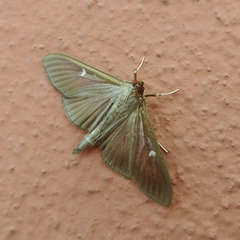 Box Tree MothCydalima perspectalisDamages trees, gardens or crops
 Celery Leaftier MothUdea rubigalis
 Elegant Grass-veneerMicrocrambus elegans
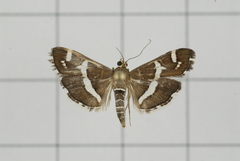 Hawaiian Beet Webworm MothSpoladea recurvalisDamages trees, gardens or crops
 Garden Grass-veneerChrysoteuchia culmellaDamages trees, gardens or crops
 Bluegrass Webworm MothParapediasia teterrellusDamages trees, gardens or crops
Sources
- Wikipedia: https://en.wikipedia.org/wiki/Herpetogramma_sphingealis
Look it up elsewhere: GBIF · iNaturalist · BugGuide · Wikipedia
Text written 2026-10-25 from the sources above and checked sentence by sentence against them. Data fetched 2026-10-25.