 Bug FAQ
Helastia cinerearia
Helastia cinerearia · Order: Lepidoptera · Family: Geometridae

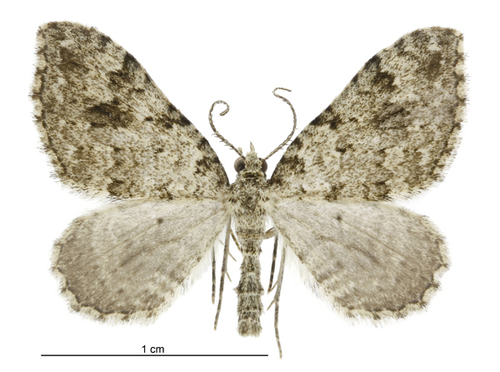
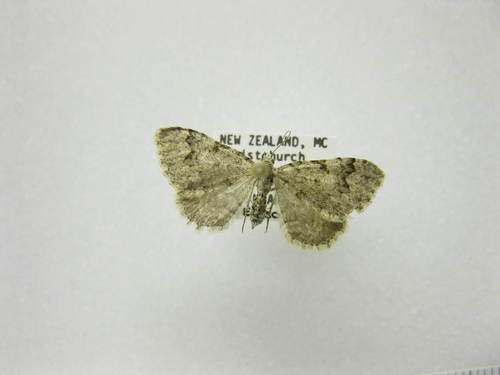
Helastia cinerearia is a moth with pale brown-ash forewings marked by many thin dark streaks and occasional faint transverse bands; a wavy whitish streak near the outer edge and a tiny white dot on the costa are also present. It lives in urban gardens, various forests and sub-alpine areas across New Zealand’s main islands and some offshore islands. The larvae feed on lichens growing on rocks, while adults visit flowers such as Hebe salicifolia, Hoheria lyallii and Leptospermum scoparium for nectar.
Source: Wikipedia
How to recognize it
The forewings have many slender dark streaks, sometimes joining into faint bands, a wavy whitish streak near the outer margin, and a tiny white dot on the middle of the costa; the hindwings are ashy-white with faint dark streaks.
Source: Wikipedia
Size
The moth’s forewings are pointed, slightly sickle-shaped, and colored pale brownish-ash with numerous thin dark streaks.
Source: Wikipedia
Where it lives
It prefers urban gardens, a range of forest types and sub-alpine habitats.
Source: Wikipedia
What it eats
Larvae feed on lichens that grow on rocks. Adults have been seen feeding on the flowers of Hebe salicifolia, Hoheria lyallii and Leptospermum scoparium, likely helping pollinate them.
Source: Wikipedia
Life cycle
Adults are on the wing throughout the year but are most common from September to February.
Source: Wikipedia
When you see it
The moth can be seen flying all year, with peak activity between September and February. They are active at dusk and in the evening and can be collected using light traps, sugar, or by visiting flowers.
Source: Wikipedia
More photos
Questions people ask
Where can I find Helastia cinerearia?
It lives in urban gardens, forests and sub-alpine areas across New Zealand’s main islands and some offshore islands.
Source: Wikipedia
When are these moths active?
Adults are on the wing all year but are most common from September to February and are active at dusk and night.
Source: Wikipedia
What flowers do the adults visit?
Adults feed on the flowers of Hebe salicifolia, Hoheria lyallii and Leptospermum scoparium.
Source: Wikipedia
Same family (Geometridae)
 Willow BeautyPeribatodes rhomboidaria
 Pale BeautyCampaea perlataDamages trees, gardens or crops
 Large Lace-border MothScopula limboundataDamages trees, gardens or crops
 Riband WaveIdaea aversata
 Yellow Shell MothCamptogramma bilineata
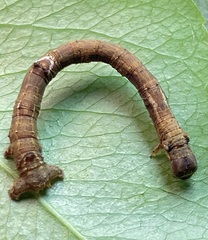 Large Maple Spanworm MothProchoerodes lineolaDamages trees, gardens or crops
Sources
- Wikipedia: https://en.wikipedia.org/wiki/Helastia_cinerearia
Look it up elsewhere: GBIF · iNaturalist · BugGuide · Wikipedia
Text written 2026-10-23 from the sources above and checked sentence by sentence against them. Data fetched 2026-10-23.