 Bug FAQ
Hebrew Character
Orthosia gothica · Order: Lepidoptera · Family: Noctuidae
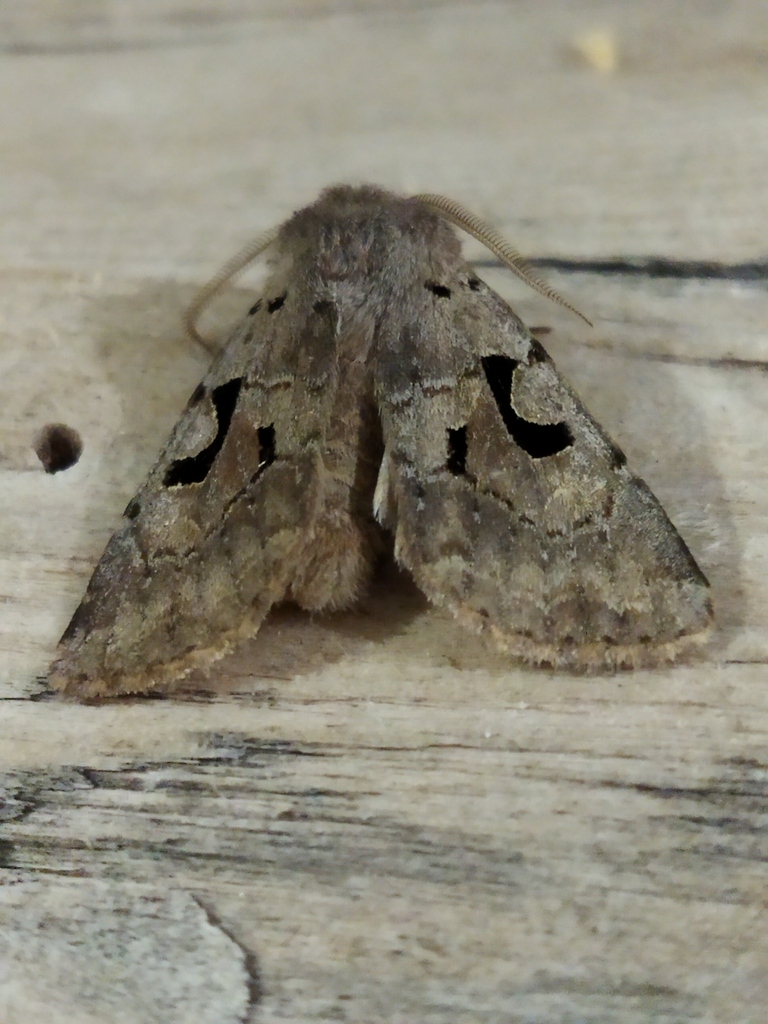
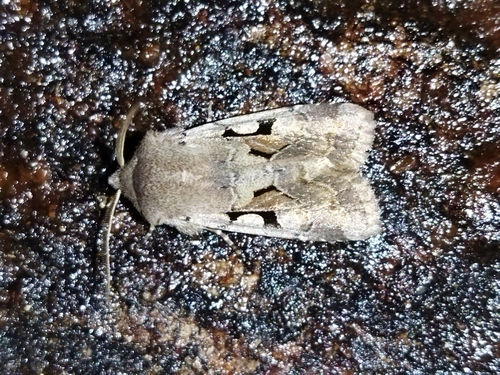
The Hebrew Character moth has a wingspan of about 30 to 40 mm and flies at night in early spring, usually March and April. Its most distinctive feature is a black marking on each wing that looks like the Hebrew letter nun (נ) or a gothic arch. The species is found throughout Europe, and its larvae feed on many different plants, overwintering as a pupa.
Source: Wikipedia
How to recognize it
Both the common and scientific names refer to the black marks on the wings that resemble the Hebrew letter nun (נ) and a gothic arch.
Source: Wikipedia
Size
The adult moth’s wingspan ranges from 30 to 40 mm.
Source: Wikipedia
Where it lives
It occurs across Europe.
Source: Wikipedia
What it eats
Caterpillars are green with yellow dots and lines, and they eat a wide variety of plants.
Source: Wikipedia
Life cycle
The species spends the winter as a pupa.
Source: Wikipedia
Where it comes from
Its native range is throughout Europe.
Source: Wikipedia
More photos
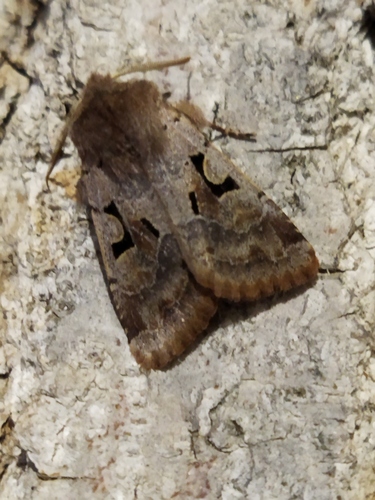
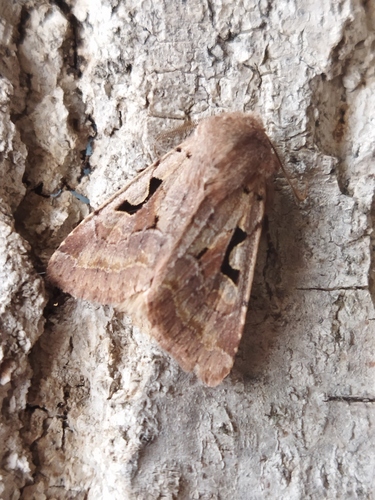
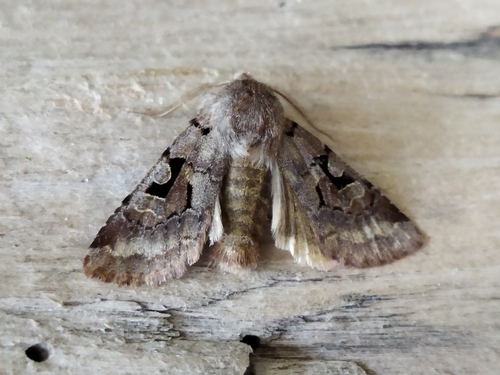
Questions people ask
How can I identify the Hebrew Character moth?
Look for a 30 to 40 mm moth with a distinctive black mark on each wing that looks like the Hebrew letter nun (נ) or a gothic arch.
Source: Wikipedia
When are these moths active?
They fly at night in early spring, mainly March and April, but can appear later.
Source: Wikipedia
Same family (Noctuidae)
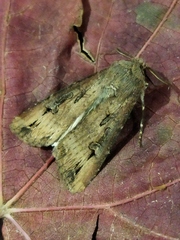 Ipsilon Dart MothAgrotis ipsilonDamages trees, gardens or crops
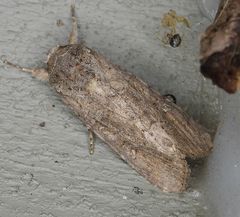 Fall Armyworm MothSpodoptera frugiperdaDamages trees, gardens or crops
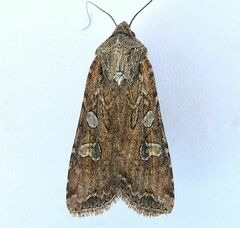 Army Cutworm MothEuxoa auxiliarisDamages trees, gardens or crops
 Large Yellow UnderwingNoctua pronubaDamages trees, gardens or crops
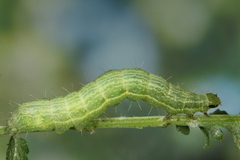 Silver ΥAutographa gamma
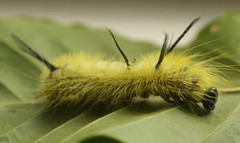 American DaggerAcronicta americanaCan irritate skin
Sources
- Wikipedia: https://en.wikipedia.org/wiki/Hebrew_character
Look it up elsewhere: GBIF · iNaturalist · BugGuide · Wikipedia
Text written 2026-10-22 from the sources above and checked sentence by sentence against them. Data fetched 2026-10-22.