 Bug FAQ
Heart and Dart
Agrotis exclamationis · Order: Lepidoptera · Family: Noctuidae
Also called: Heart & Dart
Source: Wikipedia
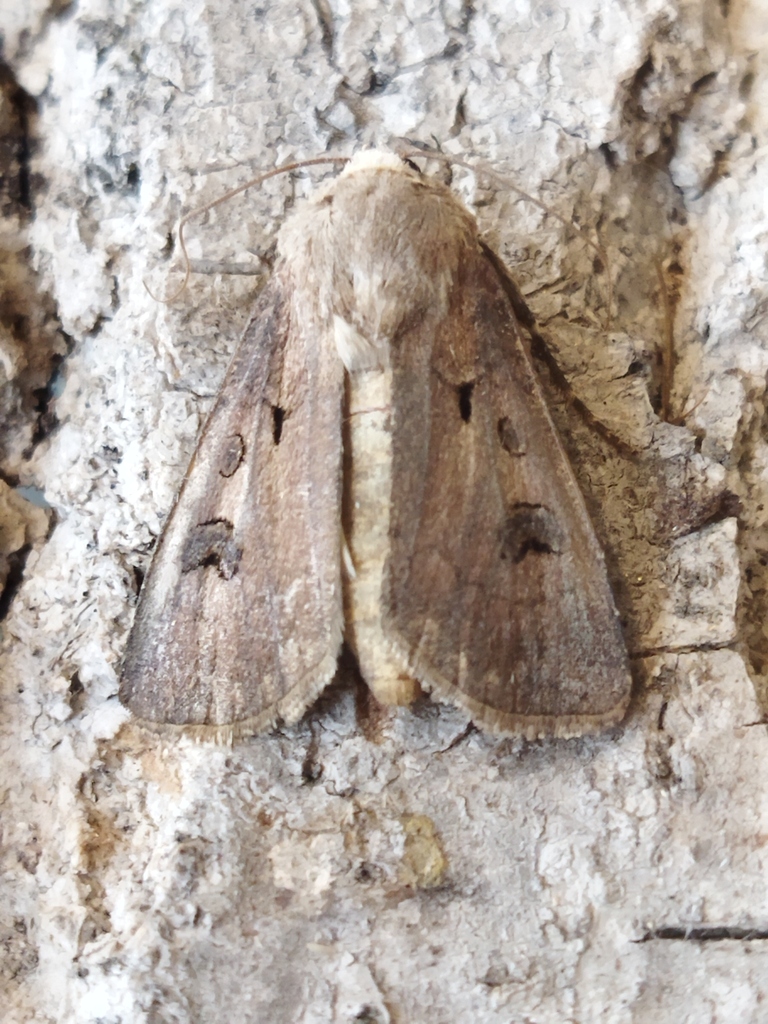
Adult Heart and Dart moths have a wingspan of about 35 to 44 mm and show a dark bar across the front of the thorax when seen head-on. They fly at night from May through July, are attracted to lights, and the larvae feed on many wild and cultivated plants.
Source: Wikipedia
How to recognize it
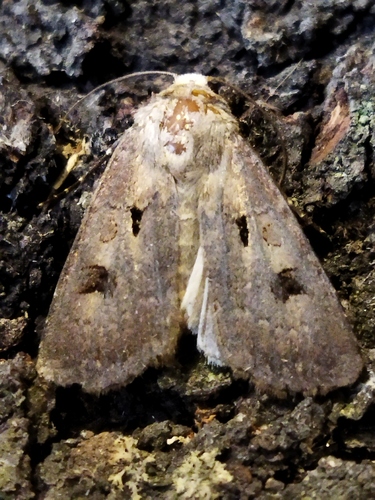
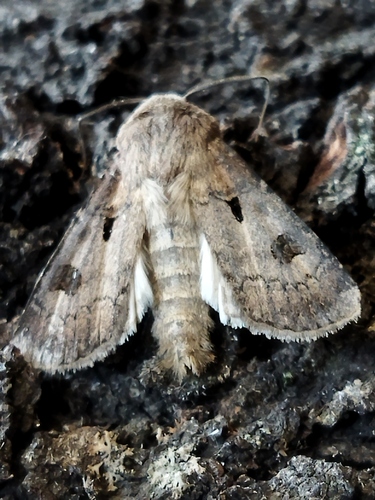
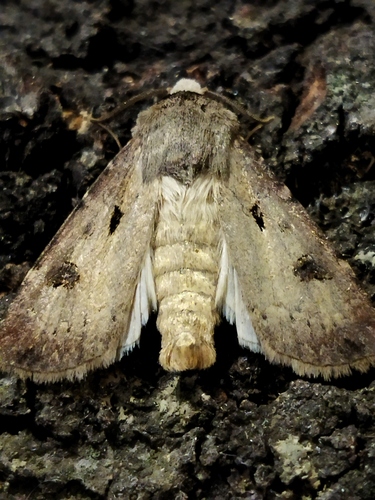
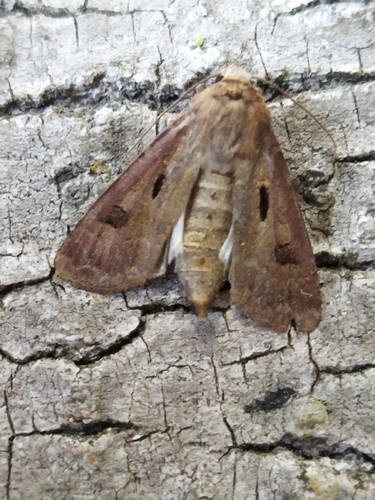
The forewings vary from light to dark brown but always bear distinct dark spots that give the species its common name. A dark horizontal stripe on the front of the thorax is visible when the moth is viewed from the front.
Source: Wikipedia
Size
The moth’s wingspan ranges between 35 and 44 mm.
Source: Wikipedia
What it eats
Caterpillars eat a broad selection of plants, including both wild species and cultivated crops.
Source: Wikipedia
Life cycle
The species spends the winter as a fully grown larva in a soil chamber before turning into a pupa in spring. The pupal stage is notable for its bright red colour.
Source: Wikipedia
When you see it
Adults are active at night from May to July and are strongly attracted to artificial lights, sometimes appearing in large numbers.
Source: Wikipedia
Where it comes from
It is found across the Palearctic region, from Ireland in the west to Japan in the east.
Source: Wikipedia
Where it is found in the US
Recorded in 1 of 51 states and DC. Most records: Colorado.
Darker = more records. Counts are museum and citizen-science records, not population size.
Source: GBIF
More photos
Questions people ask
What plants do the larvae feed on?
The caterpillars eat many different plants, both wild and those grown in gardens or fields.
Source: Wikipedia
When can I expect to see these moths?
Adults are on the wing at night from May through July and are attracted to lights.
Source: Wikipedia
How can I tell this moth apart from similar species?
Look for the characteristic dark spots on the forewings and a horizontal dark bar on the front of the thorax when viewed head-on.
Source: Wikipedia
Same family (Noctuidae)
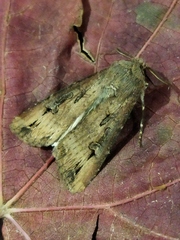 Ipsilon Dart MothAgrotis ipsilonDamages trees, gardens or crops
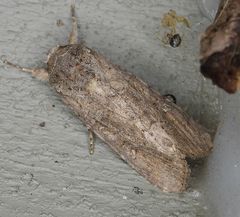 Fall Armyworm MothSpodoptera frugiperdaDamages trees, gardens or crops
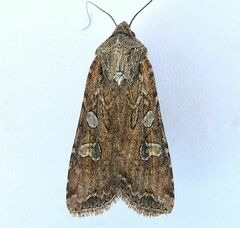 Army Cutworm MothEuxoa auxiliarisDamages trees, gardens or crops
 Large Yellow UnderwingNoctua pronubaDamages trees, gardens or crops
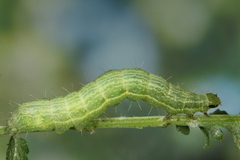 Silver ΥAutographa gamma
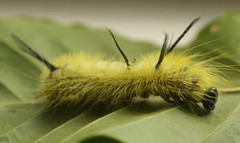 American DaggerAcronicta americanaCan irritate skin
Sources
- Wikipedia: https://en.wikipedia.org/wiki/Heart_and_dart
Look it up elsewhere: GBIF · iNaturalist · BugGuide · Wikipedia
Text written 2026-10-22 from the sources above and checked sentence by sentence against them. Data fetched 2026-10-22.