 Bug FAQ
Heart and Club
Agrotis clavis · Order: Lepidoptera · Family: Noctuidae
Also called: Heart & Club
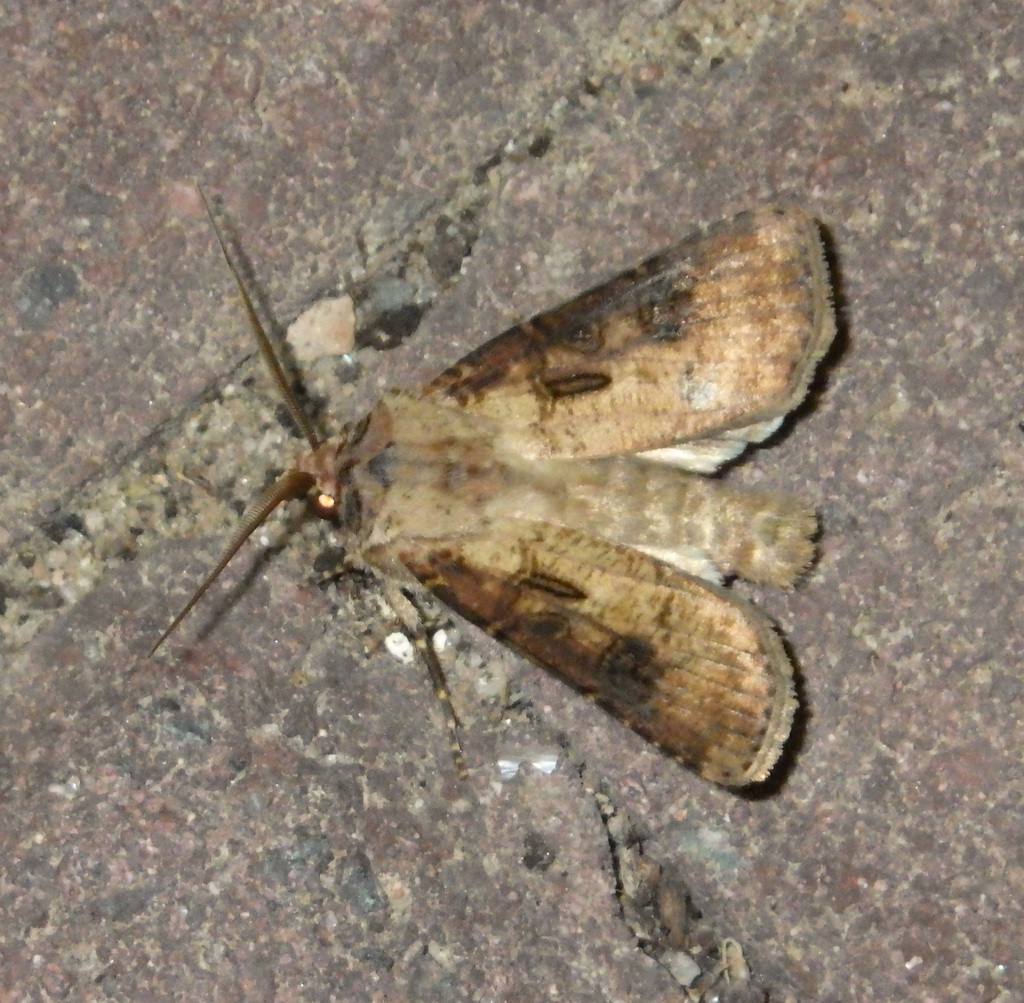
The Heart and Club moth has a 35 to 40 mm wingspan and lives on calcareous grasslands across the Palearctic region. Its larvae are dark brown with black dots, feed on many herbaceous plants to first on leaves, later on roots to and overwinter as full-grown larvae in the soil.
Source: Wikipedia
How to recognize it
The forewings are usually pale with bold dark spots that are rounded, which gave the species its common name.
Source: Wikipedia
Size
Wingspan ranges from 35 to 40 mm.
Source: Wikipedia
Where it lives
It mainly lives in calcareous grassland.
Source: Wikipedia
What it eats
The larva is dark brown with black dots and eats a variety of herbaceous plants. Young larvae feed on leaves, later switching to the plant roots.
Source: Wikipedia
When you see it
Adults fly at night in June and July and are attracted to light and sugar.
Source: Wikipedia
Where it comes from
It is found throughout the Palearctic realm.
Source: Wikipedia
Lookalikes
It differs from the more common Heart and Dart moth by having rounded rather than elongated claviform spots, but colour and markings vary widely and identification may need genital examination.
Source: Wikipedia
More photos

Questions people ask
When are Heart and Club moths active?
The adults fly at night during June and July and come to light and sugary baits.
Source: Wikipedia
What do the caterpillars eat?
The caterpillars feed on many herbaceous plants, starting on leaves and later moving to the roots.
Source: Wikipedia
How can I tell this moth apart from similar species?
Its forewing spots are rounded, unlike the elongated spots of the Heart and Dart moth, but the pattern can be highly variable.
Source: Wikipedia
Same family (Noctuidae)
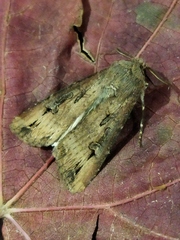 Ipsilon Dart MothAgrotis ipsilonDamages trees, gardens or crops
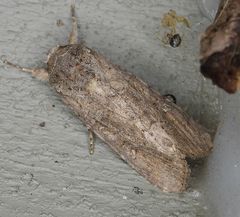 Fall Armyworm MothSpodoptera frugiperdaDamages trees, gardens or crops
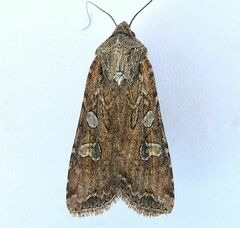 Army Cutworm MothEuxoa auxiliarisDamages trees, gardens or crops
 Large Yellow UnderwingNoctua pronubaDamages trees, gardens or crops
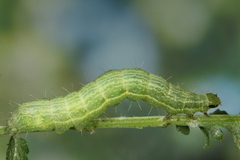 Silver ΥAutographa gamma
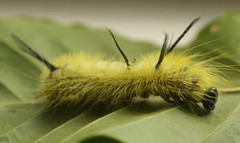 American DaggerAcronicta americanaCan irritate skin
Sources
- Wikipedia: https://en.wikipedia.org/wiki/Agrotis_clavis
Look it up elsewhere: GBIF · iNaturalist · BugGuide · Wikipedia
Text written 2026-10-22 from the sources above and checked sentence by sentence against them. Data fetched 2026-10-22.