 Bug FAQ
Hairy-headed leafcutter ant
Atta cephalotes · Order: Hymenoptera · Family: Formicidae
Also called: Leaf-cutter ant

The hairy-headed leafcutter ant is a large tropical ant that farms fungus for food. Its nests can be up to 7 m deep and are placed where breezes can remove excess CO₂ from the fungus chambers. Colonies occupy about 200 m² on the rainforest floor and are found from Mexico to Bolivia, including parts of Brazil.
Source: Wikipedia
How to recognize it
Atta cephalotes is called the hairy-headed leafcutter ant.
Source: Wikipedia
Where it lives
Nests can be as deep as 7 m and are positioned to let breezes clear dangerous CO₂ levels from the fungus they grow. A colony typically spreads over roughly 200 m² of rainforest floor.
Source: Wikipedia
What it eats
Workers collect leaves and bring them back to the nest to cultivate fungus. The cultivated fungus is the ant’s primary food source.
Source: Wikipedia
Life cycle
The colony has three castes: tiny minims, medium-sized medias, and large majors.
Source: Wikipedia
Where it comes from
They live throughout the Neotropical region, from Mexico down to Bolivia, with separate populations in Amazonas and northeastern Brazil.
Source: Wikipedia
Status: native in North America. Source: iNaturalist
Same family (Formicidae)
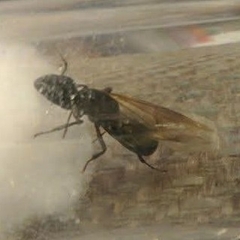 Eastern Black Carpenter AntCamponotus pennsylvanicusCan damage your home
 Red Imported Fire AntSolenopsis invictaCan sting
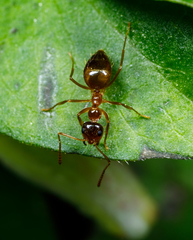 American Winter AntPrenolepis imparis
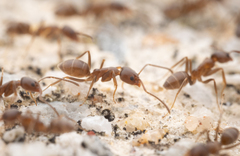 Argentine AntLinepithema humileNuisance, not dangerous
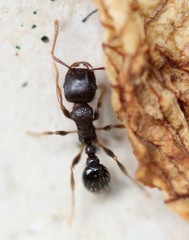 Immigrant Pavement AntTetramorium immigransCan sting
 Odorous House AntTapinoma sessileCan damage your home
Sources
- Wikipedia: https://en.wikipedia.org/wiki/Atta_cephalotes
Look it up elsewhere: GBIF · iNaturalist · BugGuide · ITIS · Wikipedia
Text written 2026-10-22 from the sources above and checked sentence by sentence against them. Data fetched 2026-10-22.