 Bug FAQ
Grey-spotted Sedgesitter
Platycheirus albimanus · Order: Diptera · Family: Syrphidae
Also called: Three-tufted Sedgesitter
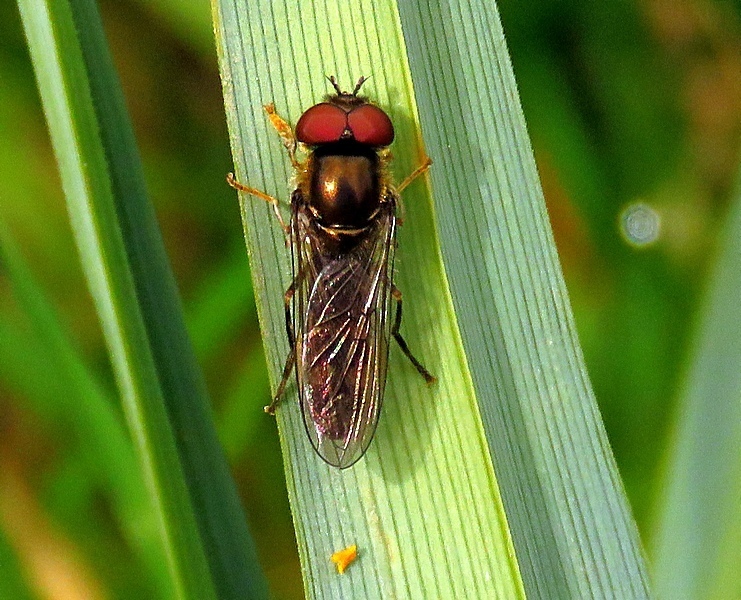
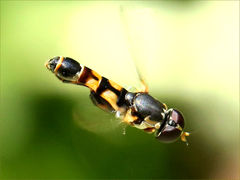
The grey-spotted sedgesitter has a front-facing face that looks dusted silver and its abdomen segments show silvery or faint yellow markings. Adults fly from April to October, often near woodland edges, scrub, heath, or hedgerows where they visit many flowers. It is a holarctic hoverfly found across Greenland, Iceland, Europe, Russia, Siberia to the Pacific, the Philippines, Alaska, western Canada and the United States.
Source: Wikipedia
How to recognize it
The face seen from the front is dusted silverish. The tergites have silvery or obscure yellow markings.
Source: Wikipedia
Where it lives
Adults are usually seen in flight on the edges of woodland, scrub, heath or hedgerows where they visit many flowers.
Source: Wikipedia
Life cycle
Platycheirus albimanus is a common, widespread hoverfly species.
Source: Wikipedia
When you see it
Adults can be found flying from April through October.
Source: Wikipedia
Where it is found in the US
Recorded in 2 of 51 states and DC. Most records: Alaska, Oregon.
Darker = more records. Counts are museum and citizen-science records, not population size.
Source: GBIF
Status: native in North America; native in Canada. Source: iNaturalist
More photos

Questions people ask
When are grey-spotted sedgesitters active?
Adults are on the wing from April to October.
Source: Wikipedia
Where can I find this hoverfly?
Look for them on the edges of woodlands, scrub, heath or hedgerows where they visit many flowers.
Source: Wikipedia
What do the larvae eat?
The larvae feed on aphids found on many plants, shrubs and trees.
Source: Wikipedia
Same family (Syrphidae)


Sources
- Wikipedia: https://en.wikipedia.org/wiki/Platycheirus_albimanus
Look it up elsewhere: GBIF · iNaturalist · BugGuide · Wikipedia
Text written 2026-10-22 from the sources above and checked sentence by sentence against them. Data fetched 2026-10-22.