 Bug FAQ
Green-Marked Owlet
Ichneutica insignis · Order: Lepidoptera · Family: Noctuidae
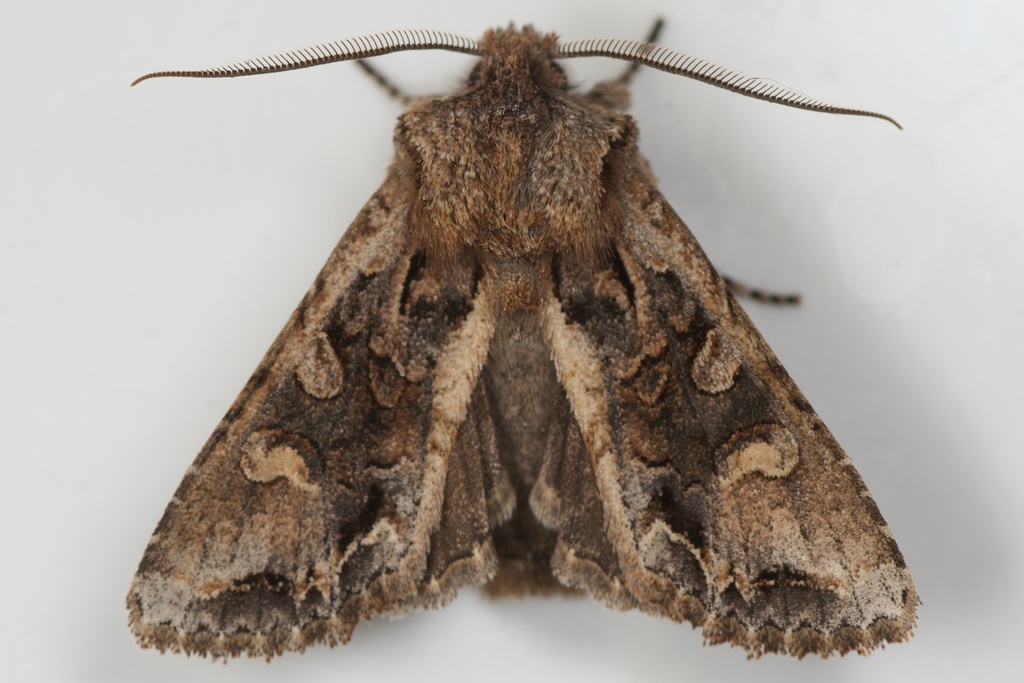
The Green-Marked Owlet is a small moth about 7 to 8 mm long with a 18 to 20 mm wingspan. It lives throughout New Zealand in many habitats but is rare in inland tussock grasslands.
Source: Wikipedia
How to recognize it
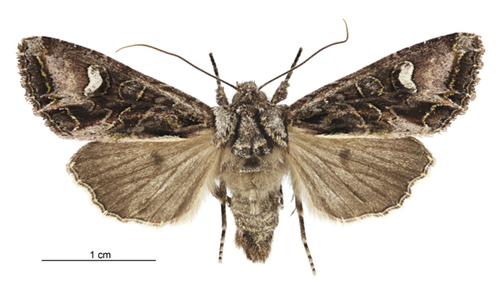
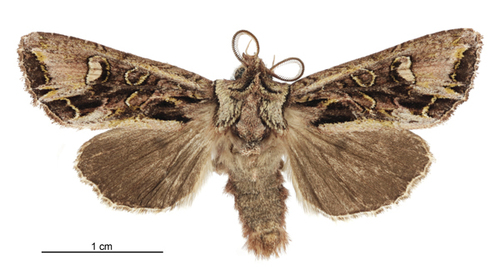
Both sexes are ferruginous-cinereous, and the forewings show a mix of glaucous-cinereous and blackish tones with an irregular submarginal band, zigzag black lines, and typical orbicular and reniform spots edged in pale cinereous.
Source: Wikipedia
Size
Body length is 7 to 8 mm and wing length is 18 to 20 mm.
Source: Wikipedia
Where it lives
It occurs in many New Zealand habitats but is scarce or absent from inland tussock grasslands.
Source: Wikipedia
What it eats
Larvae have been recorded feeding on white clover (Trifolium pratense).
Source: Wikipedia
Life cycle
Larvae hatch from eggs after about two weeks.
Source: Wikipedia
When you see it
Adults can be seen on the wing throughout the year.
Source: Wikipedia
Lookalikes
It is a variable species and can be confused with I. skelloni and I. plena; male antennae have longer pectinations than those of I. skelloni.
Source: Wikipedia
More photos
Questions people ask
How big is the Green-Marked Owlet?
Its body is 7 to 8 mm long and its wings are 18 to 20 mm long.
Source: Wikipedia
Where is this moth found?
It is endemic to New Zealand and occurs in many habitats, though it is rare in inland tussock grasslands.
Source: Wikipedia
Same family (Noctuidae)
 Ipsilon Dart MothAgrotis ipsilonDamages trees, gardens or crops
 Fall Armyworm MothSpodoptera frugiperdaDamages trees, gardens or crops
 Army Cutworm MothEuxoa auxiliarisDamages trees, gardens or crops
 Large Yellow UnderwingNoctua pronubaDamages trees, gardens or crops
 Silver ΥAutographa gamma
 American DaggerAcronicta americanaCan irritate skin
Sources
- Wikipedia: https://en.wikipedia.org/wiki/Ichneutica_insignis
Look it up elsewhere: GBIF · iNaturalist · BugGuide · Wikipedia
Text written 2026-10-23 from the sources above and checked sentence by sentence against them. Data fetched 2026-10-23.