 Bug FAQ
Great Orange Tip
Hebomoia glaucippe · Order: Lepidoptera · Family: Pieridae
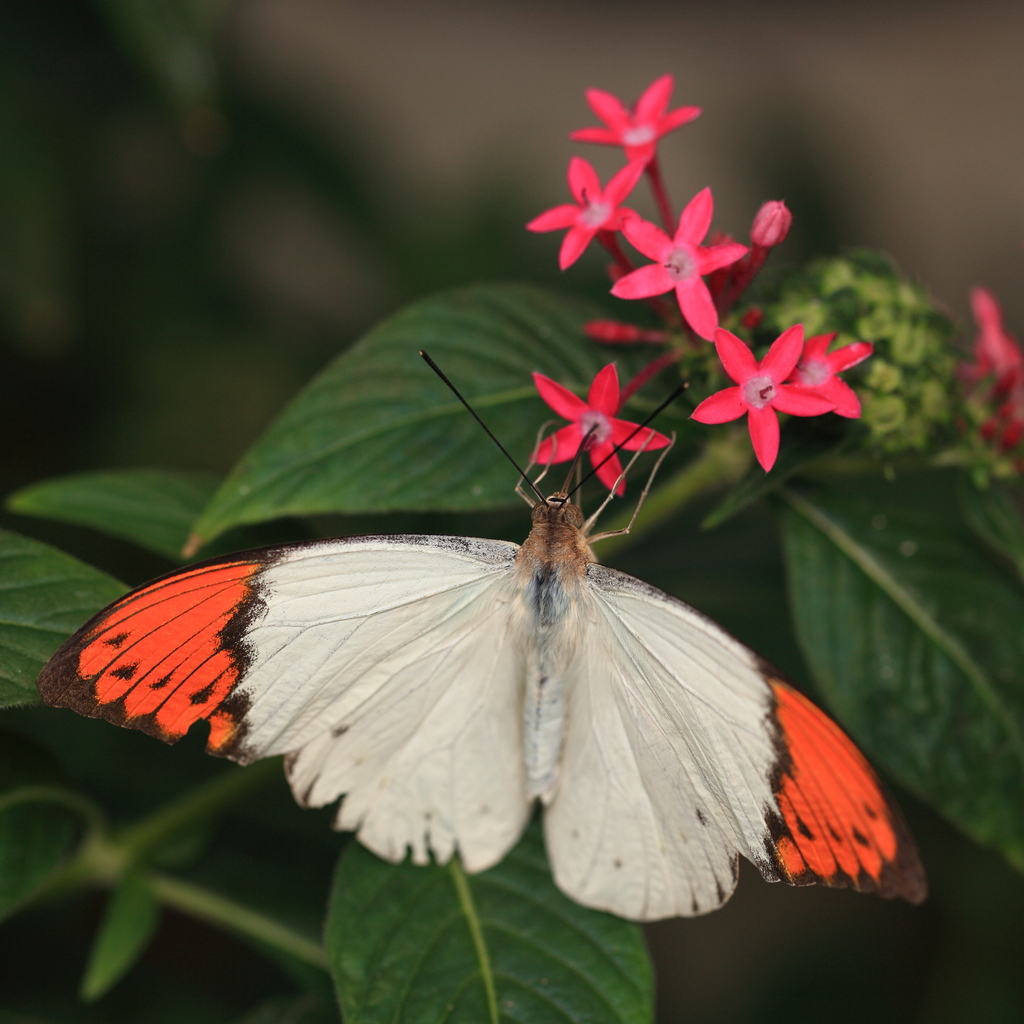
Males have a creamy-white upperside with a restricted orange patch on the forewing formed by streaks and orange spots. It lives across the Indomalayan realm, Wallacea, much of South and Southeast Asia, southern China and southern Japan.
Source: Wikipedia
How to recognize it
Males are creamy white on the upperside; the orange forewing patch is limited to streaks in interspaces 3-6 and 10, with black-incised tips and a row of hastate orange spots beyond.
Source: Wikipedia
Does it bite or sting?
The wings contain glacontryphan-M, a peptide toxin similar to that of cone snails. This toxin likely serves as a defence against predators.
Source: Wikipedia
Where it lives
Found in the Indomalayan realm and Wallacea. Also occurs throughout much of South and Southeast Asia, southern China and southern Japan.
Source: Wikipedia
What it eats
Eggs are laid on plants in the Capparaceae family such as Crataeva religiosa and several Capparis species.
Source: Wikipedia
Life cycle
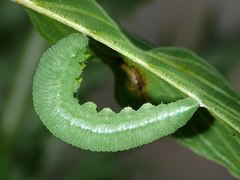
The larva is subcylindrical, tapered at both ends, dark green with a lateral bluish line and minute red spots; legs are green with black borders. Eggs are deposited on the same Capparaceae host plants listed for diet.
Source: Wikipedia
Where it comes from
Its native range includes the Indomalayan realm and Wallacea.
Source: Wikipedia
Lookalikes
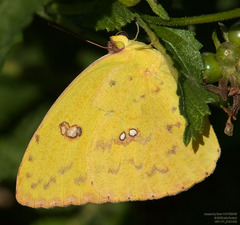
Some subspecies, like H. g. vossi, have pure yellow instead of white coloration.
Source: Wikipedia
More photos
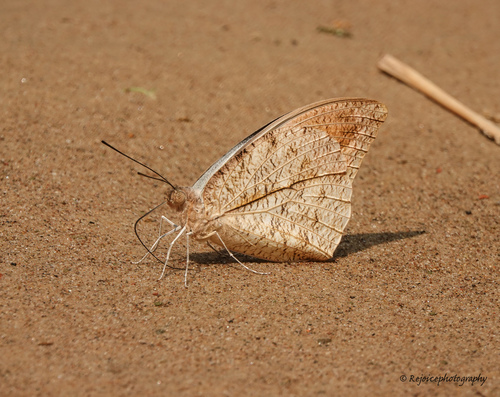
Same family (Pieridae)


Sources
- Wikipedia: https://en.wikipedia.org/wiki/Hebomoia_glaucippe
Look it up elsewhere: GBIF · iNaturalist · BugGuide · Wikipedia
Text written 2026-10-22 from the sources above and checked sentence by sentence against them. Data fetched 2026-10-22.