 Bug FAQ
Great Brocade
Eurois occulta · Order: Lepidoptera · Family: Noctuidae
Also called: Great Gray Dart, Great Brocade Moth
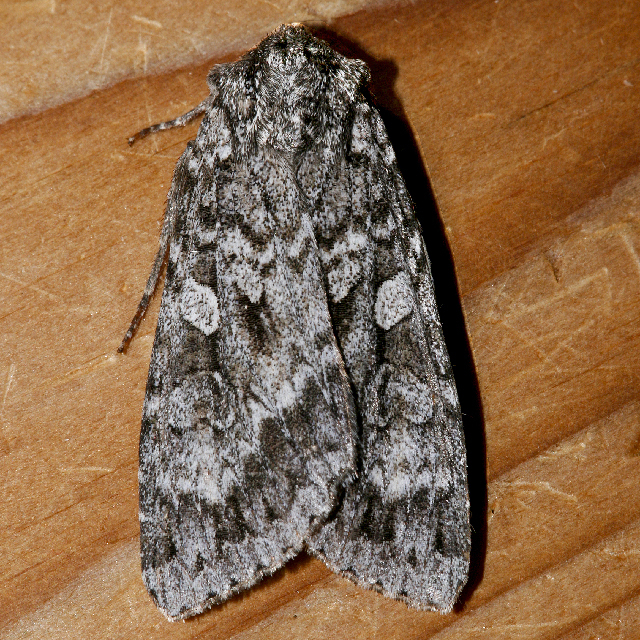
Great Brocade is a moth with a wingspan of about five to six centimeters. It lives across northern and central Europe, much of Asia to the Pacific, and the northern parts of North America, reaching as far south as Virginia and the Great Lakes region.
Source: Wikipedia
How to recognize it
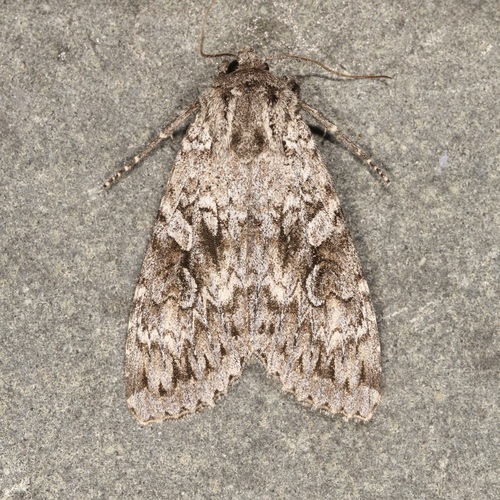
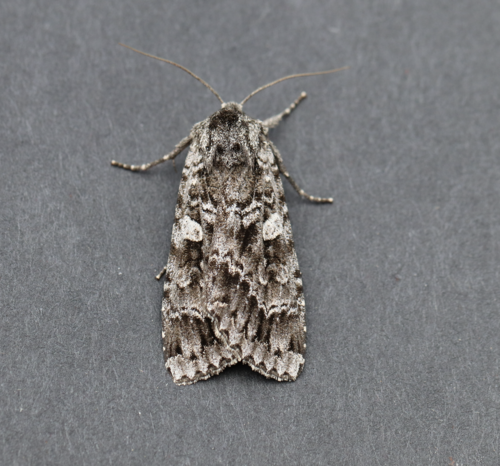
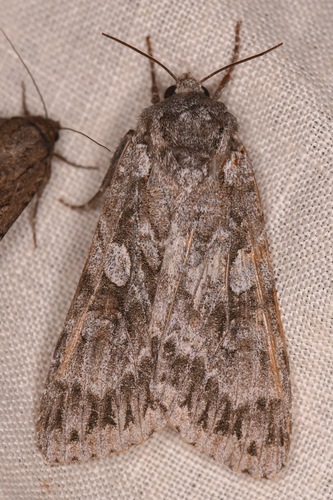
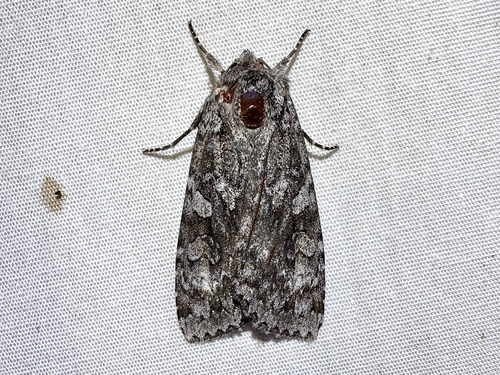
The forewings are pale grey with darker grey shading, a black streak near the base, large grey stigmata edged in black, and a submarginal line of big black and white teeth; the hindwings are dark brown with a white fringe.
Source: Wikipedia
Size
Its wingspan ranges from 50 to 60 mm.
Source: Wikipedia
What it eats
The caterpillars feed on plants such as Myrica gale, Vaccinium species, birch, willow and various other herbaceous plants.
Source: Wikipedia
Life cycle
Pupal remains found in peat suggest that past outbreaks of this moth may have contributed to the collapse of Norse settlements in Greenland.
Source: Wikipedia
Where it comes from
The species is native to northern and central Europe, North and central Asia extending to the Pacific and Japan. It is also native to the northern regions of North America, spanning Canada and reaching southward to Virginia and the Great Lakes area.
Source: Wikipedia
Lookalikes
The form implicata is a very dark, almost black mountain variant found in Finland, the Harz Mountains of Germany, and Scotland. The intermediate form ab. extricata Zett. occurs in Lapland.
Source: Wikipedia
Where it is found in the US
Recorded in 27 of 51 states and DC. Most records: Montana, Alaska, Michigan, Wyoming, Colorado, Oregon, Massachusetts, Washington.
Darker = more records. Counts are museum and citizen-science records, not population size.
Source: GBIF
Status: native in North America; native in Canada; native in United States. Source: iNaturalist
Months it is reported in the US
Source: GBIF
More photos
Questions people ask
Where is the Great Brocade found?
It lives across northern and central Europe, much of Asia to the Pacific, and the northern parts of North America, reaching as far south as Virginia and the Great Lakes region.
Source: Wikipedia
Are there similar species I might confuse it with?
Yes, the very dark form implicata occurs in Finland, the Harz Mountains and Scotland, and the intermediate form ab. extricata is found in Lapland.
Source: Wikipedia
Same family (Noctuidae)
 Ipsilon Dart MothAgrotis ipsilonDamages trees, gardens or crops
 Fall Armyworm MothSpodoptera frugiperdaDamages trees, gardens or crops
 Army Cutworm MothEuxoa auxiliarisDamages trees, gardens or crops
 Large Yellow UnderwingNoctua pronubaDamages trees, gardens or crops
 Silver ΥAutographa gamma
 American DaggerAcronicta americanaCan irritate skin
Sources
- Wikipedia: https://en.wikipedia.org/wiki/Eurois_occulta
Look it up elsewhere: GBIF · iNaturalist · BugGuide · ITIS · Wikipedia
Text written 2026-10-24 from the sources above and checked sentence by sentence against them. Data fetched 2026-10-24.