 Bug FAQ
Grape Leaffolder and Leafroller Moths
Desmia funeralis · Order: Lepidoptera · Family: Crambidae
Also called: Grape Leaf Folder Moth, grape leaffolder, Grape Leaffolder Moth
Source: Wikipedia
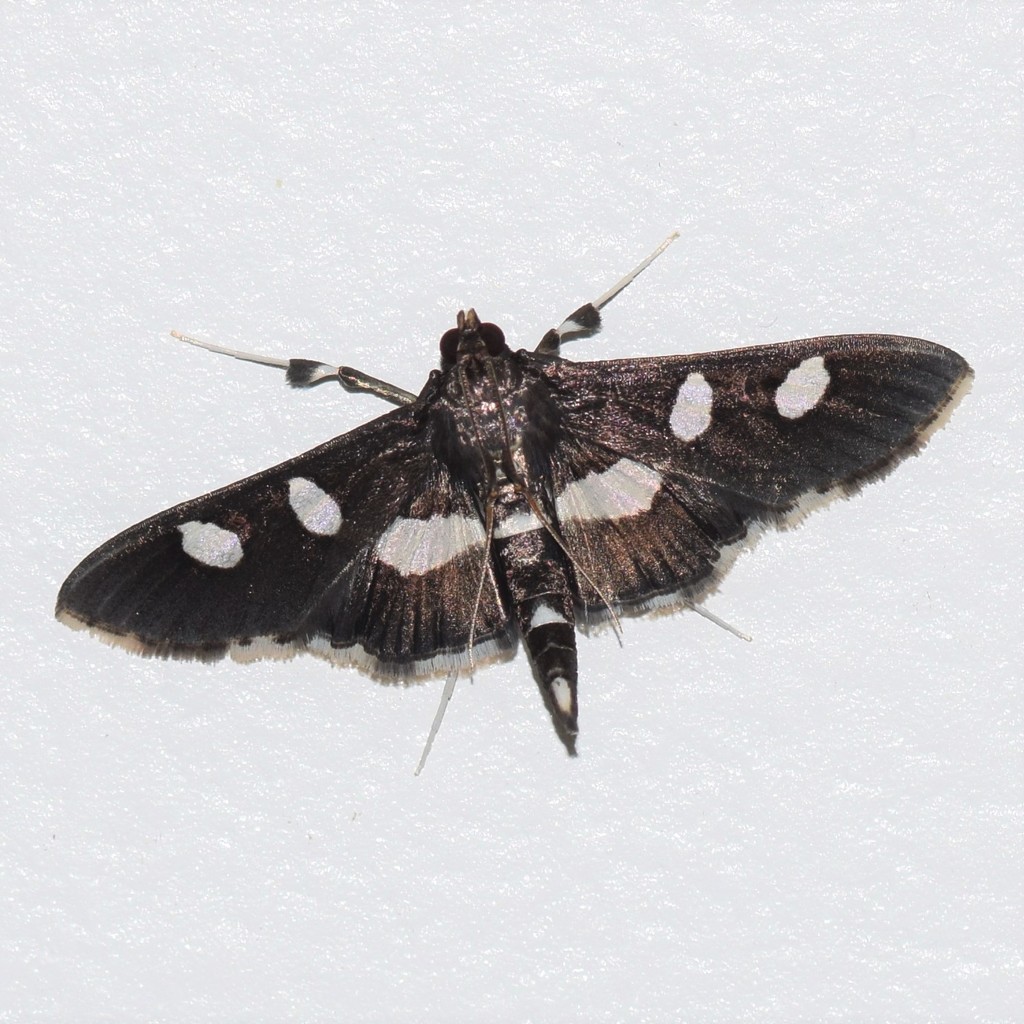
The adult moth has a wingspan of about 2 to 2.8 centimeters. There are two to three generations each year, and adults are active from May through September.
Source: Wikipedia
Size
Adults measure 21 to 28 mm across the wings.
Source: Wikipedia
Where it lives
They are found from the southern United States west to California and north to the northeastern U.S. and southeastern Canada. These moths fly during the day.
Source: Wikipedia
What it eats
Larvae feed on grape vines, eastern redbud, and evening primrose.
Source: Wikipedia
Life cycle
Two to three generations occur each year. Adults are on the wing from May to September.
Source: Wikipedia
When you see it
Adults are active from May through September.
Source: Wikipedia
Lookalikes
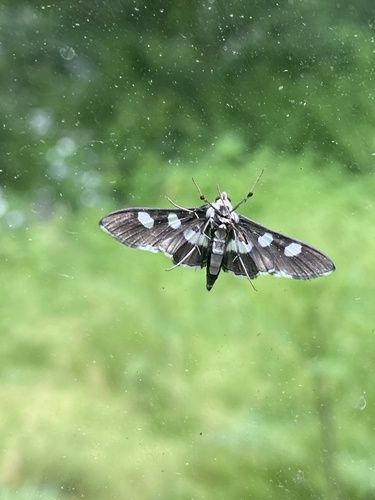
From above, it looks the same as the similar species Desmia maculalis.
Source: Wikipedia
Where it is found in the US
Recorded in 45 of 51 states and DC. Most records: Texas, Virginia, Ohio, Maryland, South Carolina, Georgia, Oklahoma, North Carolina.
Darker = more records. Counts are museum and citizen-science records, not population size.
Source: GBIF
Months it is reported in the US
Source: GBIF
More photos
Questions people ask
What plants do the larvae eat?
The caterpillars feed on grape vines, eastern redbud, and evening primrose.
Source: Wikipedia
When are the adult moths active?
Adults fly during the day from May through September.
Source: Wikipedia
Is this moth a problem for my garden?
It can be a minor pest of grapes, feeding on the leaves and vines.
Source: Wikipedia
Same family (Crambidae)
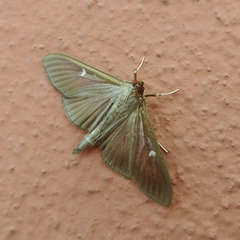 Box Tree MothCydalima perspectalisDamages trees, gardens or crops
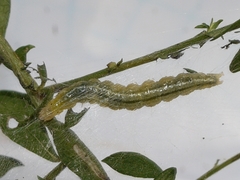 Celery Leaftier MothUdea rubigalisDamages trees, gardens or crops
 Elegant Grass-veneerMicrocrambus elegans
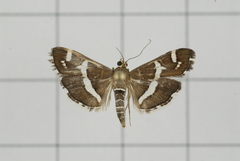 Hawaiian Beet Webworm MothSpoladea recurvalisDamages trees, gardens or crops
 Garden Grass-veneerChrysoteuchia culmellaDamages trees, gardens or crops
 Bluegrass Webworm MothParapediasia teterrellusDamages trees, gardens or crops
Sources
- Wikipedia: https://en.wikipedia.org/wiki/Desmia_funeralis
Look it up elsewhere: GBIF · iNaturalist · BugGuide · Wikipedia
Text written 2026-10-23 from the sources above and checked sentence by sentence against them. Data fetched 2026-10-23.