 Bug FAQ
Graef’s Pug
Eupithecia graefii · Order: Lepidoptera · Family: Geometridae
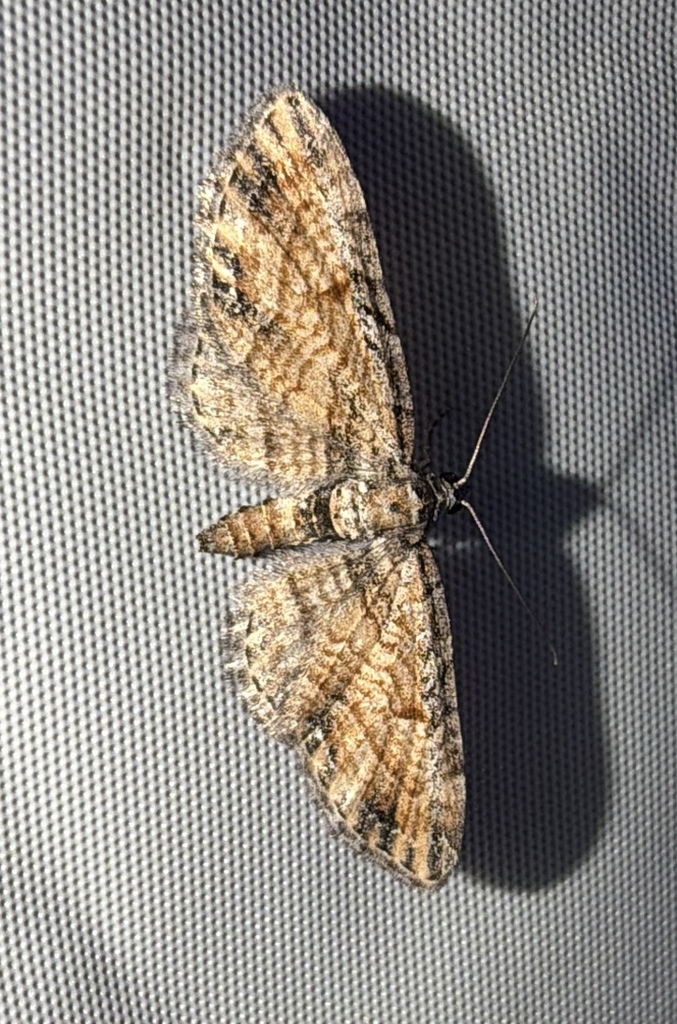
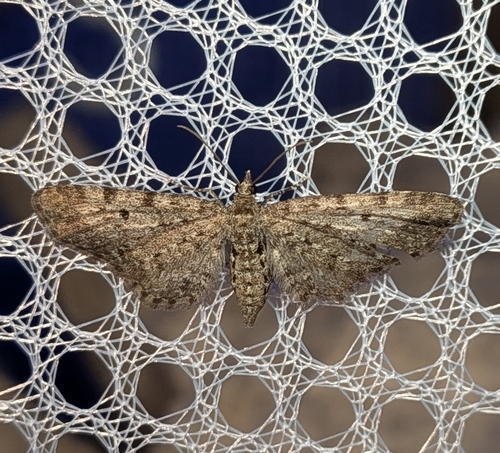
Graef’s pug is a small moth with a wingspan of about 1.7 to 2.5 cm. Its caterpillars can be green, rosy pink or reddish pink and feed on Arbutus, Gaylussacia and possibly on Thuja and Pseudotsuga. Adults are most common in summer but have been seen from April through November across wooded areas of western North America, from southwestern Alberta to California and up to Alaska.
Source: Wikipedia
How to recognize it
The larvae vary in colour from green to rosy or reddish pink.
Source: Wikipedia
Size
The wingspan ranges between 17 and 25 mm.
Source: Wikipedia
Where it lives
It lives in wooded habitats.
Source: Wikipedia
What it eats
Larvae feed on species of Arbutus and Gaylussacia, and possibly on Thuja and Pseudotsuga.
Source: Wikipedia
Life cycle
Adults are primarily on the wing in summer, though records show they can be active from April to November.
Source: Wikipedia
When you see it
The flight period spans from early spring through late fall, with a peak in summer.
Source: Wikipedia
Where it is found in the US
Recorded in 7 of 51 states and DC. Most records: California, Oregon, Washington, Montana, Colorado, Idaho, Wyoming.
Darker = more records. Counts are museum and citizen-science records, not population size.
Source: GBIF
Status: native in North America; native in Canada. Source: iNaturalist
Months it is reported in the US
Source: GBIF
More photos
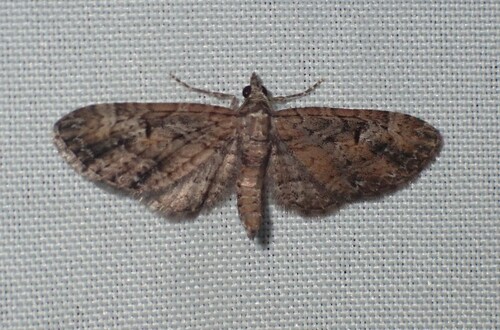
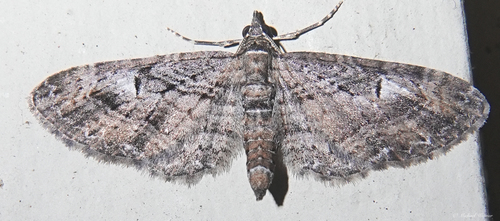
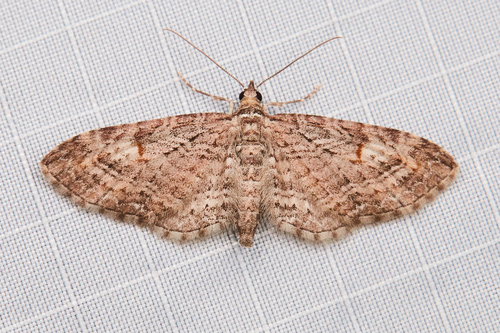
Questions people ask
What do the caterpillars look like?
The larvae can be green, rosy pink or reddish pink.
Source: Wikipedia
What plants do the larvae feed on?
They feed on Arbutus and Gaylussacia species and may also use Thuja and Pseudotsuga.
Source: Wikipedia
Same family (Geometridae)




Sources
- Wikipedia: https://en.wikipedia.org/wiki/Eupithecia_graefi
Look it up elsewhere: GBIF · iNaturalist · BugGuide · Wikipedia
Text written 2026-10-25 from the sources above and checked sentence by sentence against them. Data fetched 2026-10-25.