 Bug FAQ
Graceful Twig Ant
Pseudomyrmex gracilis · Order: Hymenoptera · Family: Formicidae
Also called: Elongate Twig Ant, Mexican Twig Ant, Slender Twig Ant
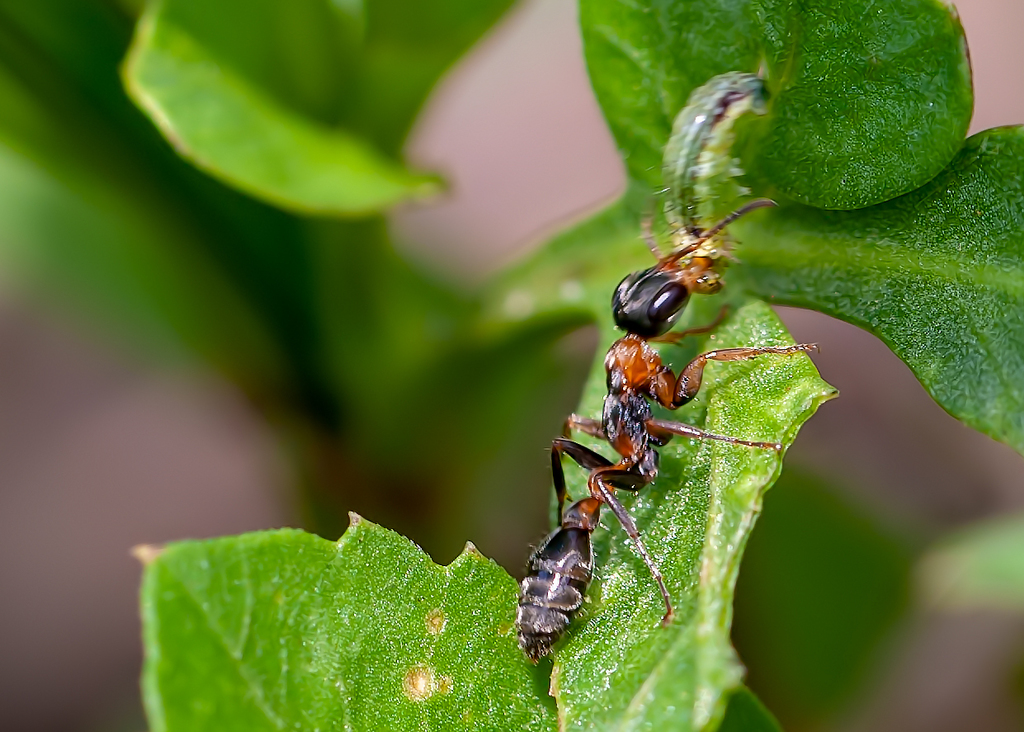
Workers are about 8 to 10 mm long and have a dark head and abdomen with orange-colored thorax, legs and antennae. They are often seen on plants, hunting other insects or gathering honeydew from sap-sucking bugs. If a colony loses its queen, workers fight with their antennae to form a hierarchy, and the top individuals can lay eggs until a new queen arrives.
Source: Wikipedia
How to recognize it
Workers are bi-colored: dark head and gaster, orange thorax, legs and antennae with darker shading.
Source: Wikipedia
Size
Workers measure about 8 to 10 mm (0.31 to 0.39 in) in length.
Source: Wikipedia
Where it lives
They are commonly found on vegetation while foraging.
Source: Wikipedia
What it eats
They hunt live insects and also collect honeydew from sap-sucking insects.
Source: Wikipedia
Life cycle
Without a queen, workers establish a dominance hierarchy by antennae boxing, and the highest ranking individuals can lay eggs temporarily.
Source: Wikipedia
Where it is found in the US
Recorded in 11 of 51 states and DC. Most records: Florida, Texas, Louisiana, Hawaii, Alabama, Georgia, Mississippi, South Carolina.
Darker = more records. Counts are museum and citizen-science records, not population size.
Source: GBIF
Months it is reported in the US
Source: GBIF
More photos
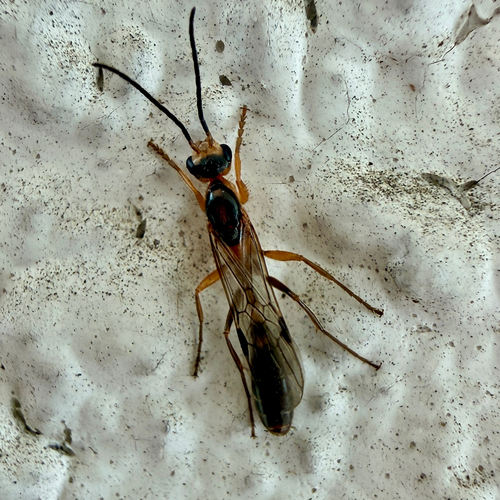
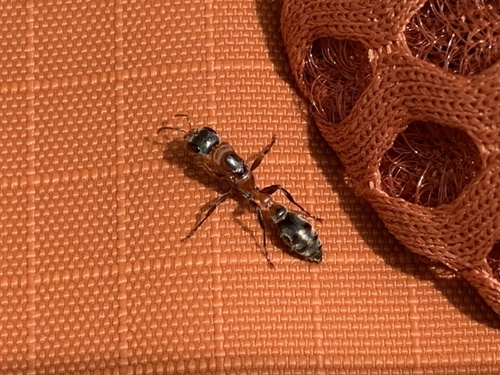

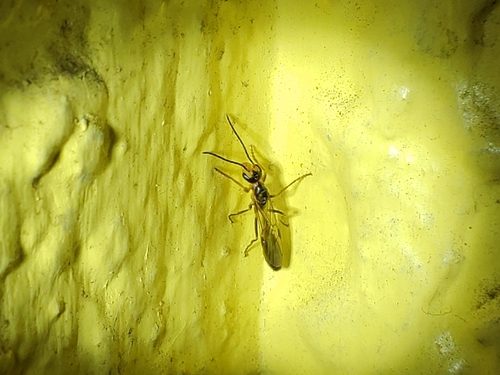
Same family (Formicidae)
 Eastern Black Carpenter AntCamponotus pennsylvanicusCan damage your home
 Red Imported Fire AntSolenopsis invictaCan sting
 American Winter AntPrenolepis imparis
 Argentine AntLinepithema humileNuisance, not dangerous
 Immigrant Pavement AntTetramorium immigransCan sting
 Odorous House AntTapinoma sessileCan damage your home
Sources
- Wikipedia: https://en.wikipedia.org/wiki/Pseudomyrmex_gracilis
Look it up elsewhere: GBIF · iNaturalist · BugGuide · ITIS · Wikipedia
Text written 2026-10-22 from the sources above and checked sentence by sentence against them. Data fetched 2026-10-22.