 Bug FAQ
Golden Twig Ant
Pseudomyrmex pallidus · Order: Hymenoptera · Family: Formicidae
Also called: Pallid Twig Ant
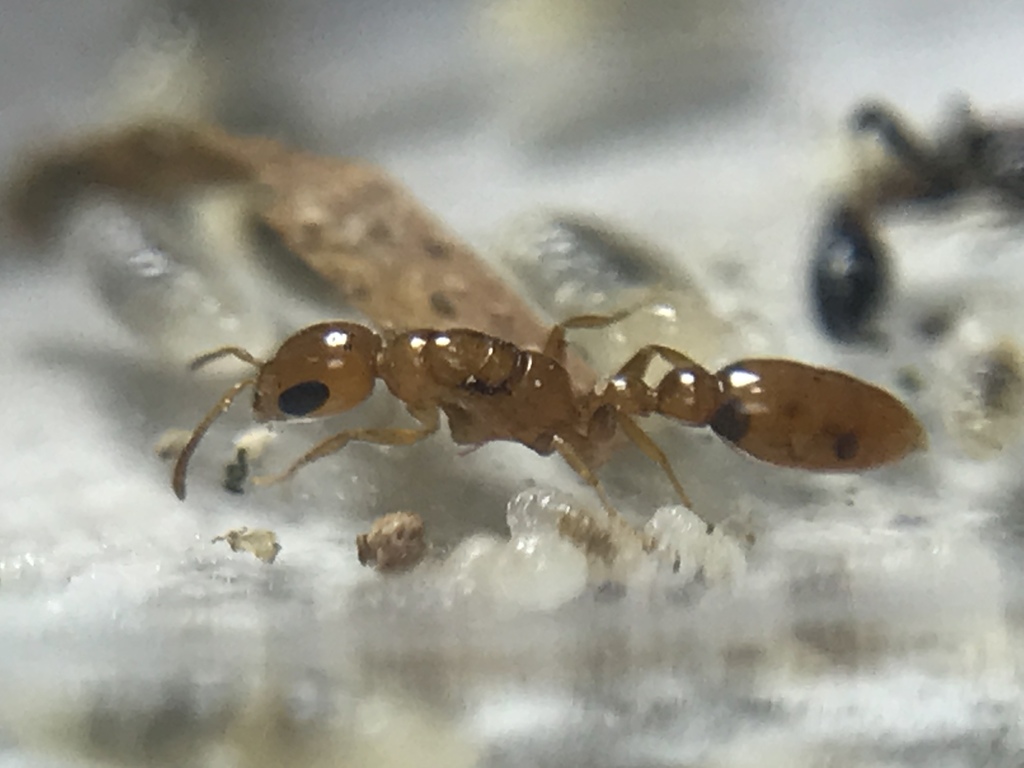
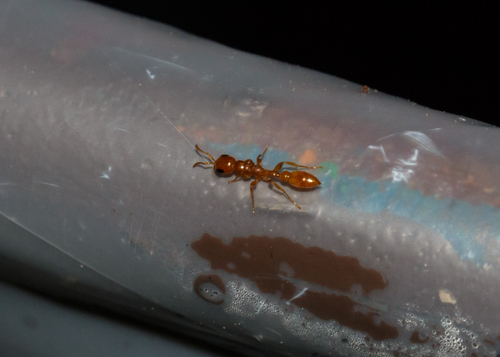
Pseudomyrmex pallidus workers are small, slender ants with yellow, orange, or brown bodies and large eyes, short antennae, and a sting. They live in hollow stems of dead grasses at the edge of grassy and wooded areas across the southern United States to Central America. Colonies feed on nectar, insect prey, and sugary solutions, and they produce workers year-round while males appear only in summer and fall.
Source: Wikipedia
How to recognize it
Workers are yellow, orange, or brown in color.
Source: Wikipedia
Size
Head widths range from about 0.68 to 0.89 mm. The stems they occupy are 5 to 10 mm in diameter.
Source: Wikipedia
Does it bite or sting?
They possess a well-developed sting.
Source: Wikipedia
Where it lives
They are generally located where grassland meets woodland.
Source: Wikipedia
What it eats
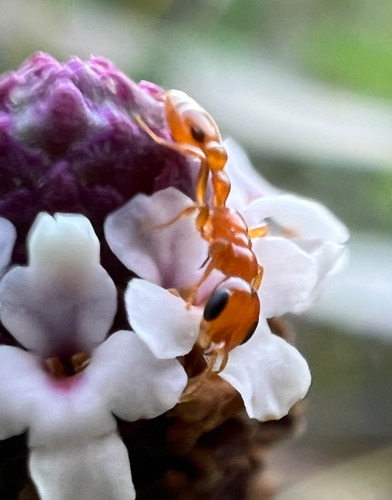
In the field they feed on floral nectar and captured insects. In the lab they accept sugar solutions and dead insect parts.
Source: Wikipedia
Life cycle
Workers are produced continuously throughout the year. Reproductive females can be collected year-round.
Source: Wikipedia
When you see it
Males are produced only in summer and fall. Reproductive females are present throughout the year.
Source: Wikipedia
Where it comes from
They occur throughout the Nearctic realm, especially the southern United States down to Central America.
Source: Wikipedia
Where it is found in the US
Recorded in 15 of 51 states and DC. Most records: Texas, Florida, Mississippi, Arizona, Alabama, Georgia, North Carolina, Louisiana.
Darker = more records. Counts are museum and citizen-science records, not population size.
Source: GBIF
Months it is reported in the US
Source: GBIF
More photos
Questions people ask
What do these ants eat?
They feed on nectar from flowers and on insects they catch, and in captivity they will also take sugar water and dead insects.
Source: Wikipedia
When are male ants present?
Males are produced only during the summer and fall seasons.
Source: Wikipedia
Where do they build their nests?
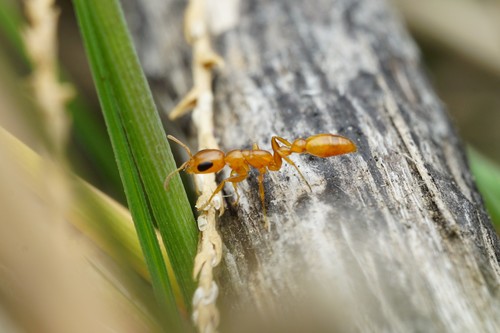
They nest inside hollow stems of dead grasses, usually where grassland meets woodland.
Source: Wikipedia
Same family (Formicidae)
 Eastern Black Carpenter AntCamponotus pennsylvanicusCan damage your home
 Red Imported Fire AntSolenopsis invictaCan sting
 American Winter AntPrenolepis imparis
 Argentine AntLinepithema humileNuisance, not dangerous
 Immigrant Pavement AntTetramorium immigransCan sting
 Odorous House AntTapinoma sessileCan damage your home
Sources
- Wikipedia: https://en.wikipedia.org/wiki/Pseudomyrmex_pallidus
Look it up elsewhere: GBIF · iNaturalist · BugGuide · ITIS · Wikipedia
Text written 2026-10-23 from the sources above and checked sentence by sentence against them. Data fetched 2026-10-23.