 Bug FAQ
Giant Vinegaroon
Mastigoproctus giganteus · Order: Uropygi · Family: Thelyphonidae
Source: Wikipedia
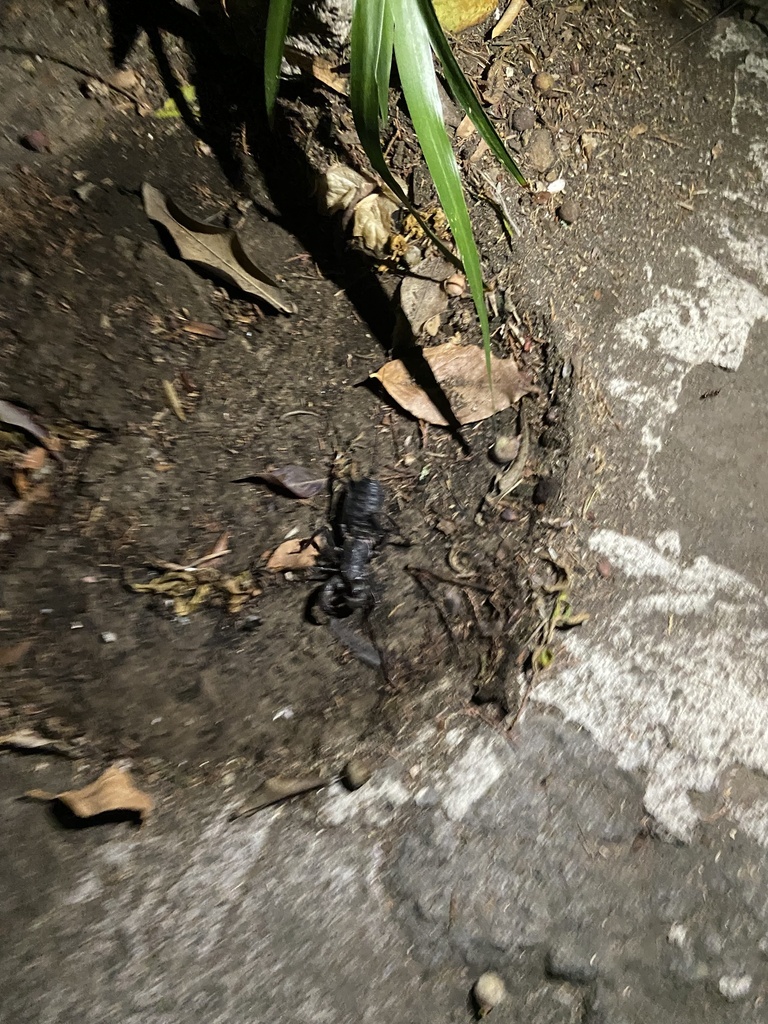
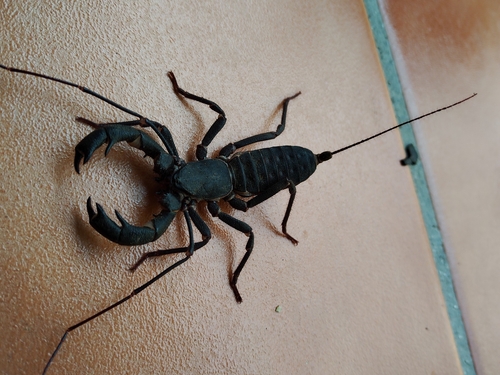
The giant vinegaroon is a 1.6 to 2.4 in long arachnid with six walking legs, two sensory front legs, claw-like pedipalps, and a thin whip-like tail. It lives in the southern United States and Mexico at mid-elevations, hunts insects, worms and slugs at night, and can help control pest populations. Females reproduce once, guarding about 40 young, while males fight each other for mates; they live 4 to 7 years.
Source: Wikipedia
How to recognize it
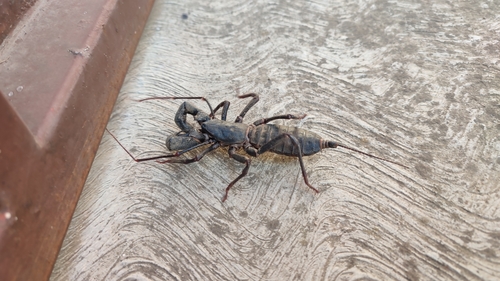
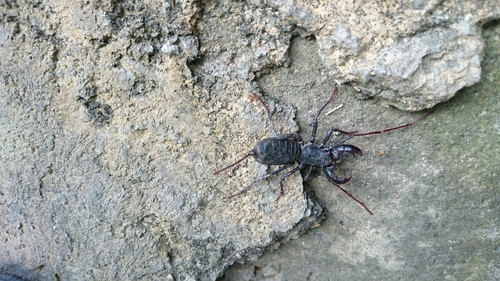
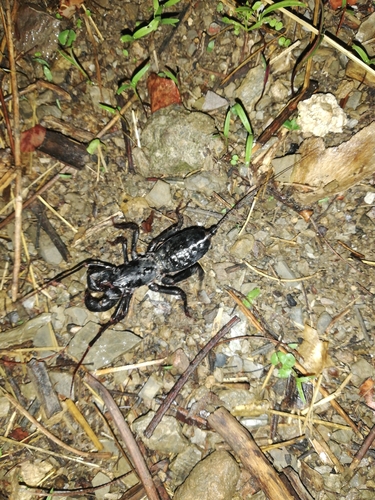
It moves on six legs, uses two long front legs to sense prey, and has large claw-like pedipalps for crushing. A thin, whip-like tail gives it the name whipscorpion.
Source: Wikipedia
Size
Adults reach 40 to 60 mm (1.6 to 2.4 in) in body length, not counting the tail.
Source: Wikipedia
Is it a pest in the house?
It is considered beneficial because it helps control stinging scorpions, insects and spiders around homes.
Source: Wikipedia
Does it bite or sting?
It rarely bites or pinches people, but its tail can spray acid that may sting if it contacts cuts or mucous membranes and can irritate eyes.
Source: Wikipedia
Where it lives
It inhabits southern U.S. and Mexican regions at elevations of 1380 to 1800 m.
Source: Wikipedia
What it eats
It preys on insects, worms and slugs.
Source: Wikipedia
Life cycle
Lifespan is 4 to 7 years; females reproduce once, producing about 40 offspring they protect and feed. Males battle each other at night for mating opportunities.
Source: Wikipedia
When you see it
It is an active night predator feeding on various arthropods.
Source: Wikipedia
Where it comes from
Its native range extends from the Southern United States into Mexico.
Source: Wikipedia
Where it is found in the US
Recorded in 5 of 51 states and DC. Most records: New Mexico, Florida, Arizona, Texas, Oregon.
Darker = more records. Counts are museum and citizen-science records, not population size.
Source: GBIF
Status: endemic in North America. Source: iNaturalist
Months it is reported in the US
Source: GBIF
More photos
Questions people ask
Can they sting or cause irritation?
Yes, the acid spray from their tail can sting cuts or eyes and cause irritation.
Source: Wikipedia
Are they helpful in the garden?
They help control insects, worms, slugs and other pests, making them beneficial for gardens.
Source: Wikipedia
How big do they get?
Adults grow to about 40 to 60 mm (1.6 to 2.4 in) long, not counting the tail.
Source: Wikipedia
Same family (Thelyphonidae)

Sources
- Wikipedia: https://en.wikipedia.org/wiki/Mastigoproctus_giganteus
Look it up elsewhere: GBIF · iNaturalist · BugGuide · ITIS · Wikipedia
Text written 2026-10-22 from the sources above and checked sentence by sentence against them. Data fetched 2026-10-22.