 Bug FAQ
Giant Mesquite Bug
Thasus neocalifornicus · Order: Hemiptera · Family: Coreidae
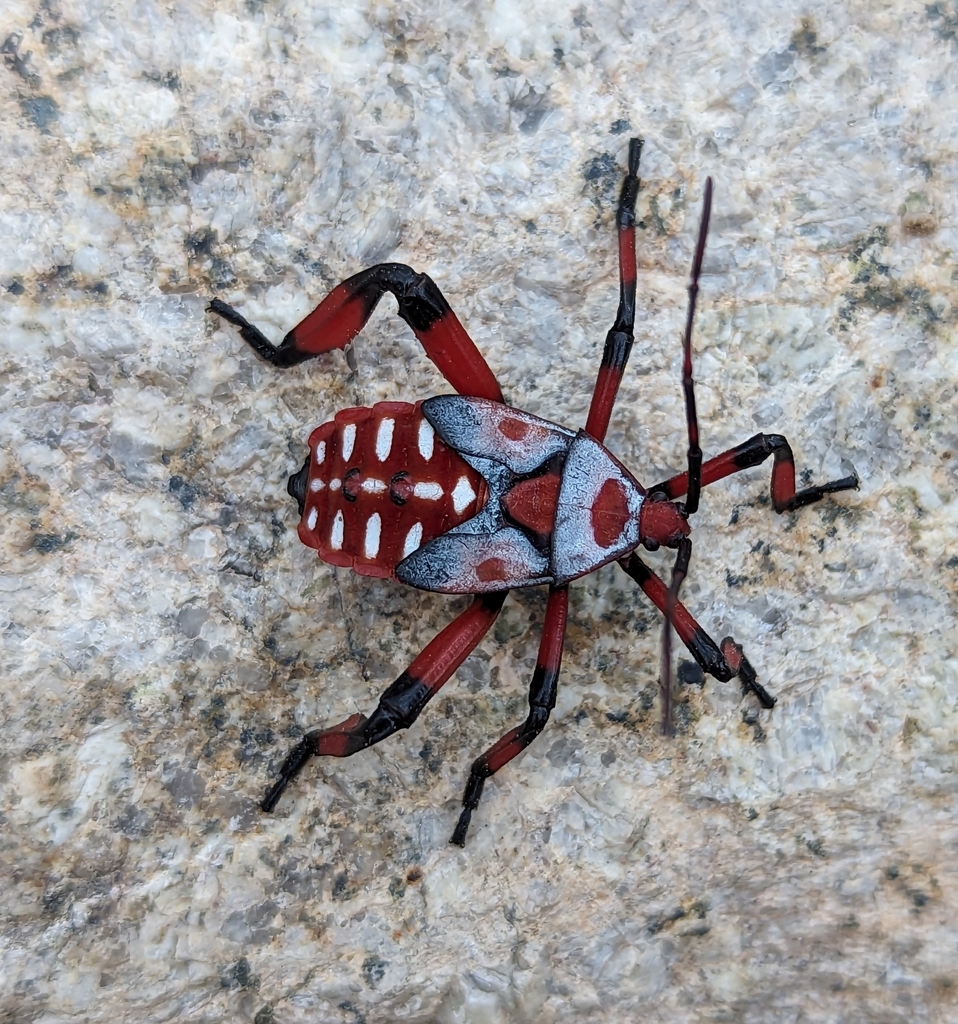
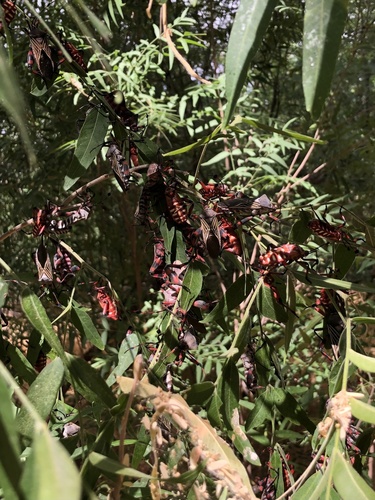
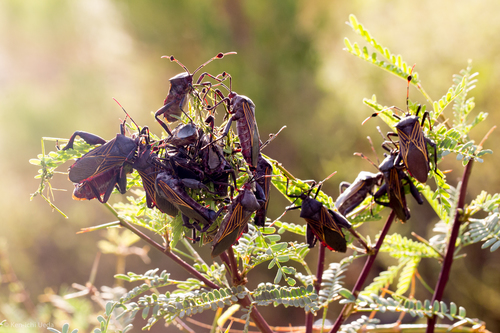
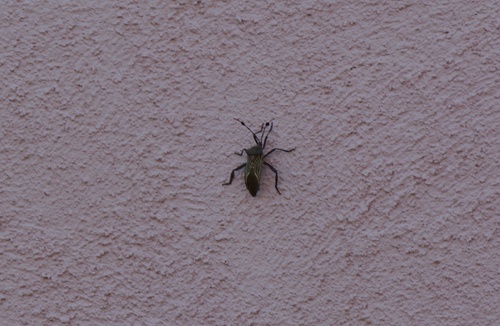
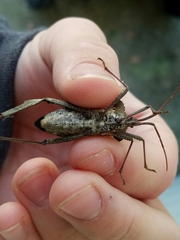
Adults are about two inches long and are dark brown with striped legs and antennae. They live in the Sonoran Desert from southwestern Arizona to Baja California Sur, often gathering on mesquite trees.
Source: Wikipedia
Size
Adults measure roughly two inches in length.
Source: Wikipedia
Where it lives
They inhabit the Sonoran Desert, ranging from southwestern Arizona into Baja California Sur.
Source: Wikipedia
When you see it
Populations are most common around Tucson, Arizona and the southern tip of Baja California Sur.
Source: Wikipedia
Where it comes from
Their native range is the Sonoran Desert of the southwestern United States and northwestern Mexico.
Source: Wikipedia
Lookalikes
It was previously confused with T. gigas or T. acutangulus until distinguished in 1995.
Source: Wikipedia
Where it is found in the US
Recorded in 3 of 51 states and DC. Most records: Arizona, Texas, New Mexico.
Darker = more records. Counts are museum and citizen-science records, not population size.
Source: GBIF
Months it is reported in the US
Source: GBIF
More photos
Questions people ask
How can I tell a giant mesquite bug apart from similar species?
Look for the bright white-red warning colors on nymphs and the dark brown body with crimson-black striped legs on adults; other species lack this exact pattern.
Source: Wikipedia
Where are giant mesquite bugs found?
They live in the Sonoran Desert, from southwestern Arizona down into Baja California Sur.
Source: Wikipedia
Same family (Coreidae)
 Western Conifer Seed BugLeptoglossus occidentalisDamages trees, gardens or crops
 Squash BugAnasa tristisDamages trees, gardens or crops
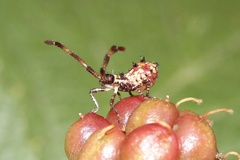 Dock BugCoreus marginatus
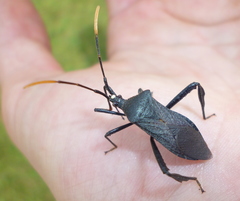 Acanthocephala terminalisAcanthocephala terminalisHarmless
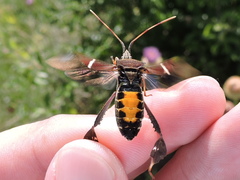 Eastern Leaf-footed BugLeptoglossus phyllopusDamages trees, gardens or crops
 Giant leaf-footed bugAcanthocephala declivis
Sources
- Wikipedia: https://en.wikipedia.org/wiki/Giant_mesquite_bug
Look it up elsewhere: GBIF · iNaturalist · BugGuide · ITIS · Wikipedia
Text written 2026-10-24 from the sources above and checked sentence by sentence against them. Data fetched 2026-10-24.