 Bug FAQ
Garden Lithobius
Lithobius melanops · Order: Lithobiomorpha · Family: Lithobiidae
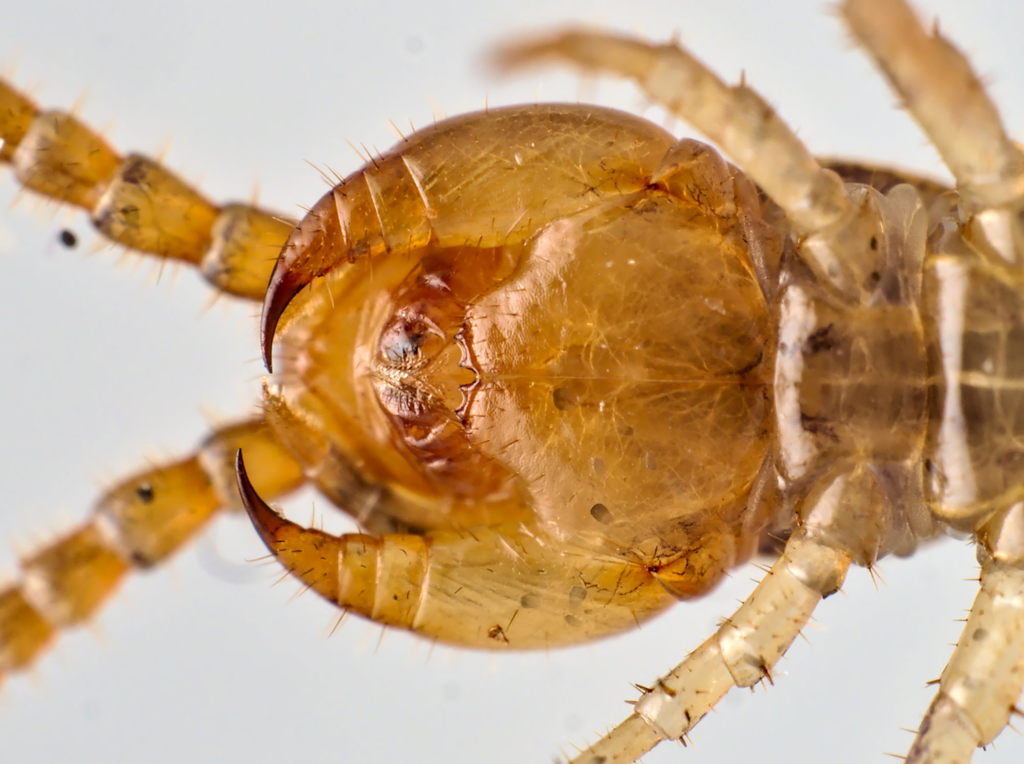
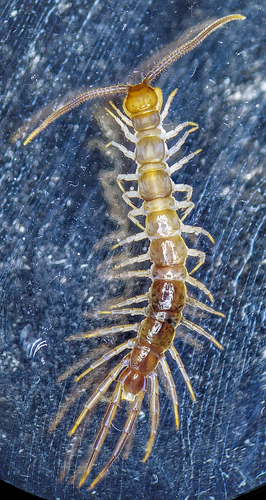
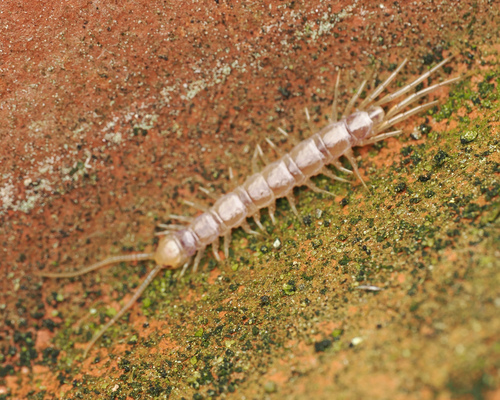
Garden Lithobius is a pale brown centipede with a dark stripe along its back and distinctive antennae and leg features. It lives in dry places like steppes, gardens and dunes, usually under stones, wood or bark, and can be found all year round. At night it hunts soil insects and other small invertebrates, using venom to kill its prey.
Source: Wikipedia
How to recognize it
The centipede is pale brown with a darker longitudinal stripe on the dorsal side. Key features include 32 to 44 antennal segments, 10-13 ocelli (the rear one much larger), 2+2 forcipular teeth, round pores on hind coxae, backward projections on several tergites, and the 15th leg has a pair of unequal claws.
Source: Wikipedia
Size
Adults measure between 11 mm and 17 mm in length.
Source: Wikipedia
Where it lives
Found in dry habitats such as steppes, hillsides, bright forests, woodlands, heathlands, gardens, churchyards, sand dunes, shingle and vegetated sea cliffs.
Source: Wikipedia
What it eats
It injects venom through its forcipules to subdue prey.
Source: Wikipedia
Life cycle
Like other Lithobiomorphs, it has a hemianamorphic life cycle, adding body segments and legs with each molt until adult form is reached.
Source: Wikipedia
When you see it
It can be encountered throughout the year.
Source: Wikipedia
Where it comes from
This species occurs in many parts of the world.
Source: Wikipedia
Where it is found in the US
Recorded in 12 of 51 states and DC. Most records: Pennsylvania, Massachusetts, Colorado, New York, Virginia, California, Maine, Nevada.
Darker = more records. Counts are museum and citizen-science records, not population size.
Source: GBIF
Status: introduced in North America; introduced in United States; introduced in Canada. Source: iNaturalist
Months it is reported in the US
Source: GBIF
More photos
Questions people ask
Do they bite?
They can bite and inject venom, but the venom is not medically significant to people.
Source: Wikipedia
Where might I find them in my garden?
Look under stones, dead wood, loose bark or on walls in dry, sunny parts of the garden.
Source: Wikipedia
Same family (Lithobiidae)

Sources
- Wikipedia: https://en.wikipedia.org/wiki/Lithobius_melanops
Look it up elsewhere: GBIF · iNaturalist · BugGuide · ITIS · Wikipedia
Text written 2026-10-23 from the sources above and checked sentence by sentence against them. Data fetched 2026-10-22.