 Bug FAQ
Four-lined Hornet Fly
Spilomyia sayi · Order: Diptera · Family: Syrphidae
Also called: Spilomyia quadrifasciata
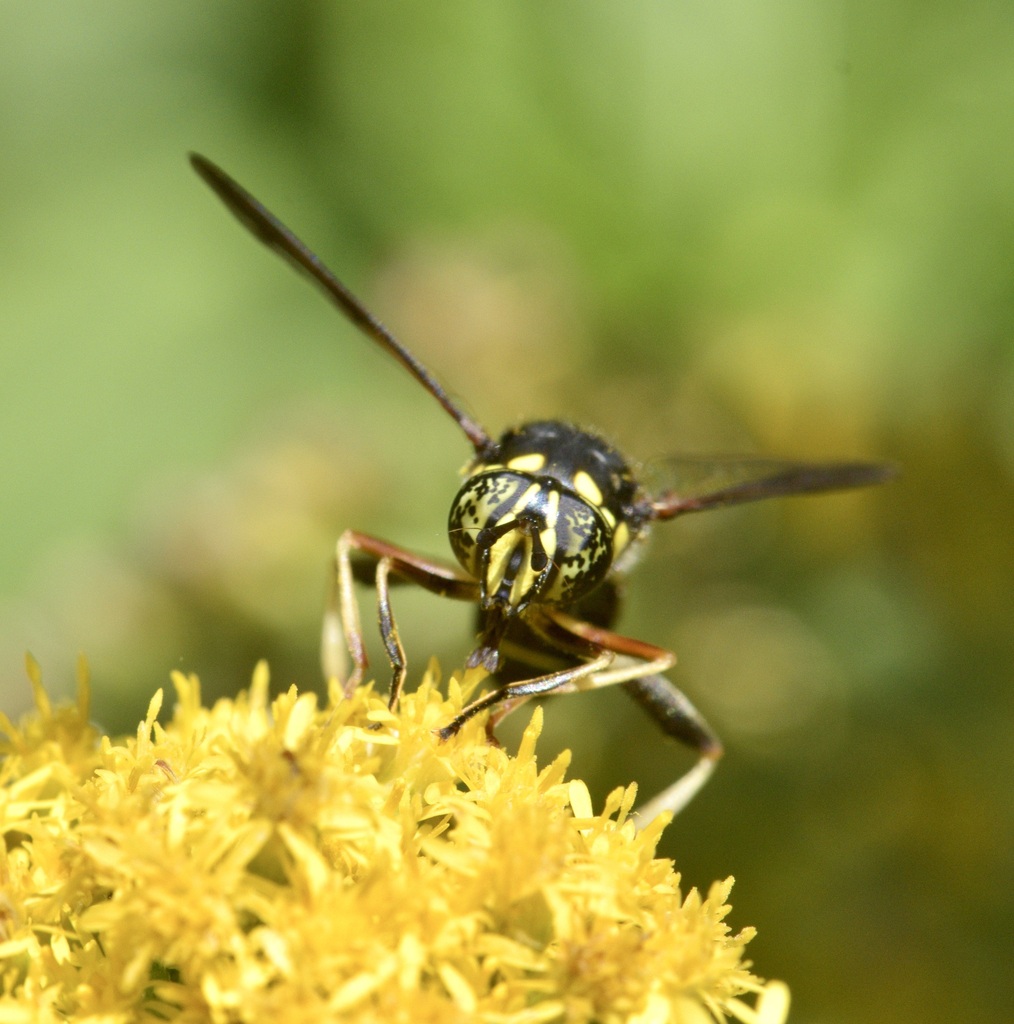
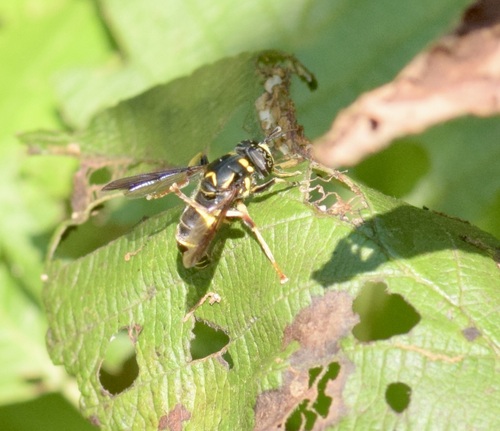
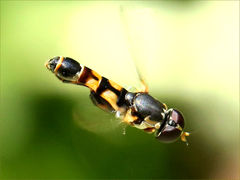
The four-lined hornet fly is a medium-sized hoverfly, 10 to 16 mm long, that mimics a wasp. Adults visit flowers, while the larvae live in decaying heartwood of deciduous trees.
Source: Wikipedia
How to recognize it
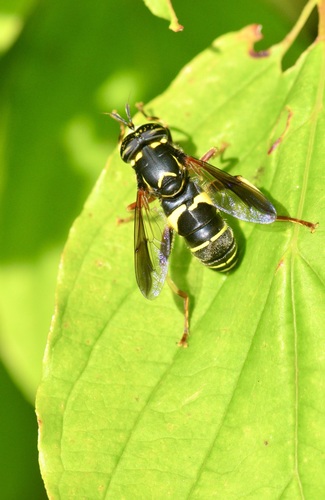
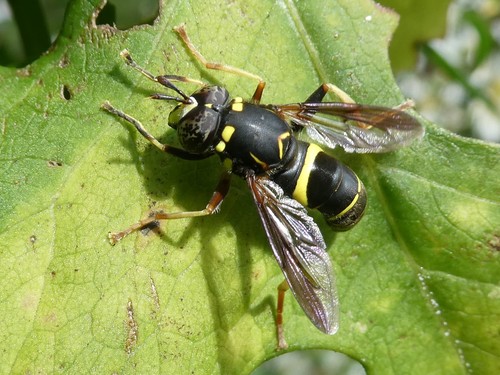
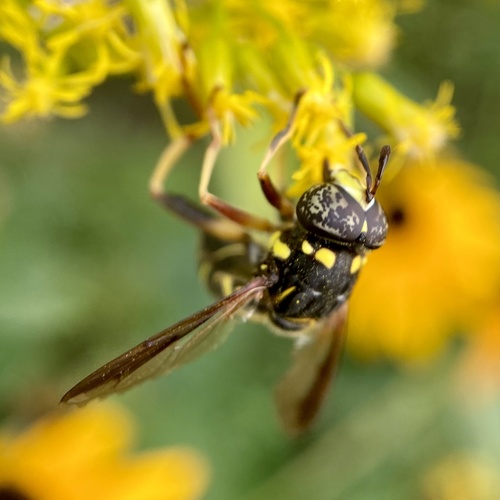
The head has a black vertex and, in females, a yellow antennal prominence; the face is yellow with a broad black stripe. The abdomen is a black, slender cylinder with four yellow bands.
Source: Wikipedia
Size
Body length ranges from 10 to 16 mm (about 0.4 to 0.6 in).
Source: Wikipedia
Where it lives
Adults are commonly seen on flowers. Larvae develop in moist, decaying heartwood of deciduous trees.
Source: Wikipedia
Life cycle
Males often hill-top, waiting on high ground for females.
Source: Wikipedia
Where it comes from
It occurs from western Canada across the United States to the northeastern part of North America.
Source: Wikipedia
Lookalikes
This species mimics a wasp in appearance.
Source: Wikipedia
Where it is found in the US
Recorded in 17 of 51 states and DC. Most records: Maine, Minnesota, Vermont, New York, Wisconsin, Michigan, New Hampshire, Nebraska.
Darker = more records. Counts are museum and citizen-science records, not population size.
Source: GBIF
Status: native in North America; native in Canada. Source: iNaturalist
Months it is reported in the US
Source: GBIF
More photos
Questions people ask
How can I tell a four-lined hornet fly apart from a real wasp?
Look for the slender, hoverfly shape, the black vertex, the yellow facial stripe, the inverted V yellow mark on the thorax, and the four yellow bands on a black abdomen.
Source: Wikipedia
Where might I find the larvae of this fly?
The larvae live in moist, decaying heartwood of deciduous trees, such as in rot holes.
Source: Wikipedia
Same family (Syrphidae)


Sources
- Wikipedia: https://en.wikipedia.org/wiki/Spilomyia_sayi
Look it up elsewhere: GBIF · iNaturalist · BugGuide · ITIS · Wikipedia
Text written 2026-10-23 from the sources above and checked sentence by sentence against them. Data fetched 2026-10-22.