 Bug FAQ
Forest Semilooper
Declana floccosa · Order: Lepidoptera · Family: Geometridae
Source: Wikipedia
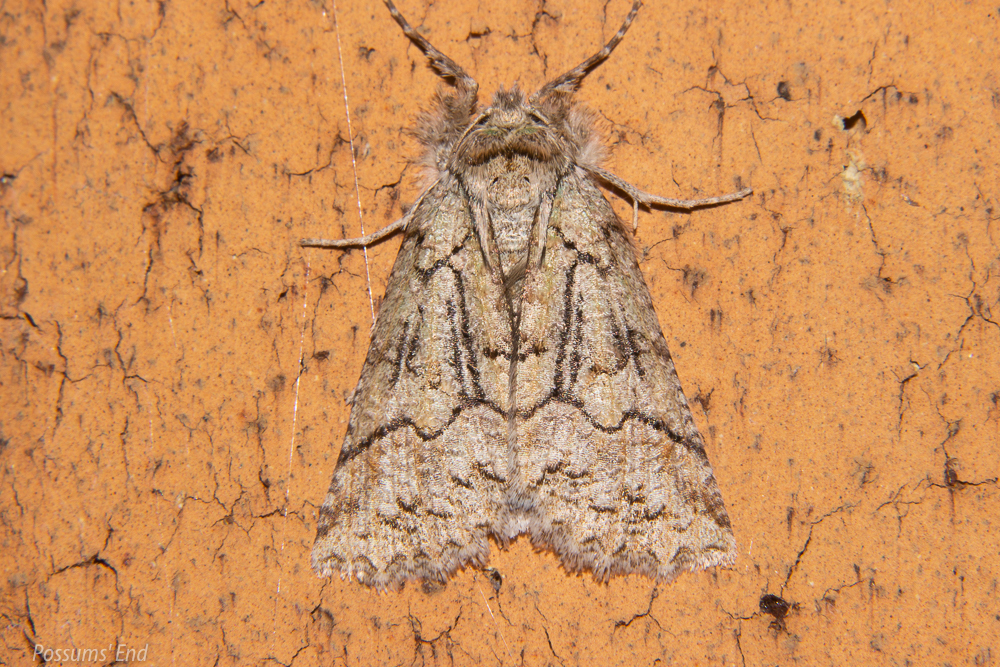
Adults have a wingspan of about 27 to 35 mm and show a lot of colour variation. It is found only in New Zealand.
Source: Wikipedia
Size
The wingspan ranges from 27 to 35 mm and colour patterns vary greatly.
Source: Wikipedia
Where it lives
It occurs only in New Zealand.
Source: Wikipedia
Life cycle
A long-term study showed the population fell sharply in the mid-1980s and began to recover in the late 1990s.
Source: Wikipedia
When you see it
Adults are attracted to light and are often caught in mercury-vapour light traps.
Source: Wikipedia
Where it comes from
The species is endemic to New Zealand.
Source: Wikipedia
Lookalikes
Declana floccosa is also called the forest semilooper or manuka moth and belongs to the Geometridae family.
Source: Wikipedia
More photos
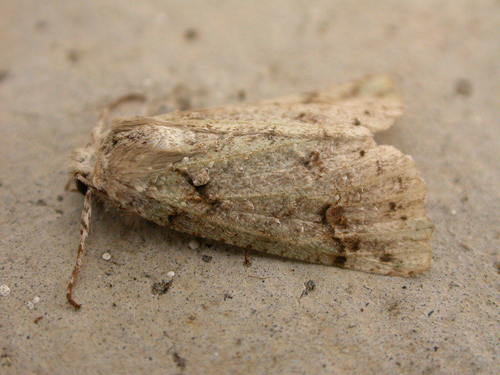
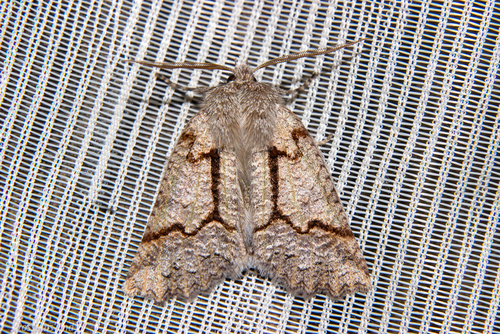
Questions people ask
Same family (Geometridae)
 Willow BeautyPeribatodes rhomboidaria
 Pale BeautyCampaea perlataDamages trees, gardens or crops
 Large Lace-border MothScopula limboundataDamages trees, gardens or crops
 Riband WaveIdaea aversata
 Yellow Shell MothCamptogramma bilineata
 Large Maple Spanworm MothProchoerodes lineolaDamages trees, gardens or crops
Sources
- Wikipedia: https://en.wikipedia.org/wiki/Declana_floccosa
Look it up elsewhere: GBIF · iNaturalist · BugGuide · Wikipedia
Text written 2026-10-22 from the sources above and checked sentence by sentence against them. Data fetched 2026-10-22.