 Bug FAQ
Forest Looper
Pseudocoremia leucelaea · Order: Lepidoptera · Family: Geometridae
Also called: Conifer Flash, white-marked brown moth
Source: Wikipedia
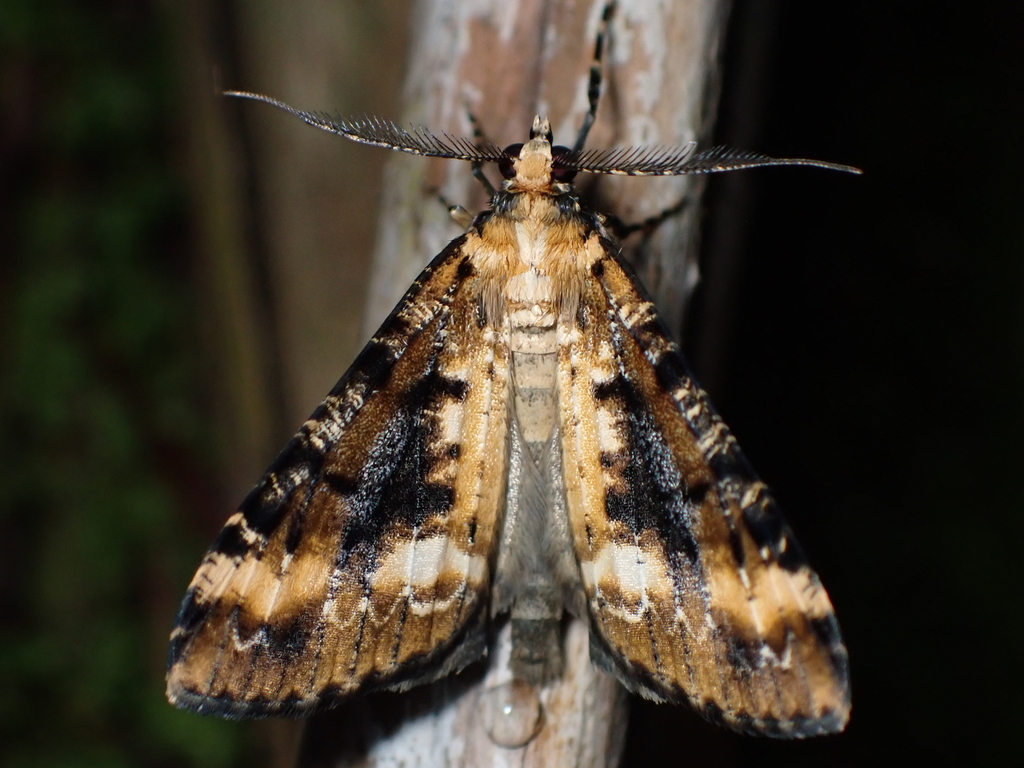
Adults have a wingspan of about 30 to 34 mm and show strong colour differences between males and females. The species lives in native and planted conifer forests throughout New Zealand and the caterpillars eat the foliage of many conifer species. Adults can be seen all year, but are most common from October to May, and there may be two generations each year.
Source: Wikipedia
How to recognize it
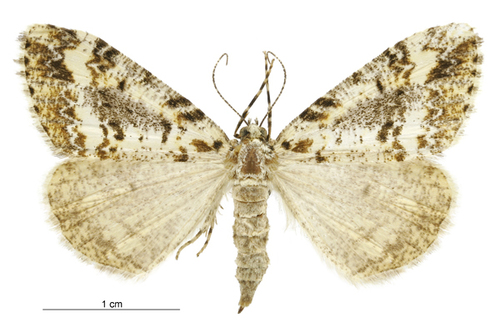
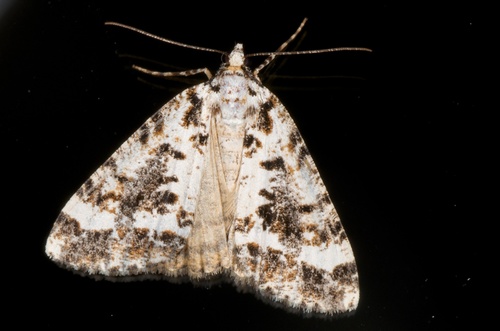
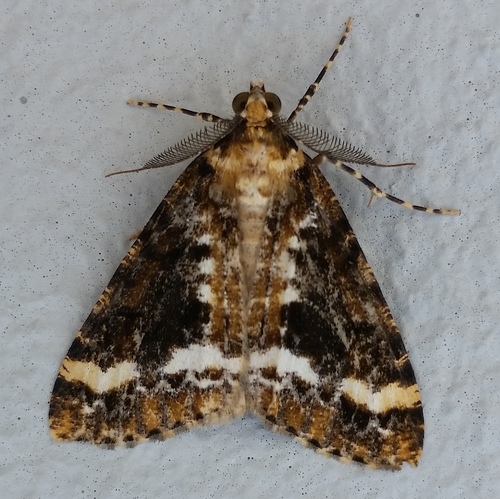
Adults are highly variable in appearance and show sexual dimorphism in colour. Females have a buff-toned base with earthy copper tones, while males are more earthy with distinct forewing banding that is less clear in females.
Source: Wikipedia
Size
The wingspan ranges from 30 mm (1.2 in) to 34 mm (1.3 in).
Source: Wikipedia
What it eats
Adults have been seen visiting flowering plants such as Pittosporum pimeleoides and Veronica salicifolia.
Source: Wikipedia
Life cycle
Two distinct generations per year are thought to occur. Eggs are laid on conifer foliage; the hatching larvae feed until they pupate.
Source: Wikipedia
When you see it
Adults are active throughout the year, with most sightings between November and May. They commonly emerge from October to April but can be observed year-round.
Source: Wikipedia
Where it comes from
The moth is endemic to New Zealand and occurs on the North, South and Stewart Islands.
Source: Wikipedia
Lookalikes
It may be confused with P. productata, but the two differ in the shape of the median forewing band. It also resembles P. melinata, yet it has longer antennal pectinations, a less rounded forewing termen, and a straight white posterior band across the forewing.
Source: Wikipedia
More photos

Questions people ask
What do the caterpillars eat?
The larvae feed on the leaves of many conifer species.
Source: Wikipedia
When are adult Forest Loopers most likely to be seen?
Adults are most commonly observed from October through May, though they can appear year-round.
Source: Wikipedia
How can I tell this moth apart from similar species?
Look for the distinct forewing band in males and the longer antennal pectinations and straight white posterior band that separate it from P. productata and P. melinata.
Source: Wikipedia
Where is this moth found?
It is endemic to New Zealand and occurs throughout the North, South and Stewart Islands.
Source: Wikipedia
Same family (Geometridae)




Sources
- Wikipedia: https://en.wikipedia.org/wiki/Pseudocoremia_leucelaea
Look it up elsewhere: GBIF · iNaturalist · BugGuide · Wikipedia
Text written 2026-10-23 from the sources above and checked sentence by sentence against them. Data fetched 2026-10-22.