 Bug FAQ
Fine-lined Gray
Exelis pyrolaria · Order: Lepidoptera · Family: Geometridae
Also called: Fine-lined Gray Moth
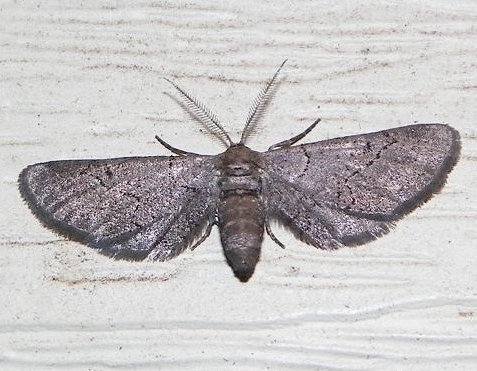
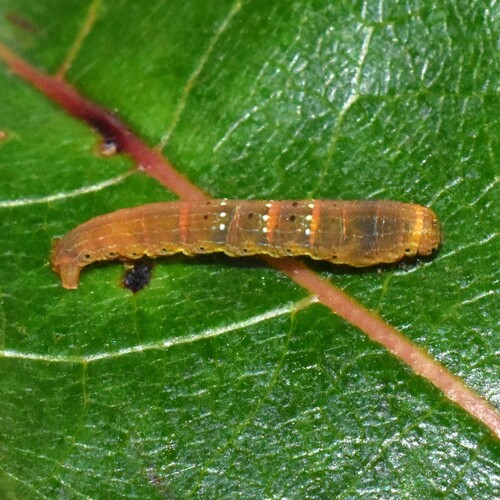
Males have a wingspan of about 22 to 25 mm and females 19 to 24 mm. Adults are on the wing from February through September, most often between May and August. The larvae feed on Chimaphila umbellata and Diospyros virginiana.
Source: Wikipedia
Size
Males have a wingspan of about 22 to 25 mm; females are slightly smaller at 19 to 24 mm.
Source: Wikipedia
What it eats
Larvae have been recorded feeding on the plants Chimaphila umbellata and Diospyros virginiana.
Source: Wikipedia
Life cycle
Adults are active from February to September, with peak records from May to August.
Source: Wikipedia
When you see it
The flight period spans February through September, most commonly May to August.
Source: Wikipedia
Where it comes from
The species is native to the eastern United States.
Source: Wikipedia
Where it is found in the US
Recorded in 20 of 51 states and DC. Most records: Mississippi, Alabama, Maryland, Oklahoma, Tennessee, Georgia, North Carolina, Louisiana.
Darker = more records. Counts are museum and citizen-science records, not population size.
Source: GBIF
Months it is reported in the US
Source: GBIF
More photos
Questions people ask
When can I see adult Fine-lined Gray moths?
Adults are on the wing from February through September, especially between May and August.
Source: Wikipedia
How large are these moths?
Males have a wingspan of about 22 to 25 mm and females 19 to 24 mm.
Source: Wikipedia
What do the caterpillars eat?
The larvae feed on Chimaphila umbellata and Diospyros virginiana.
Source: Wikipedia
Same family (Geometridae)




Sources
- Wikipedia: https://en.wikipedia.org/wiki/Exelis_pyrolaria
Look it up elsewhere: GBIF · iNaturalist · BugGuide · ITIS · Wikipedia
Text written 2026-10-25 from the sources above and checked sentence by sentence against them. Data fetched 2026-10-25.