 Bug FAQ
Festinatus-group Carpenter Ants
Camponotus festinatus · Order: Hymenoptera · Family: Formicidae
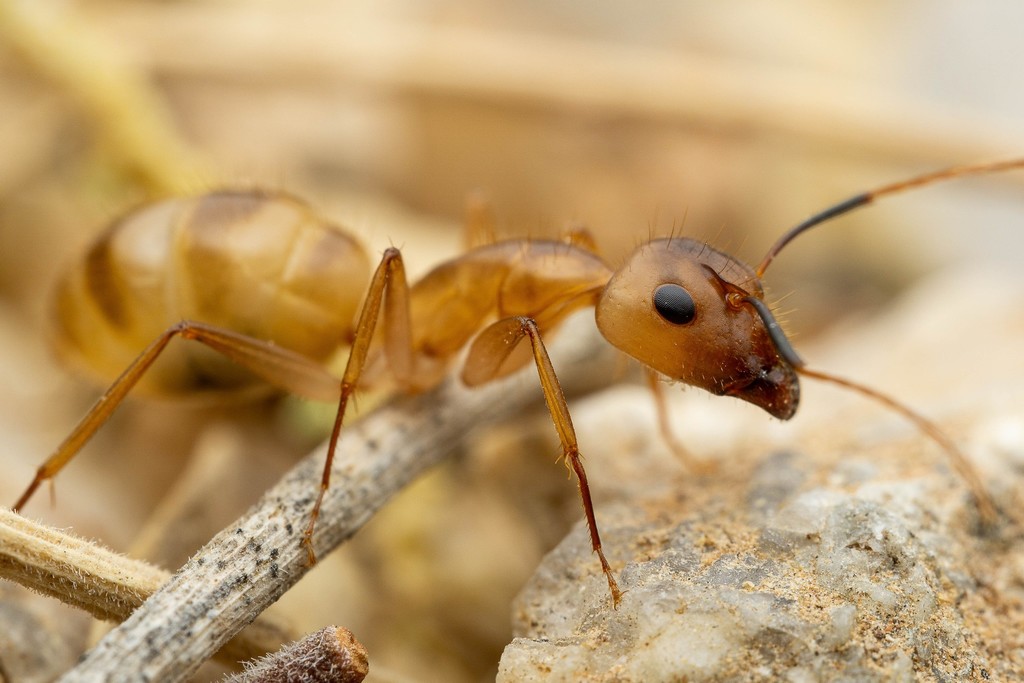
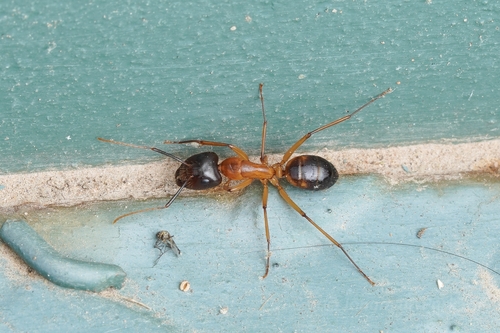
Camponotus festinatus is a carpenter ant native to the southwestern United States and northern Mexico. The ants feed only on liquid sources such as tree sap or the juices of dead animals.
Source: Wikipedia
Does it bite or sting?
These ants can bite with their mandibles. They have no functional sting but can spray formic acid from an acidopore.
Source: Wikipedia
Where it lives
It is most often found near Tucson, Arizona.
Source: Wikipedia
What it eats
The species is an exclusive liquid feeder. It can only consume tree sap or the juices from dead animals.
Source: Wikipedia
Life cycle
Queens start new colonies alone, sealing themselves in a chamber and raising the first workers without outside food.
Source: Wikipedia
Where it comes from
It occurs naturally in the southwestern U.S. and the northern part of Mexico.
Source: Wikipedia
Lookalikes
The species shows a wide range of forms that make it hard to categorize. Two possible new subspecies and two split-off species have been described from this complex.
Source: Wikipedia
Where it is found in the US
Recorded in 9 of 51 states and DC. Most records: Texas, Arizona, New Mexico, California, Utah, Missouri, North Carolina, Louisiana.
Darker = more records. Counts are museum and citizen-science records, not population size.
Source: GBIF
Status: native in North America; native in United States. Source: iNaturalist
Months it is reported in the US
Source: GBIF
More photos
Questions people ask
What do these ants eat?
They feed only on liquids, such as sap from trees or the juices of dead animals.
Source: Wikipedia
Can they bite or sting?
They can bite with their mandibles, but they do not have a functional sting; instead they may spray formic acid.
Source: Wikipedia
Same family (Formicidae)
 Eastern Black Carpenter AntCamponotus pennsylvanicusCan damage your home
 Red Imported Fire AntSolenopsis invictaCan sting
 American Winter AntPrenolepis imparis
 Argentine AntLinepithema humileNuisance, not dangerous
 Immigrant Pavement AntTetramorium immigransCan sting
 Odorous House AntTapinoma sessileCan damage your home
Sources
- Wikipedia: https://en.wikipedia.org/wiki/Camponotus_festinatus
Look it up elsewhere: GBIF · iNaturalist · BugGuide · ITIS · Wikipedia
Text written 2026-10-23 from the sources above and checked sentence by sentence against them. Data fetched 2026-10-23.