 Bug FAQ
Feathered Thorn
Colotois pennaria · Order: Lepidoptera · Family: Geometridae
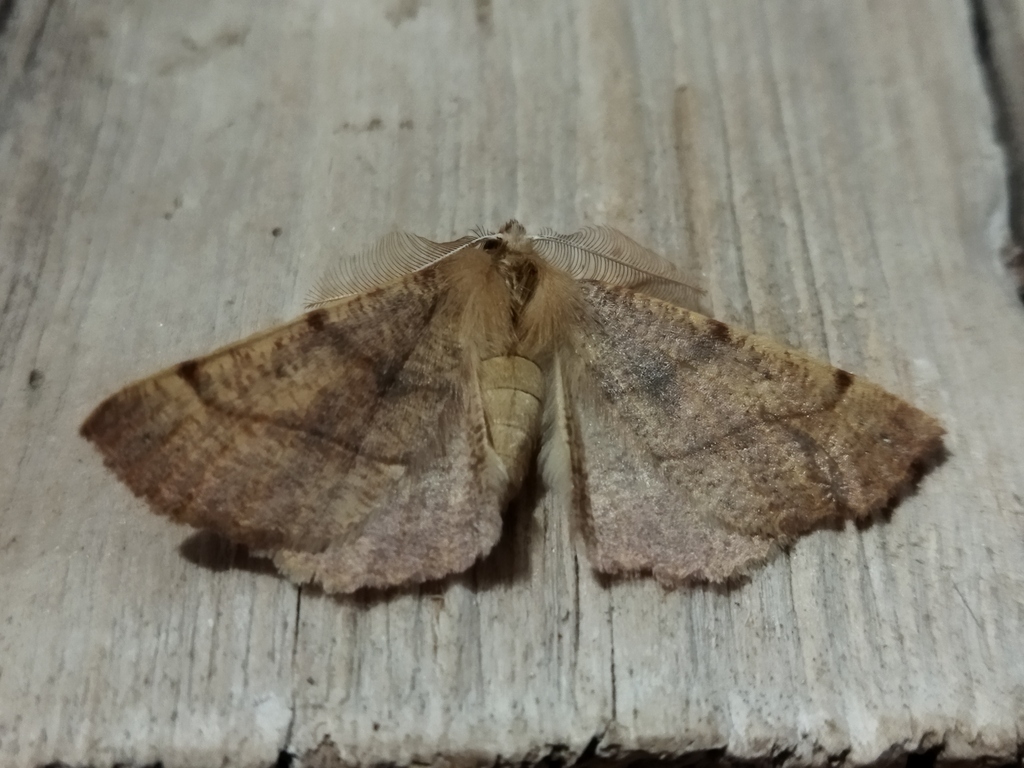
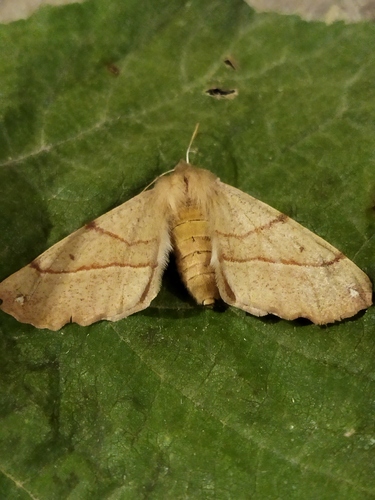
The Feathered Thorn moth has a wingspan of about 46 to 50 mm, with males usually a bit larger and broader than females. Its forewings are brown, ranging from light drab to richer reddish tones, often showing two dark bands and a small discal spot that may be faint. It lives in deciduous and mixed forests, large gardens, and is found across Europe, the Near East, and into East Asia.
Source: Wikipedia
Size
Wingspan ranges from 46 to 50 mm; males are generally larger and have broader wings than females.
Source: Wikipedia
Where it lives
Found mainly in deciduous and mixed forests and large gardens.
Source: Wikipedia
When you see it
Adults are on the wing from September to November.
Source: Wikipedia
Where it comes from
Occurs throughout Europe, the Near East, the Caucasus, and extends east to Sakhalin, Amur, Primorye, Korea, and Japan (subspecies ussuriensis).
Source: Wikipedia
More photos
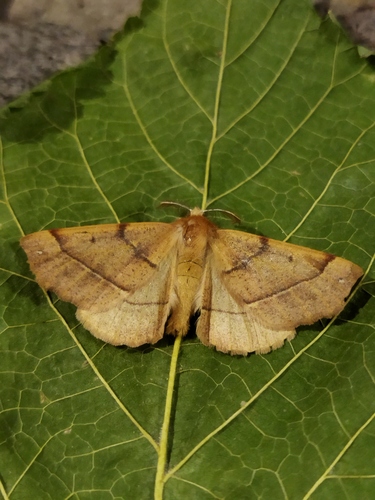
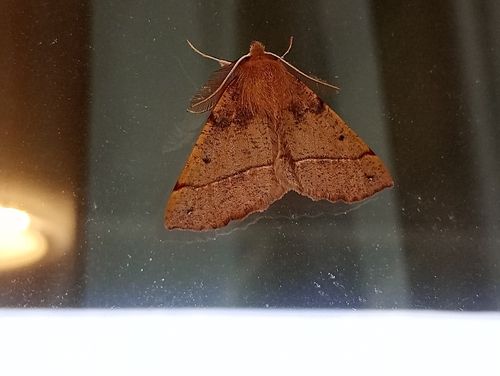
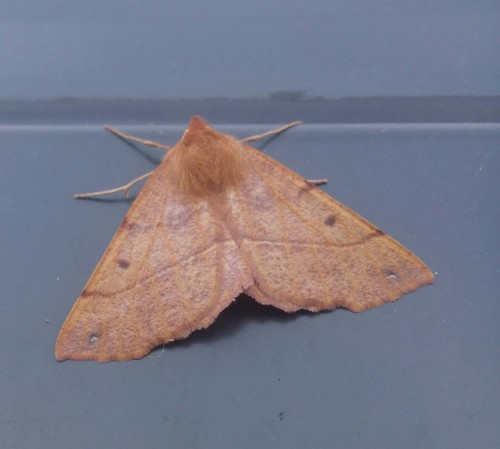
Same family (Geometridae)
 Willow BeautyPeribatodes rhomboidaria
 Pale BeautyCampaea perlataDamages trees, gardens or crops
 Large Lace-border MothScopula limboundataDamages trees, gardens or crops
 Riband WaveIdaea aversata
 Yellow Shell MothCamptogramma bilineata
 Large Maple Spanworm MothProchoerodes lineolaDamages trees, gardens or crops
Sources
- Wikipedia: https://en.wikipedia.org/wiki/Feathered_thorn
Look it up elsewhere: GBIF · iNaturalist · BugGuide · ITIS · Wikipedia
Text written 2026-10-22 from the sources above and checked sentence by sentence against them. Data fetched 2026-10-22.