 Bug FAQ
Fall Cankerworm Moth
Alsophila pometaria · Order: Lepidoptera · Family: Geometridae
Also called: Fall Cankerworm
Source: Wikipedia
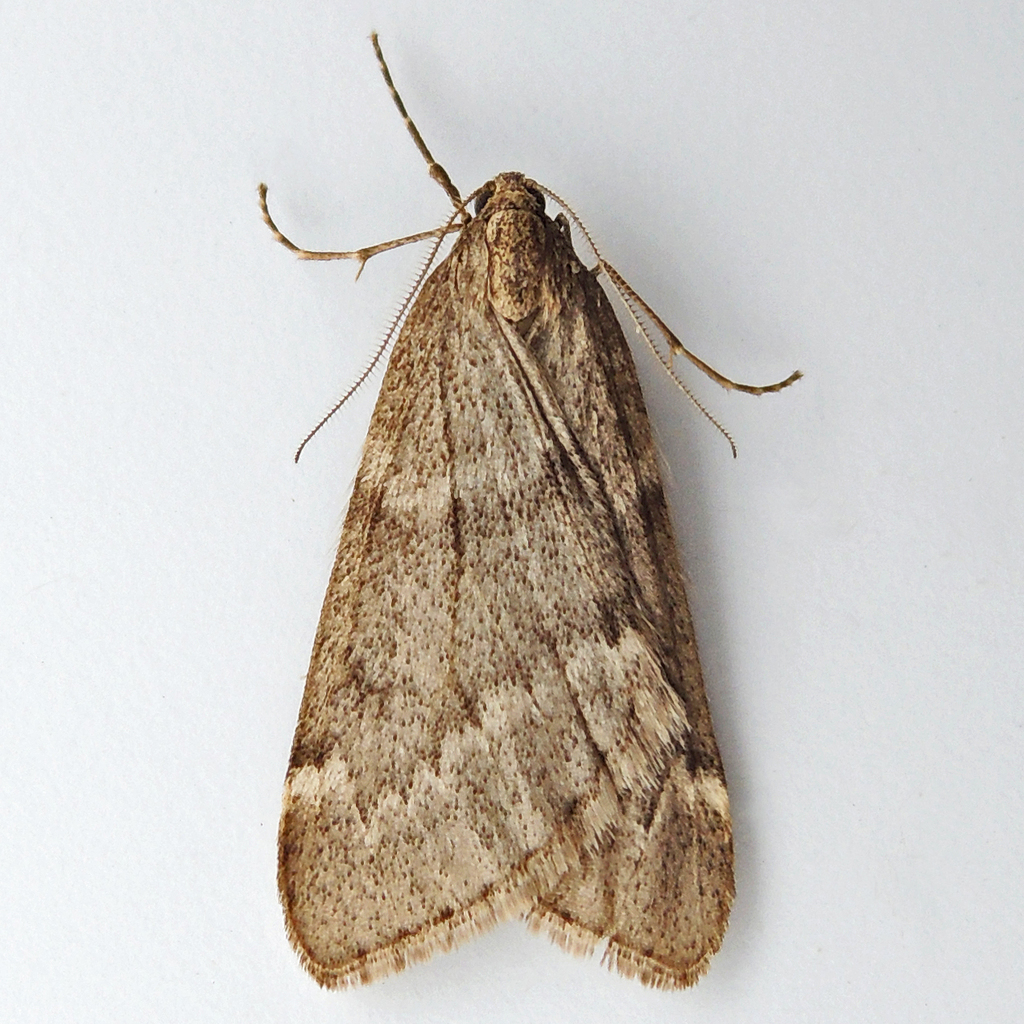
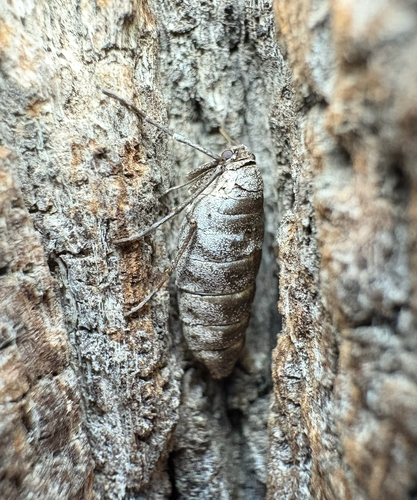
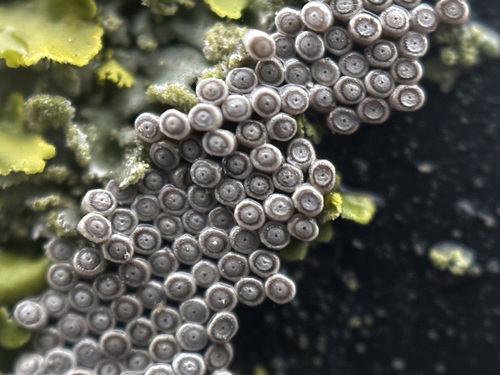
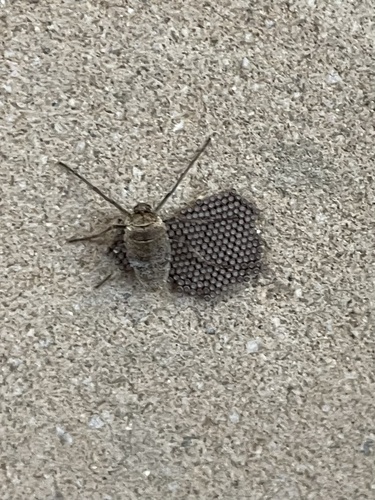
Caterpillars grow to about 2.5 cm and are green with a white line or darker with a black stripe along the back. Adults have a wingspan of 2.5 to 3.5 cm and emerge in the fall to lay eggs on hardwood trees. The larvae feed on many deciduous trees such as elm, ash, and maple, causing serious defoliation in spring.
Source: Wikipedia
How to recognize it
Light-green caterpillars show a white line down the body, while darker ones have a black stripe along the back.
Source: Wikipedia
Size
Caterpillars reach about 25 mm in length. Male moths have a wingspan between 25 and 35 mm.
Source: Wikipedia
Is it a pest in the house?
The looping caterpillars can cause major defoliation of new spring growth on many tree species. If trees lose foliage two years in a row, especially when stressed by drought, they may die.
Source: Wikipedia
How to get rid of it
Birds and ground beetles such as Calosoma frigidum naturally prey on the caterpillars.
Source: Wikipedia
Where it lives
Pupae are wrapped in silk cocoons and buried just below the soil surface.
Source: Wikipedia
What it eats
Larvae feed on a wide range of deciduous trees and shrubs, including elm, ash, and maple. The caterpillars hatch in spring and are active then.
Source: Wikipedia
When you see it
Adults appear in the fall, while the larvae become active in spring.
Source: Wikipedia
Where it comes from
The species is native to North America, ranging from eastern Canada to the western United States.
Source: Wikipedia
Where it is found in the US
Recorded in 44 of 51 states and DC. Most records: Minnesota, New York, Michigan, Connecticut, Massachusetts, Pennsylvania, Virginia, Delaware.
Darker = more records. Counts are museum and citizen-science records, not population size.
Source: GBIF
Status: native in North America; native in Canada; native in United States. Source: iNaturalist
Months it is reported in the US
Source: GBIF
More photos

Questions people ask
How can I control fall cankerworms?
Encourage natural predators like birds and ground beetles, which feed on the caterpillars.
Source: Wikipedia
When do fall cankerworms appear?
Adults emerge in the fall to lay eggs, and the larvae hatch and become active in spring.
Source: Wikipedia
What trees do they damage?
They feed on many deciduous trees, especially elm, ash, and maple, causing severe leaf loss.
Source: Wikipedia
Same family (Geometridae)
 Willow BeautyPeribatodes rhomboidaria
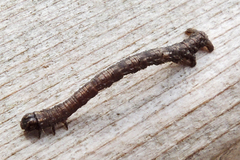 Pale BeautyCampaea perlataDamages trees, gardens or crops
 Large Lace-border MothScopula limboundataDamages trees, gardens or crops
 Riband WaveIdaea aversata
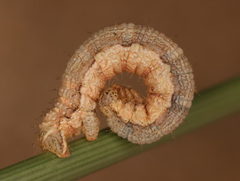 Yellow Shell MothCamptogramma bilineata
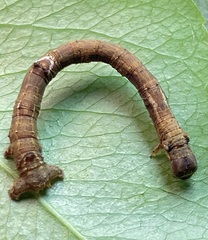 Large Maple Spanworm MothProchoerodes lineolaDamages trees, gardens or crops
Sources
- Wikipedia: https://en.wikipedia.org/wiki/Alsophila_pometaria
Look it up elsewhere: GBIF · iNaturalist · BugGuide · ITIS · Wikipedia
Text written 2026-10-23 from the sources above and checked sentence by sentence against them. Data fetched 2026-10-23.