 Bug FAQ
European Gate-keeper Ant
Colobopsis truncata · Order: Hymenoptera · Family: Formicidae
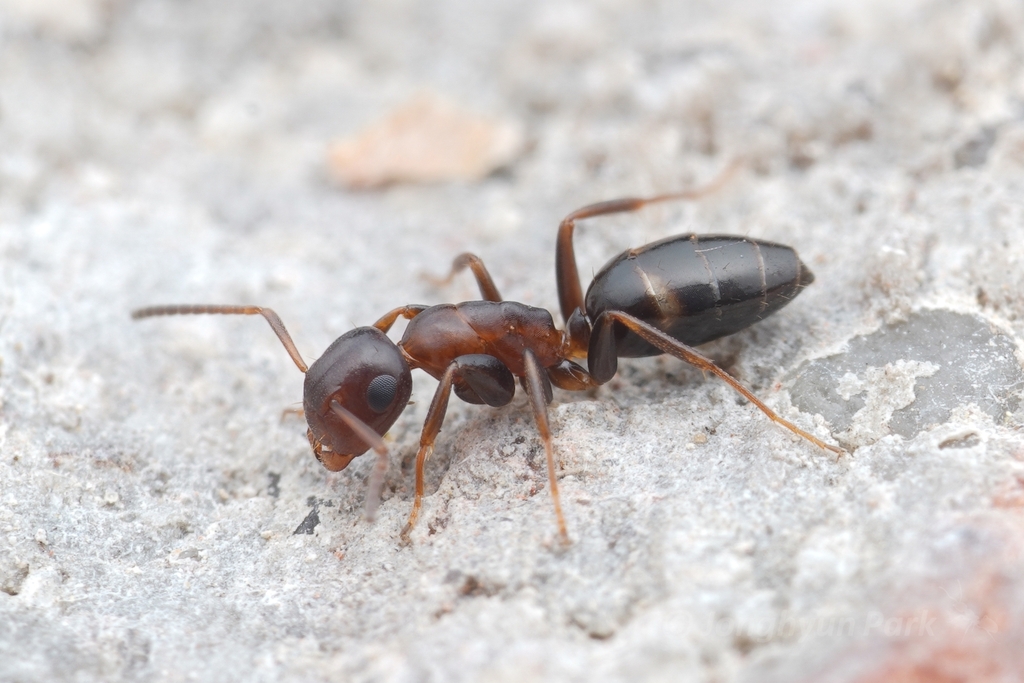
European Gate-keeper Ant workers are on average smaller than those of the similar species Colobopsis imitans (size data show negative values for C. truncata). They live in trees, nesting and foraging arboreally, and are considered a subordinate ant species. The species occurs naturally in parts of Europe and Asia.
Source: Wikipedia
How to recognize it
It can be easily mistaken for the truncata-like colour morph of Colobopsis imitans.
Source: Wikipedia
Size
Worker size measurements are negative for C. truncata, whereas they are positive for C. imitans, indicating C. truncata workers are smaller.
Source: Wikipedia
Where it lives
This ant is arboreal, preferring to nest and forage in trees. It is a subordinate species within its ant community.
Source: Wikipedia
Where it comes from
Colobopsis truncata is native to parts of Europe and Asia.
Source: Wikipedia
Lookalikes
It is often confused with the truncata-like colour morph of Colobopsis imitans.
Source: Wikipedia
More photos

Questions people ask
How can I tell European Gate-keeper Ant apart from similar ants?
Check the worker size (C. truncata workers are smaller) and use the discriminant formula DColo to separate it from the similar colour morph of C. imitans.
Source: Wikipedia
Where does this ant live?
It lives in trees, nesting and foraging arboreally, and is a subordinate species in its habitat.
Source: Wikipedia
Same family (Formicidae)
 Eastern Black Carpenter AntCamponotus pennsylvanicusCan damage your home
 Red Imported Fire AntSolenopsis invictaCan sting
 American Winter AntPrenolepis imparis
 Argentine AntLinepithema humileNuisance, not dangerous
 Immigrant Pavement AntTetramorium immigransCan sting
 Odorous House AntTapinoma sessileCan damage your home
Sources
- Wikipedia: https://en.wikipedia.org/wiki/Colobopsis_truncata
Look it up elsewhere: GBIF · iNaturalist · BugGuide · Wikipedia
Text written 2026-10-23 from the sources above and checked sentence by sentence against them. Data fetched 2026-10-22.