 Bug FAQ
European Earwig
Forficula auricularia · Order: Dermaptera · Family: Forficulidae
Also called: Common Earwig, Earwig
Source: Wikipedia
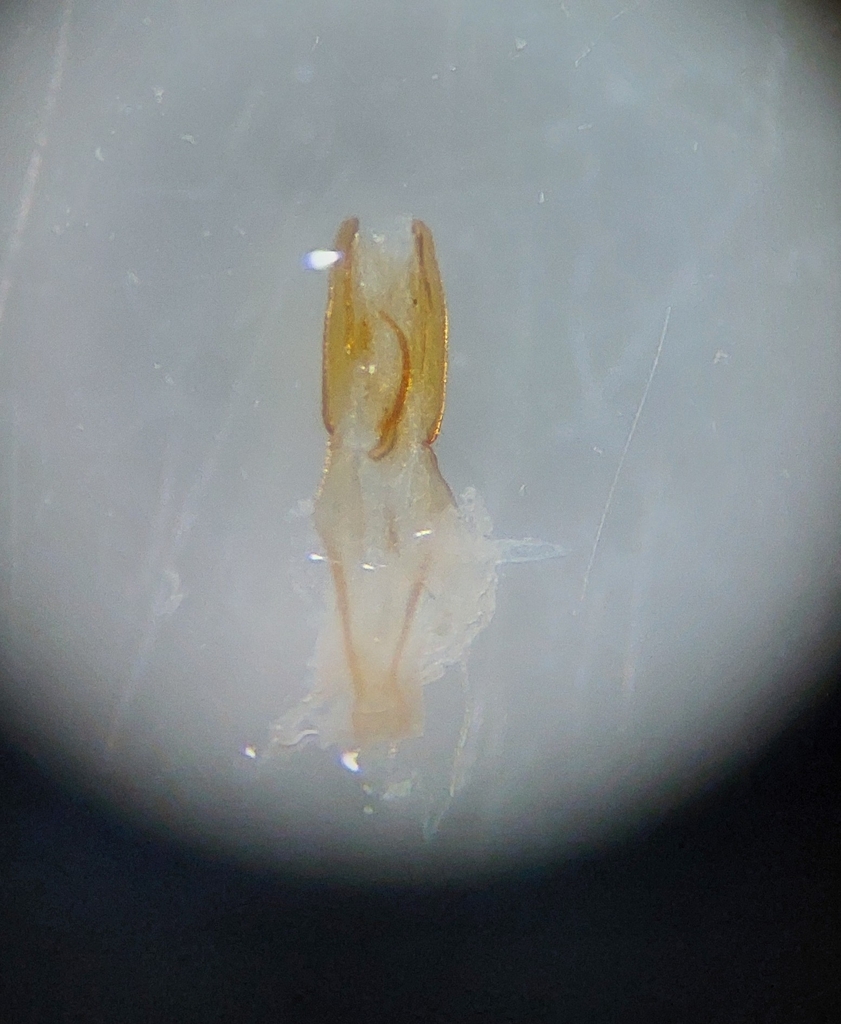
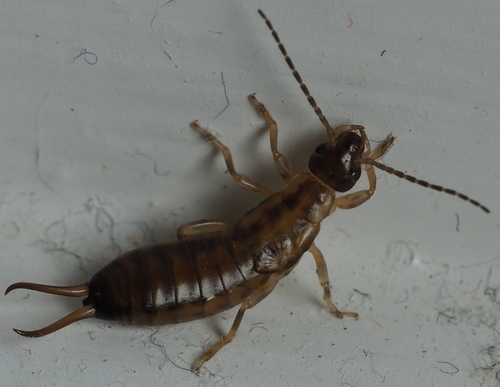
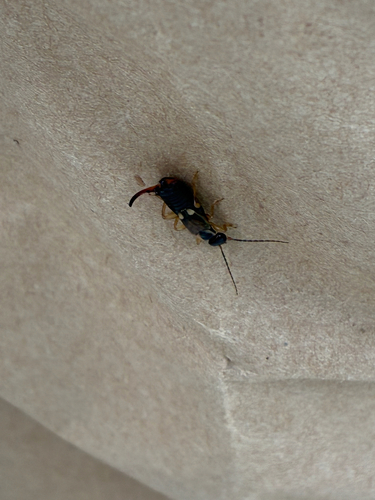
They are small reddish-brown insects about 12 to 15 mm long with a flattened body and forceps-like tail segments. They like cool, moist places, live in many parts of North America, and will feed on garden vegetables and pantry items.
Source: Wikipedia
Size
Adults measure about 12 to 15 mm (0.47 to 0.59 in) in length.
Source: Wikipedia
Is it a pest in the house?
They are common indoor insects in North America and often enter home crevices, where they may eat stored food.
Source: Wikipedia
How to get rid of it
Natural enemies like certain parasitoid flies, fungi and birds have been used for control, and insecticides can work though few products target earwigs specifically.
Source: Wikipedia
Where it lives
They thrive in cool, moist habitats and grow best at around 24 °C (75 °F).
Source: Wikipedia
What it eats
They eat a variety of vegetables such as cabbage, cauliflower, lettuce, potatoes and cucumbers, and can also damage corn silk.
Source: Wikipedia
Life cycle
Their eggs can survive both cold and heat, and adult earwigs can hibernate in cool temperatures but do poorly in poorly drained soils.
Source: Wikipedia
Where it comes from
Originally from Europe, western Asia and possibly North Africa, they were introduced to North America in the early 1900s and have spread widely.
Source: Wikipedia
Where it is found in the US
Recorded in 39 of 51 states and DC. Most records: Pennsylvania, Illinois, New York, Maryland, Massachusetts, Michigan, Ohio, California.
Darker = more records. Counts are museum and citizen-science records, not population size.
Source: GBIF
Status: introduced in United States; introduced in Canada. Source: iNaturalist
Months it is reported in the US
Source: GBIF
More photos
Questions people ask
Can earwigs damage my garden?
Yes, they feed on many garden vegetables and can also damage corn silk.
Source: Wikipedia
How can I get rid of earwigs in my house?
Seal cracks, reduce moisture, and consider insecticides or natural predators like certain flies and fungi.
Source: Wikipedia
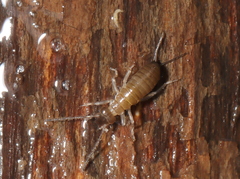
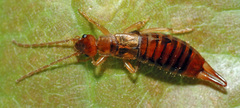
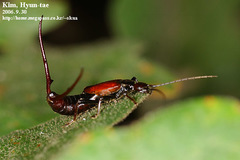
Same family (Forficulidae)

Sources
- Wikipedia: https://en.wikipedia.org/wiki/Forficula_auricularia
Look it up elsewhere: GBIF · iNaturalist · BugGuide · ITIS · Wikipedia
Text written 2026-10-22 from the sources above and checked sentence by sentence against them. Data fetched 2026-10-22.