 Bug FAQ
Anechura bipunctata
Anechura bipunctata · Order: Dermaptera · Family: Forficulidae
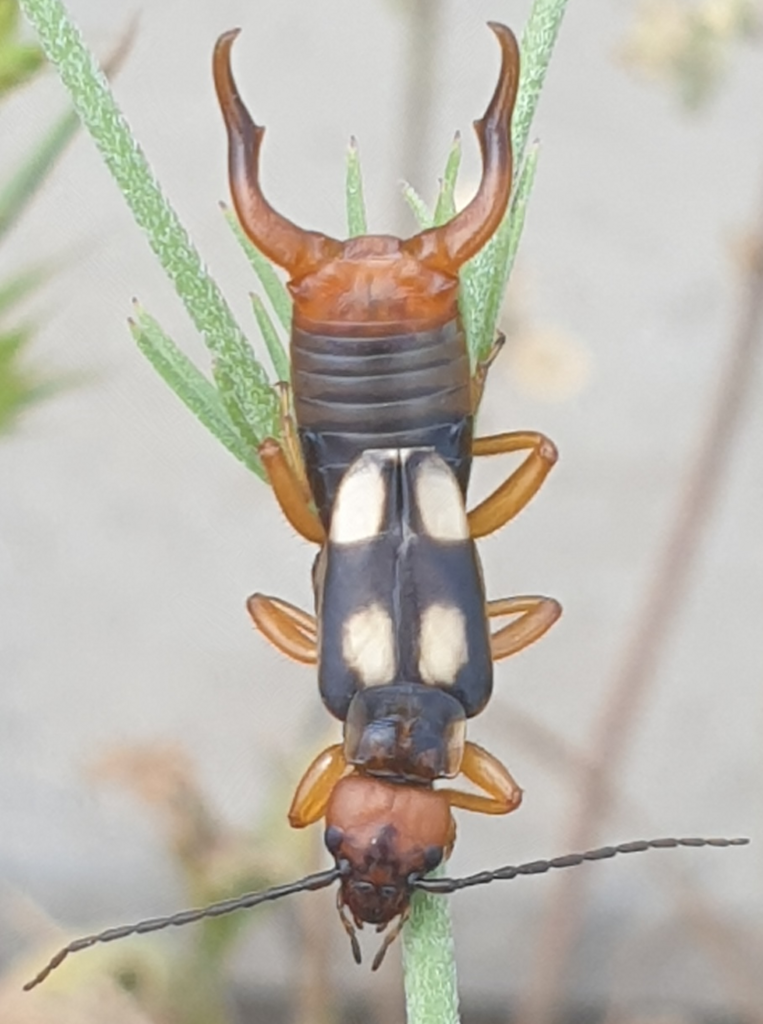
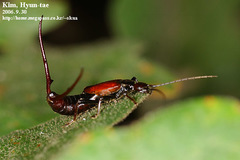
It is a winged bug with a black body and yellow markings on the wing covers, while its head, legs and sides of the pronotum are yellow-orange. Adults are about 12 to 20 mm long, including the cerci. It lives high in the mountains, usually above 2000 m elevation.
Source: Wikipedia
How to recognize it
The insect has a black body with a yellow spot on each elytron; its head, legs and the sides of the pronotum are yellowish-orange.
Source: Wikipedia
Size
Length ranges from 12 to 20 mm, measured including the cerci.
Source: Wikipedia
Where it lives
It is a montane species found at elevations above 2000 m.
Source: Wikipedia
Where it comes from
The species occurs throughout most of Europe.
Source: Wikipedia
Questions people ask
What does Anechura bipunctata look like?
It has a black body with yellow markings on the wing covers and yellow-orange head, legs and pronotum sides.
Source: Wikipedia
How big does this bug get?
Adults measure between 12 and 20 mm long, including the cerci.
Source: Wikipedia
Where is this species found?
It lives high in the mountains, usually above 2000 m, and is present in most of Europe.
Source: Wikipedia
Same family (Forficulidae)

Sources
- Wikipedia: https://en.wikipedia.org/wiki/Anechura_bipunctata
Look it up elsewhere: GBIF · iNaturalist · BugGuide · Wikipedia
Text written 2026-10-23 from the sources above and checked sentence by sentence against them. Data fetched 2026-10-23.