 Bug FAQ
European Corn Borer Moth
Ostrinia nubilalis · Order: Lepidoptera · Family: Crambidae
Also called: European Corn Borer
Source: Wikipedia

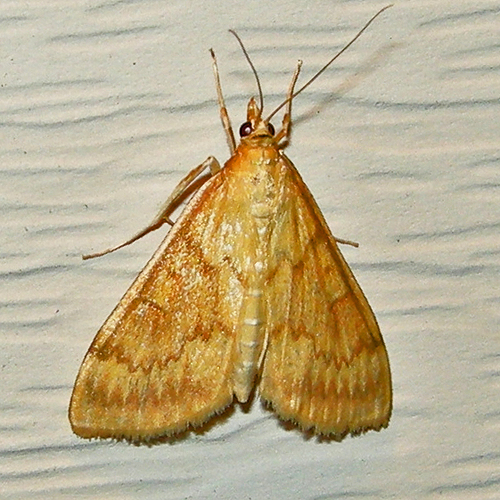
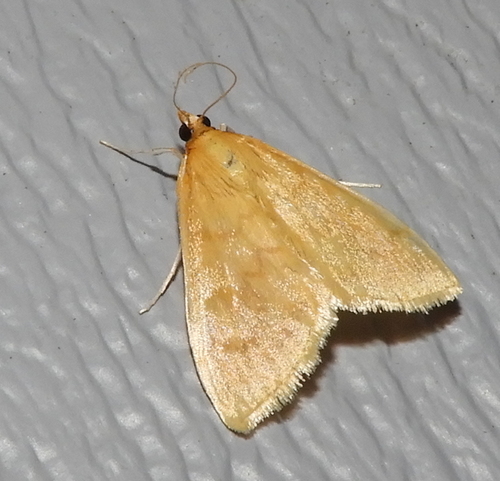
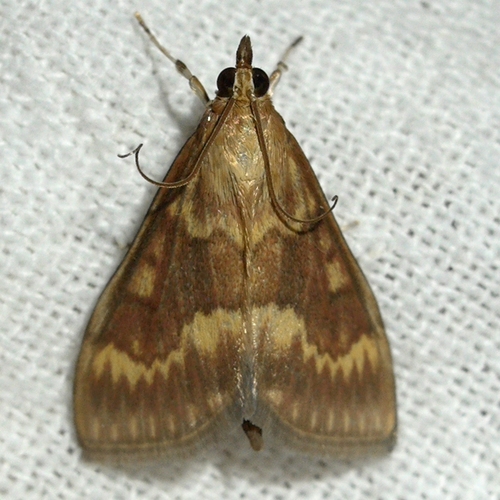
Adult moths are about 2.5 cm long with a wingspan of 2.6 to 3 cm and the female is light yellow-brown with dark wavy bands; the male is slightly smaller and darker. It originated in Europe, was first seen in North America in 1917, and now lives where corn is grown during warm months above 10 °C. Control methods include Trichogramma wasps, Beauveria fungus, Nosema protozoa, and planting refuge areas when using Bt corn.
Source: Wikipedia
How to recognize it
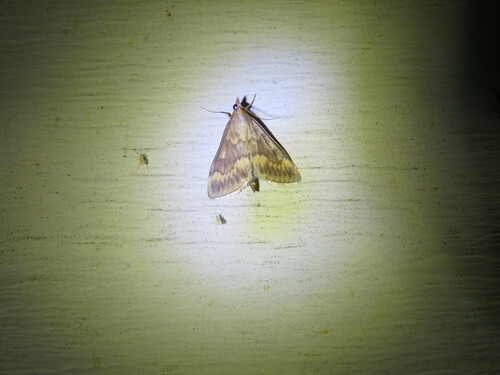
Females are light yellow-brown with irregular dark wavy bands on the wings; males are a bit smaller and darker.
Source: Wikipedia
Size
Adults measure about 25 mm in length with a wingspan of 26 to 30 mm.
Source: Wikipedia
Is it a pest in the house?
The moth is a grain pest, especially of maize, and its larvae damage crops by tunneling, which lowers agricultural yields.
Source: Wikipedia
How to get rid of it
Biological controls include Trichogramma parasitoid wasps, the fungus Beauveria bassiana and the protozoan Nosema pyrausta; when planting Bt corn, a non-Bt refuge area must be kept.
Source: Wikipedia
Where it lives
It is a pest of grain, especially maize, and can also infest beans, peppers, potatoes and snap peas when corn is scarce.
Source: Wikipedia
What it eats
Caterpillars chew tunnels through corn plants, reducing yields, and will move to other vegetables if corn is unavailable.
Source: Wikipedia
Life cycle
It goes through egg, larva, pupa and adult stages, with bivoltine populations pupating twice each year, in spring and again in midsummer.
Source: Wikipedia
When you see it
Development proceeds when temperatures are above 10 °C, matching the warm growing season of corn in North America.
Source: Wikipedia
Where it is found in the US
Recorded in 40 of 51 states and DC. Most records: Michigan, Minnesota, Ohio, Massachusetts, Wisconsin, Virginia, New York, Iowa.
Darker = more records. Counts are museum and citizen-science records, not population size.
Source: GBIF
Status: introduced in Canada; introduced in United States. Source: iNaturalist
Months it is reported in the US
Source: GBIF
More photos
Questions people ask
How can I control a European corn borer infestation?
Use biological agents like Trichogramma wasps, Beauveria fungus or Nosema, and plant refuge strips when using Bt corn.
Source: Wikipedia
What crops are affected by the European corn borer?
Primarily corn, but also beans, peppers, potatoes and snap peas when corn is scarce.
Source: Wikipedia
Same family (Crambidae)
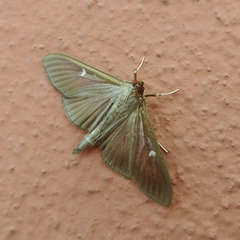 Box Tree MothCydalima perspectalisDamages trees, gardens or crops
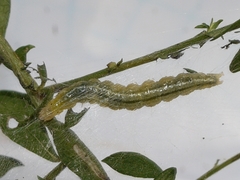 Celery Leaftier MothUdea rubigalisDamages trees, gardens or crops
 Elegant Grass-veneerMicrocrambus elegans
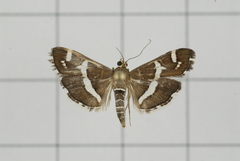 Hawaiian Beet Webworm MothSpoladea recurvalisDamages trees, gardens or crops
 Garden Grass-veneerChrysoteuchia culmellaDamages trees, gardens or crops
 Bluegrass Webworm MothParapediasia teterrellusDamages trees, gardens or crops
Sources
- Wikipedia: https://en.wikipedia.org/wiki/European_corn_borer
Look it up elsewhere: GBIF · iNaturalist · BugGuide · ITIS · Wikipedia
Text written 2026-10-22 from the sources above and checked sentence by sentence against them. Data fetched 2026-10-22.