 Bug FAQ
Little Yellow
Eurema lisa · Order: Lepidoptera · Family: Pieridae
Also called: Little Sulfur, little sulphur
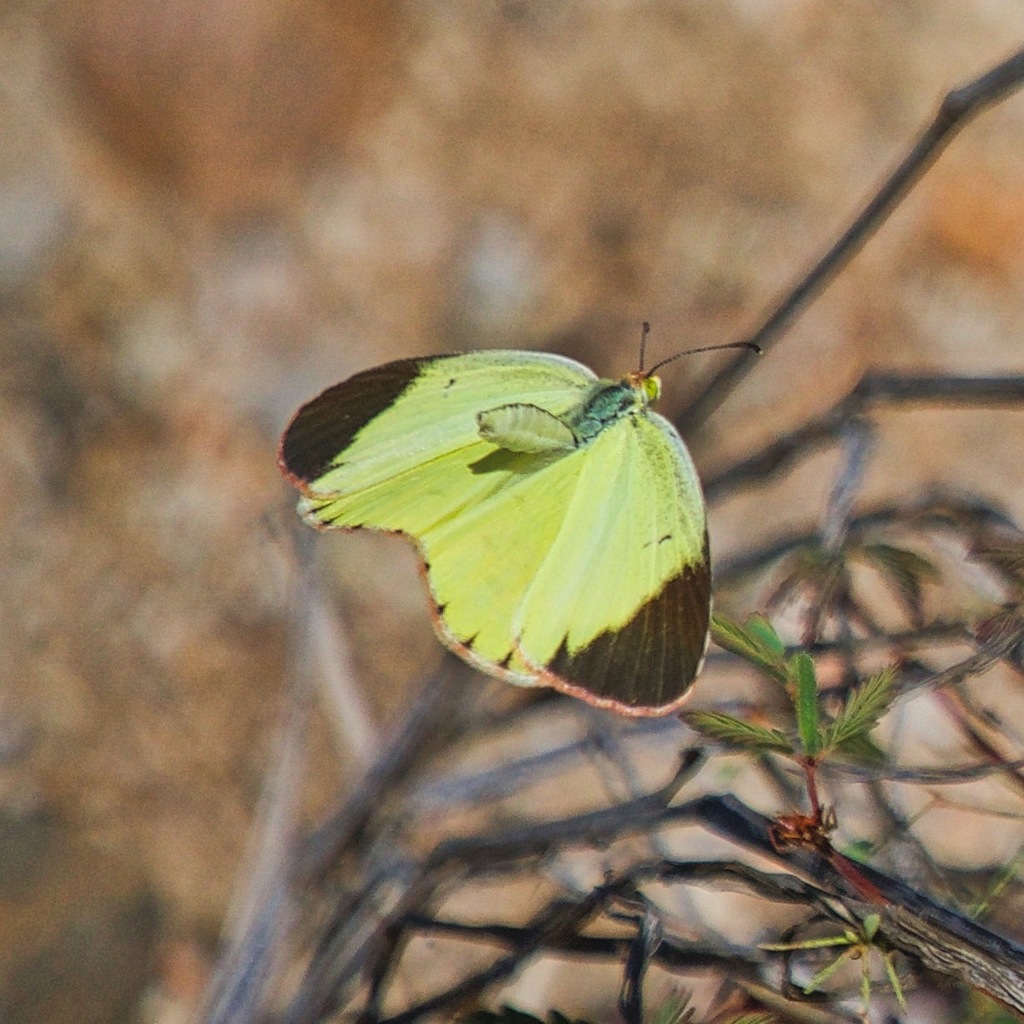
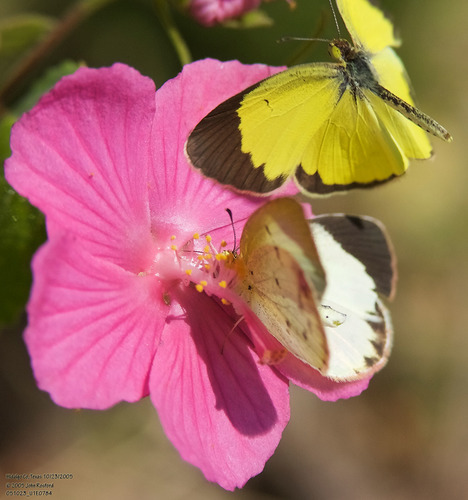
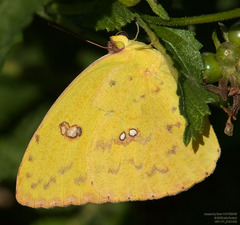
The little yellow butterfly has a wingspan of about 3.2 to 4.4 cm and shows a dark border on the forewing and two black spots on the underside of the hindwing; females may be white and males reflect ultraviolet light. It lives in open, often old-field habitats across Central America and the southern United States, can move north to Canada, and adults feed on nectar from asters and several Cassia and Mimosa species.
Source: Wikipedia
How to recognize it
Females may appear white (alba form) while males reflect ultraviolet light.
Source: Wikipedia
Size
Wingspan ranges from 32 to 44 mm (about 3.2 to 4.4 cm).
Source: Wikipedia
Where it lives
They are found in open areas, most often in old fields.
Source: Wikipedia
What it eats
Adults sip nectar from Aster species and from several Cassia plants such as C. fasciculata, C. marilandica, C. occidentalis and C. nictitans. In Puerto Rico they also feed on Glycine, and in the Antilles on Mimosa pudica and Mimosa strigillosa.
Source: Wikipedia
Life cycle
In the southern part of its range up to five generations may occur each year, while the northern range sees one to three. Males patrol on warm days to find females, and females lay single eggs on the midveins or rachis of host plants.
Source: Wikipedia
Lookalikes
Do not confuse them with the sleepy orange, which is larger and orange rather than yellow.
Source: Wikipedia
Where it is found in the US
Recorded in 37 of 51 states and DC. Most records: Texas, Florida, Illinois, Louisiana, Georgia, Missouri, Arkansas, Alabama.
Darker = more records. Counts are museum and citizen-science records, not population size.
Source: GBIF
Status: native in North America; native in Canada; native in United States. Source: iNaturalist
Months it is reported in the US
Source: GBIF
More photos
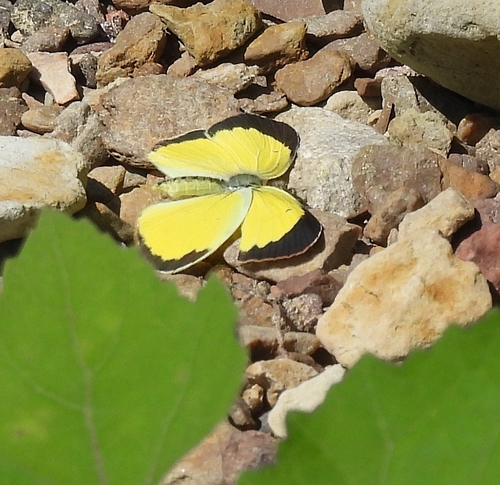
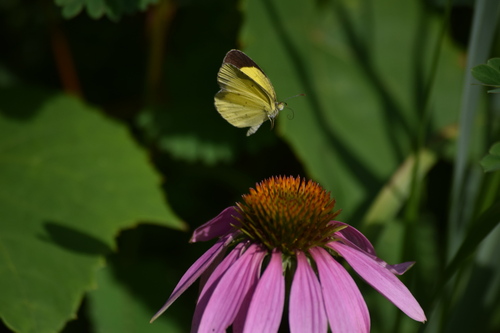
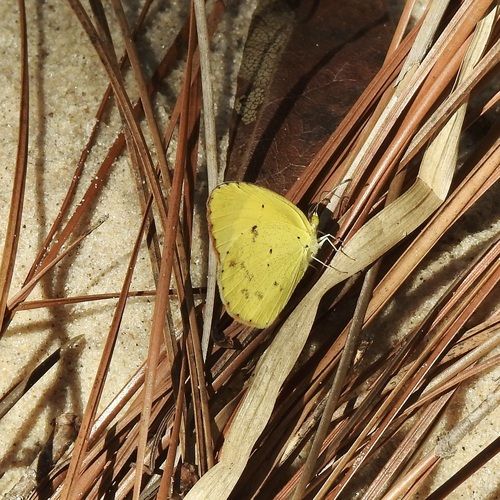
Same family (Pieridae)


Sources
- Wikipedia: https://en.wikipedia.org/wiki/Eurema_lisa
Look it up elsewhere: GBIF · iNaturalist · BugGuide · ITIS · Wikipedia
Text written 2026-10-22 from the sources above and checked sentence by sentence against them. Data fetched 2026-10-22.